Most articles about experiential marketing events examples describe campaigns from the outside: the IKEA sleepover, Share a Coke, a pop up that got written about. We have read those too. What we have that almost nobody writing about this has is the view from inside the activation while it is running.
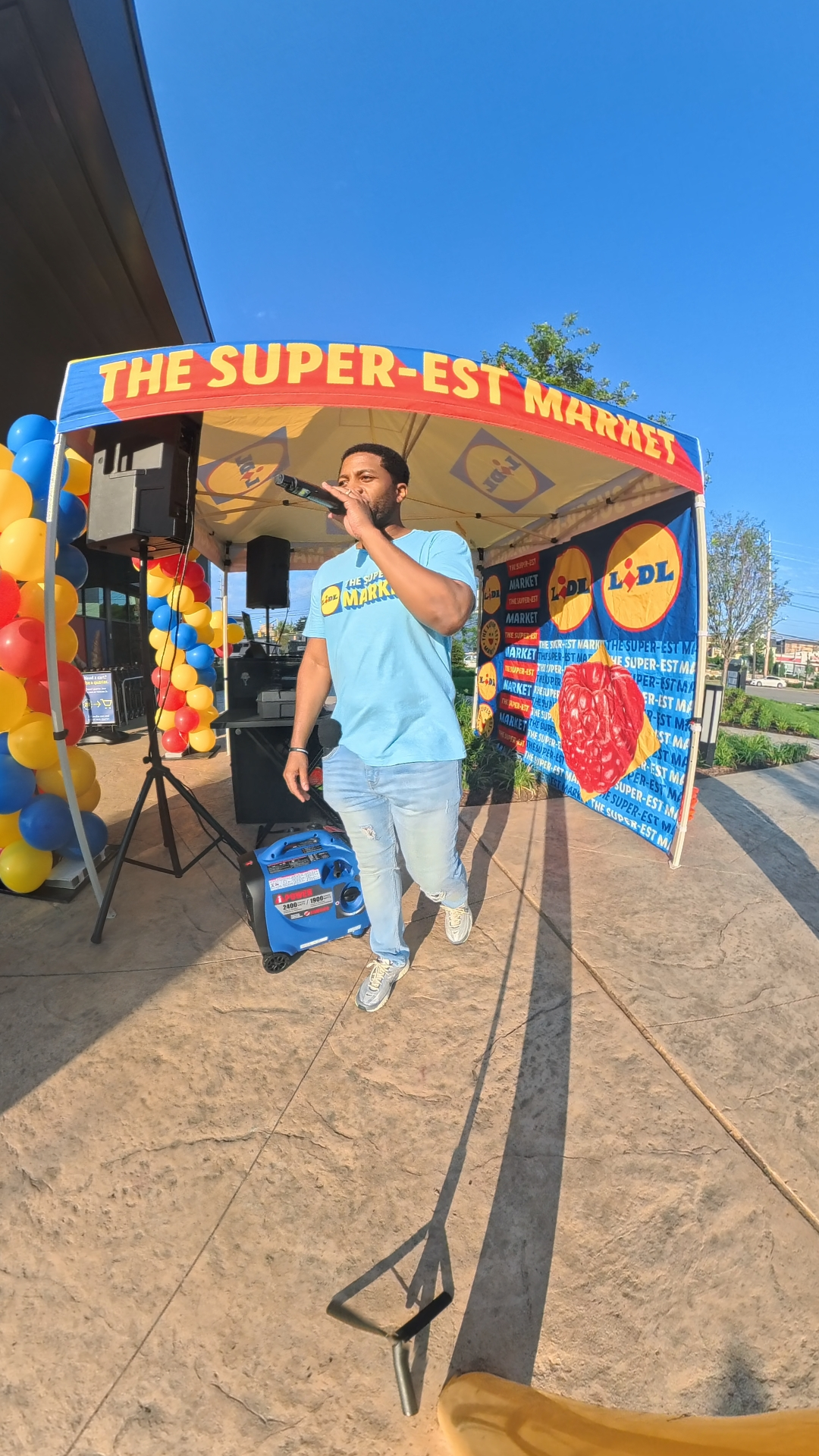
We have worked 74 Lidl US grand openings over seven years, plus brand activations for PUMA, adidas, Ashley and Insomnia Cookies. This page is what that actually taught us about why some activations convert and most do not.
The number that made us pay attention
At a PUMA activation at The Mills at Jersey Gardens, the store did $70,000 in sales in three hours.
Nothing about that was down to the product being on sale, because it was not on sale any more than it had been the week before. What changed was that a moving crowd stopped, and stopped for long enough to shop. Dwell time is the whole mechanism in retail activation, and it is the thing most activations are not built to produce.
What 74 grand openings taught us about crowds
Doing the same format 74 times across seven years is the closest thing to a controlled experiment we are ever going to get. The venues changed, the cities changed, the weather changed, the crowd size changed. The pattern did not.
- The line forms before you are ready. At a Lidl opening in Skyland, Washington DC, people were queuing at 4am. Whatever your activation is, the first people arrive earlier than your run of show assumes, and what happens to them sets the tone everyone else inherits.
- Weather does not decide attendance nearly as much as planners think. We ran an outdoor opening in Northeast Philadelphia on December 2, 2020, in winter, under COVID restrictions, and hundreds of people waited outside anyway. People will stand in the cold for something they actually want.
- Energy has to be held, not created. A crowd that is already there does not need to be excited. It needs to not be bored while it waits, which is a completely different job and a much cheaper one.
- The first 90 seconds after someone arrives decides whether they stay. Not the stage, not the giveaway. What the space sounds and feels like when they walk in.
- Repeat bookings are the only honest metric. Doing one opening well means nothing. Being asked back 74 times means the format works.
Celebrity does not do the work people think it does
In February 2026 we hosted and DJed an Ashley activation in Bensalem, Pennsylvania with Jordan and Jonathan Knight of New Kids on the Block. Roughly 3,000 fans came. Q102 Philadelphia covered it.
Three thousand people is a great headline and a hard operational problem. A celebrity brings the crowd, and then the crowd has to be managed, informed, kept in order and kept engaged across hours of waiting for a moment that lasts minutes. The talent creates the demand. Everything after that is execution, and that is where activations with famous names attached most often fall apart.
If you are budgeting a celebrity activation and you have not budgeted the crowd management and the hosting around it, you have bought the demand without buying the delivery.
The five things that decide whether an activation converts
- Dwell time. How long does a person stay in the space. Everything commercial follows from this number and almost nobody measures it.
- A reason to stop that is not the giveaway. Free items attract people who want free items. Something to do attracts people who will stay.
- Sound at conversation level. Activations are consistently too loud, which stops people talking to staff, and talking to staff is where retail conversion happens.
- Somebody reading the space in real time. A crowd that is thinning needs a different response than a crowd that is bunching, and a pre written plan cannot tell you which one you have.
- A clean handoff to the brand. The activation creates attention. If nobody converts that attention into a conversation, an email address or a purchase, it was entertainment.
None of these five work in isolation. A loud activation with a great giveaway still loses people because nobody can hear the pitch. A quiet, well staffed booth with nothing to do still gets walked past. The experiential marketing events examples that actually convert are the ones where someone owned all five at once, not the ones that nailed one and hoped the rest would follow.
Where the famous campaign examples actually help you
Not as templates. You do not have the budget of a Coca Cola campaign, and copying its mechanic at one percent of the scale produces something that looks like a cheap copy of a campaign your audience half remembers from a Super Bowl ad, not an experience built for them.
What the famous experiential marketing events examples are actually useful for is the underlying principle, not the production value. The good ones all gave people something to do rather than something to watch, and they all made participation the point rather than a bonus tacked on at the end. IKEA did not just let people nap in a store, it gave overnight shoppers an actual reason to interact with the furniture. Share a Coke did not just print names on bottles, it gave people a reason to search shelves and post about what they found. Take that mechanism, not the media budget, and build it at your scale, in your space, for your actual audience.
What we brought to the problem ourselves
Because dwell time is the mechanism, we built our own tool for it: a touchscreen kiosk and a DJ TV booth running an application we write for the specific activation rather than licensing a platform and adding a logo.
We debuted it at the 25th anniversary of 9/11 Day at the Intrepid in 2026, where the build was a trivia application that explained every answer instead of only scoring it. Thousands of volunteers moved through in shifts and every shift beat its goal count. See Audience Engagement Kiosk and Custom Event Apps.
It exists because after 74 openings the constraint was obvious. Music holds a crowd. Something to do holds a crowd longer.
What experiential agencies should brief a talent partner on
We work with experiential marketing agencies and brand teams as part of our broader production team partnerships, and the briefs that produce good activations all contain the same five things.
- The commercial objective, in one sentence. Sales, sign ups, dwell time, footfall, press. They need different builds.
- The expected crowd curve, including when it starts and whether there is a queue before doors.
- The physical space, with power, weather exposure and noise limits confirmed rather than assumed.
- Who converts the attention, and where they are standing.
- What happens if the weather, the talent or the crowd size does not match the plan.
Briefs that arrive without the first item produce activations that look good in the recap and cannot be evaluated.
Questions we get
Do you only work retail activations
No. Grand openings, mall and retail activations, celebrity appearances, sampling and roadshow formats, corporate brand activations and conference floor activations all come through us. Retail is simply where we have the most repetitions, 74 Lidl openings worth, so it is where the data is clearest. The mechanism is identical everywhere else we work: stop the crowd, hold it, hand it off to whoever converts the attention into a sale, a sign up or a conversation.
Can you work under our agency
Yes, and most of our activation work comes through agencies and production companies rather than direct from brands. We work to your cue sheet and your brand guidelines, credit the agency in every client conversation, and stay in our lane. What we ask for in return is to be in the rehearsal rather than briefed after it, because the questions that matter, where the queue forms, what the noise limit is, who is reading the crowd, only surface once we can see the actual space.
What does it cost
Single day work runs $3,500 to $8,000 depending on hours, scope and equipment. Multi stop tours and roadshows are quoted as packages. The custom kiosk application is scoped separately because it is development work.
How far out should we book
Most corporate events book us 60 to 90 days out, which gives us time to pull crowd data from comparable past activations and build the kiosk application if the activation calls for one. Activation work often moves faster than that, retail grand openings and celebrity appearances can land with two to three weeks notice, and we work with it, though the brief still needs to answer the same five questions regardless of the timeline.
Next step
Tell us the brand, the space and the commercial objective. We will tell you what we would do to hold the crowd and what we think the honest conversion path is. If the activation does not need what we do, we will say that too.