Corporate Event Entertainment: What Planners Get Wrong & How to Fix It Table of Contents Corporate event entertainment is one of the most misunderstood line items in any event budget. Planners know they need it. They book it.
“We had a fantastic experience working with DJ Reese. From start to finish, everything ran smoothly, professionally, and exactly as expected for a fundraising event. He did an excellent job managing both the DJ and emcee responsibilities.”
, Molly Edrich, verified client review
Real Proof: What Getting It Right Looks Like
No Stress Zone Entertainment has run 74 LIDL US grand opening activations over 7 years, the same client rebooking again and again is the actual evidence that these mistakes are avoidable. Covered by NBC4 Washington, with an on record LinkedIn endorsement.
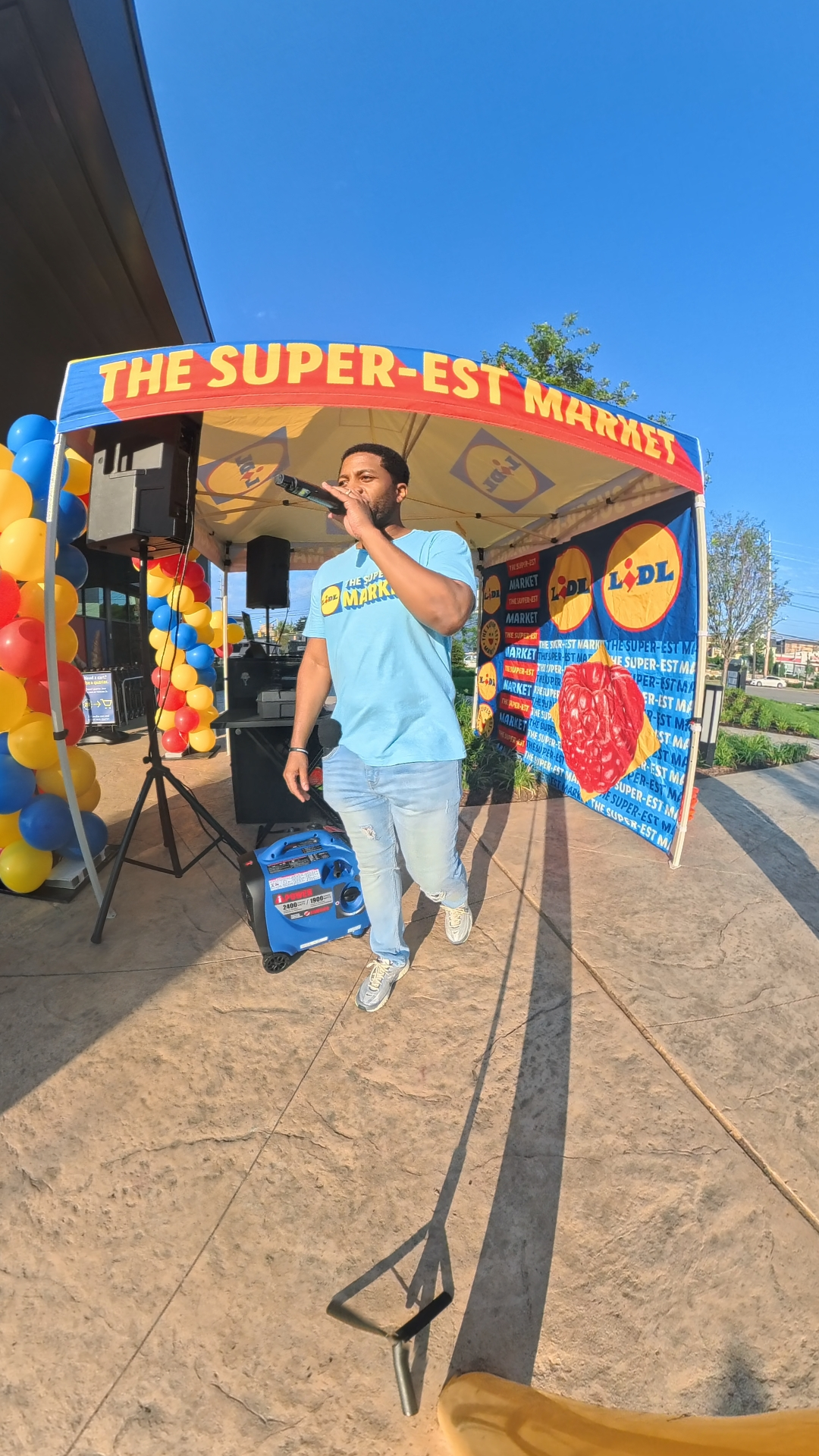
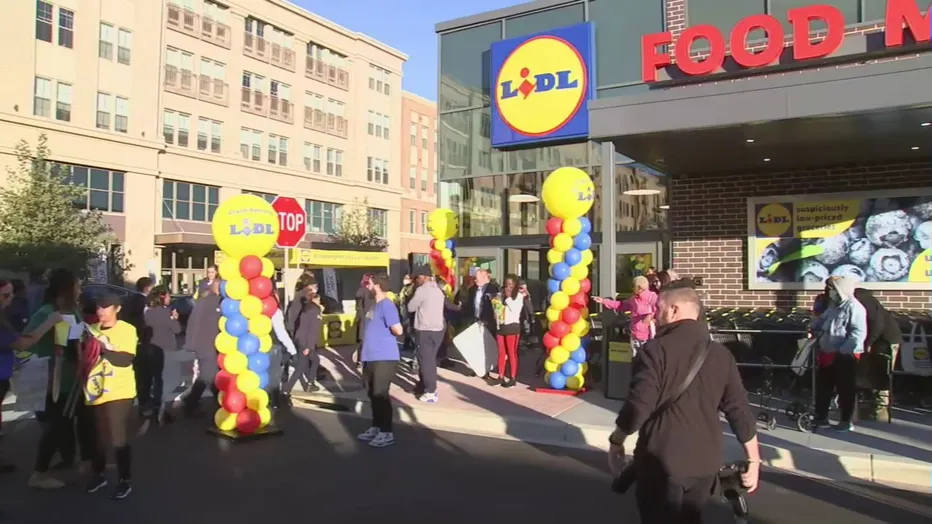

Rated 5.0 from 121 Google reviews. Read the full LIDL US case study →
Corporate Event Entertainment: What Planners Get Wrong & How to Fix It
Table of Contents
Corporate event entertainment is one of the most misunderstood line items in any event budget. Planners know they need it. They book it. And then they evaluate it the wrong way, which means they keep making the same mistake, event after event.
After 21 years producing audience engagement for corporate conferences, sales kickoffs, and leadership summits, we can tell you exactly where the breakdown happens: planners are evaluating corporate event entertainment as a commodity when it’s actually a system. And when you buy a commodity instead of a system, you get whatever shows up, not what the room actually needs.
This post breaks down the most common corporate event entertainment mistakes and, more importantly, what to ask instead of what most planners are asking.
The Meeting Professionals International (MPI) regularly surveys event planners on their biggest concerns, and year after year, the gap between what gets asked in vendor conversations and what actually determines event quality is striking.
What Corporate Event Planners Actually Ask
When a planner begins vetting corporate event entertainment, the questions tend to sound like this:
“Have you done events like ours before?” They want industry proof. Scale proof. Not a generic reel.
“Can you handle MC duties, or is that a separate hire?” They’re trying to collapse the vendor list. One outcome, two deliverables, one check.
“What happens if something goes wrong?” Equipment fails. Speakers run long. AV drops. They need to know you have contingencies, not just confidence.
“Can you work with our AV team?” They’ve been burned. The DJ who showed up and fought the production company ruined a $300K event. They’re not going through that again.
“Do you have insurance and a contract?” Basic vendor vetting. If you can’t say yes in one breath, you’re already disqualified.
“What’s your music selection process? How do you handle different age groups?” Their audience is a CFO, a 28 year old sales rep, a VP of HR, and someone’s spouse. It’s not monolithic.
“Can we hear a mix or see footage?” Proof, not promises. They’ve heard every promise.
“How do you handle a low energy room?” This is the most important question on the list. It’s the one that separates real corporate event entertainment professionals from people who play songs.
The Real Fear Behind Every Question
Every logistics question masks a more personal one. And the most important one never gets asked out loud:
“Will you embarrass us?”
That’s it. That’s the core of every corporate event entertainment vetting conversation. The planner’s reputation is on the line, with their executive team, their clients, their attendees. The event reflects on them personally. When they’re asking about contingency plans and AV coordination and music selection, they’re really asking: can we trust you with our name on this?
Other real questions underneath the surface ones:
“Will you follow direction without hand holding?” They have 47 other things to manage that day. They cannot be your stage manager.
“Will you make this feel different from the last event?” Corporate audiences are tired of the same format. Everyone’s bored of the same template. Corporate event entertainment that’s memorable is memorable because it was designed, not just executed.
“Do you understand our business goals, or just entertainment?” They’ve hired DJs who played great music and completely ignored the program flow. The speakers ran over. The transition after the award ceremony was dead air. The music during networking was too loud to talk over. These aren’t entertainment problems. They’re corporate event entertainment problems.
What You Should Be Asking Instead
Most planners are asking logistics questions. The right question is a systems question:
“How do you engineer how the room feels across the entire event arc?”
Nobody asks this. And that’s the gap. Corporate event entertainment that actually works isn’t reactive, it doesn’t respond to the room. It designs the room in advance and adjusts in real time when the design needs to flex.
The difference between a DJ who shows up and plays songs and a corporate event entertainment professional who understands audience psychology is the difference between ambient noise and a managed experience. One fills space. The other drives outcomes.
For more on what this looks like in practice, read our guide on Interactive Conference Ideas That People Actually Join, the principles overlap significantly with entertainment strategy at scale.
Three Corporate Event Entertainment Mistakes That Kill the Room
1. Booking too late and briefing too thin
Corporate event entertainment is typically booked after the venue, the catering, the AV, and the speakers. That means whoever you hire gets the least amount of context and the least amount of time to prepare, while being responsible for how the room feels during all of those other elements. The brief is usually: “show up at 7, play for 4 hours.” That’s not a brief. That’s a liability.
2. Evaluating entertainment in isolation
Corporate event entertainment doesn’t happen in a vacuum. It happens before the keynote, during the transition from general session to breakouts, between the award presentations, and at the close of a 9 hour event. When you evaluate entertainment without mapping it to those specific moments, you’re buying a product without knowing what it’s supposed to do.
3. Confusing energy delivery with energy management
Energy delivery is the DJ who pumps up the crowd for 90 seconds before a speaker. Energy management is understanding that the crowd needs to be high at the open, sustained through the morning sessions, recovered after lunch, re energized in mid afternoon, and finished strong, not wound down. These are completely different skills. Most corporate event entertainment vendors offer the first. Very few offer the second.
What Good Corporate Event Entertainment Actually Looks Like
The best corporate event entertainment partnerships look like this:
The entertainment vendor is brought in early, during agenda design, not after. They’re briefed on the business objectives of the event, not just the run of show. They understand the emotional arc the organization wants to create: the opening energy, the post lunch recovery, the recognition moment, the close. They coordinate with the AV team before the event, not day of. And on site, they have permission to make real time adjustments, because the planner trusts them to read the room.
That’s what No Stress Zone Entertainment is built for. Corporate Event DJ and Emcee Services, Nationwide starts with the business goal and works backward to the music, the hosting, and the energy design. If you’re planning a conference, sales kickoff, or leadership summit and the audience experience has to be right, Corporate Event DJ Contact DJ Reese | Trusted Expert 500+.
How to Brief a Corporate Event Entertainment Partner
Most corporate event entertainment conversations start with logistics. Here’s what actually needs to happen before you get to the calendar and the contract.
The most effective briefing process treats the entertainment partner as a strategic collaborator, not a vendor who shows up and performs. That shift in framing changes everything about how the relationship is structured and what outcomes are possible.
Start with the business objective, not the program
Before you send a request for proposal, write one sentence that captures what success looks like for the business, not the event. “By the end of this event, our sales team should believe we have a credible path to 40% growth” is a business objective. “We want a great keynote and an exciting evening reception” is a program description. Only one of these is useful for briefing a corporate event entertainment partner who’s expected to contribute to outcomes.
Describe the audience, not the demographics
Demographic profiles (age range, seniority level, industry) are starting points, not the brief. More useful for corporate event entertainment planning: what shared experience does this audience carry into the room? What did they go through together this year? What do they need to feel by the end of the event that they didn’t feel when they walked in? Those questions produce a usable brief. Demographics produce a guess.
Map the energy arc before you set the agenda
A well run corporate event entertainment briefing includes a conversation about energy, specifically, how the room should feel at each major transition point. Arrival energy. Post keynote energy. Post lunch energy. Pre close energy. When your entertainment partner understands the emotional arc you’re building, every element of their performance can be calibrated to that arc instead of just filling time between sessions.
Name your highest risk moment explicitly
Every event has one. The 45 minute slot after lunch when the audience has stopped listening. The point where the program ran long and the room is done. The transition between the last panel and the evening reception when people are checking their phones. Name that moment in the briefing. A corporate event entertainment partner who knows where the danger zone is can design a specific response to it, instead of discovering it in the room and reacting under pressure.
What Good Corporate Event Entertainment Looks Like in Practice
Good corporate event entertainment doesn’t draw attention to itself. That sounds counterintuitive, but the goal of entertainment that serves a business event is to make the audience feel something specific, not to make the entertainment partner the star of the show.
Here’s what it looks like when corporate event entertainment is doing its job:
The room arrives at the energy level the program needs. Not just “people are here.” The first five minutes of music, hosting, or experience design sets a tone that carries through the opening keynote. Attendees feel oriented, not just present.
Transitions don’t create dead air. Every gap in a corporate event program, between sessions, between speakers, during awards, during transitions between general session and breakouts, is an opportunity for the entertainment layer to hold the room’s energy or deliberately shift it. When corporate event entertainment is well integrated, these moments feel intentional. When it’s an afterthought, they feel like things you endure.
The close lands. The last 20 minutes of a corporate event are disproportionately powerful for memory formation. What attendees carry out the door, the final emotional state, the last story told, the last piece of music they heard, shapes how they talk about the event for weeks. Professional corporate event entertainment design starts with the close and builds backward.
You get real time adjustment without asking for it. A mid event energy check shouldn’t require a planner to walk across the room and send a text. A professional corporate event entertainment partner is watching the room as closely as you are, reading the signals, audience body language, conversation energy, attention levels, and adjusting before the dip becomes visible to everyone else.
This is the difference between entertainment that fills a slot on the run of show and entertainment that makes the run of show work. If you want to explore what this looks like for your specific event, Corporate Event DJ Contact DJ Reese | Trusted Expert 500+, not the playlist.
Red Flags in Corporate Event Entertainment Conversations
Knowing what good corporate event entertainment looks like is useful. Knowing what bad looks like before you sign a contract is more useful.
They lead with their equipment list. Equipment matters. A well specified audio rig and proper lighting control are necessary. But when the first conversation is about gear instead of goals, you’re dealing with a technician, not a strategic corporate event entertainment partner. The equipment question should come after: “What are you trying to accomplish and who’s in the room?”
They can’t describe a specific pivot they’ve made mid event. Ask any corporate event entertainment professional you’re considering: “Tell us about a time the energy in the room shifted unexpectedly and what you did.” If the answer is generic (“we always read the room”) or non specific (“we have handled situations like that”), you’re looking at someone who hasn’t actually been tested at the level of work you need. Specific pivots, “at 8:47 we could see the back third of the room disengaging after the second awards segment so we shifted the tempo and brought up the lights”, are what professional execution looks like.
They price before they scope. Corporate event entertainment pricing that arrives before a real conversation about scope, objectives, and audience isn’t a price, it’s a number. Professional corporate event entertainment partners understand that the investment structure follows the scope, and the scope follows the objective. If you get a flat rate in the first email, you’re being sold to rather than consulted with.
Their references are from a different category of event. A track record of successful private parties is not the same as a track record in corporate event entertainment. The audience dynamics, business objectives, energy management requirements, and professional stakes are categorically different. Ask specifically for references from corporate event clients at a comparable event type and scale, and ask those references the question that actually matters: “Did the entertainment contribute to the business goal of the event?”
They don’t ask about the run of show until late in the conversation. A corporate event entertainment partner who isn’t curious about your program flow, your other speakers, your timing constraints, and your tech setup in the first conversation is going to be a headache during production. The right partner wants to understand the full architecture of the event, not just their slot in it.
The corporate event entertainment conversation is a filtering mechanism. Use it as one. The questions you ask, and the quality of the answers you receive, tell you everything you need to know about whether this is a partner who can execute at the level your event requires.
If you’re ready to have a different kind of conversation about corporate event entertainment, one that starts with your business objectives and ends with a specific, executable plan, Corporate Event DJ and Emcee Services, Nationwide.
The Pre event Conversation That Changes Everything
Before any corporate event entertainment contract is signed, there is one conversation that separates strategic partnerships from vendor transactions. Most planners skip it, not because they don’t know to have it, but because the industry has normalized skipping it. The RFP goes out, the pricing comes back, references get checked, and a decision gets made based on criteria that don’t actually predict event success.
The conversation that matters is about alignment. Not alignment on logistics, alignment on what the event is supposed to accomplish for the people in the room and the organization that put them there.
Here is what that conversation sounds like:
“We have a sales kickoff for 400 people in March. By the time the last person leaves the venue, we need the team to believe, not just intellectually understand, but viscerally believe, that this company has a credible path to 40% growth this year. Everything that happens in that room needs to serve that outcome. The opening energy, the music between sessions, the close, the evening program. What would you do differently if that’s the lens you’re using?”
That question, asked to a professional corporate event entertainment partner, will tell you everything you need to know about whether this is the right person for the job. The answer reveals whether they understand the relationship between entertainment and business outcomes, whether they have a framework for the kind of work you’re describing, and whether they’ve done it at the level you need.
The answer also reveals something about how the relationship will work if you hire them. Partners who understand that corporate event entertainment is a business function, not just a program element, will ask you follow up questions that get into the audience psychology, the organizational moment you’re in, and the specific emotional shifts you’re trying to engineer. They’ll treat your objectives as their brief. And the work they produce will reflect that.
This is the standard No Stress Zone Entertainment holds itself to on every corporate event. The brief always starts with the business objective. The design always serves the audience experience. And the measurement of success is always whether the room felt what it was supposed to feel, not just whether the music was good and the transitions were smooth.
Corporate Event DJ and Emcee Services, Nationwide, we start by listening. Then we build.
Proof from the room: see every industry we have worked in, with proof.
FAQ: Corporate Event Entertainment
What’s the difference between a corporate DJ and a corporate event entertainment professional?
A corporate DJ plays music. A corporate event entertainment professional manages the energy arc of the entire event, using music, hosting, audience psychology, and live event strategy to control how the room feels from open to close. The difference shows up in every transition, every energy dip, and every moment the room needs to shift.
How early should you book corporate event entertainment?
Ideally six to eight weeks before the event for most corporate entertainment. For large scale conferences or events with complex production needs, three to four months allows enough time for proper briefing and coordination with your AV and production teams.
What should a corporate event entertainment brief include?
At minimum: the business objective of the event, the audience profile (industry, seniority mix, age range), the run of show with timing, the AV setup and contact, the desired energy state at the end of the event, and any specific moments that need elevated attention (awards, keynote send offs, closing reception).
How do you keep energy high during a full day corporate event?
Energy architecture, deliberately mapping the emotional arc of the day. High at open, recovery after morning sessions, re engagement post lunch, strong close. Corporate event entertainment that sustains energy across a full day isn’t louder than other entertainment. It’s more intentional about when and how it shows up.
Related Reading
- High Stakes Events: 5 Best Fixes When Yours Never Deliver
- Corporate Event Feels Flat: 5 Best Experience Design Fixes
Frequently Asked Questions
What should you plan for first with this type of event?
When a planner begins vetting corporate event entertainment, the questions tend to sound like this: “Have you done events like ours before? ” They want industry proof.
What’s the most common mistake to avoid?
Every logistics question masks a more personal one. And the most important one never gets asked out loud: “Will you embarrass us?
What actually matters most on the day?
Most planners are asking logistics questions. The right question is a systems question: “How do you engineer how the room feels across the entire event arc?