

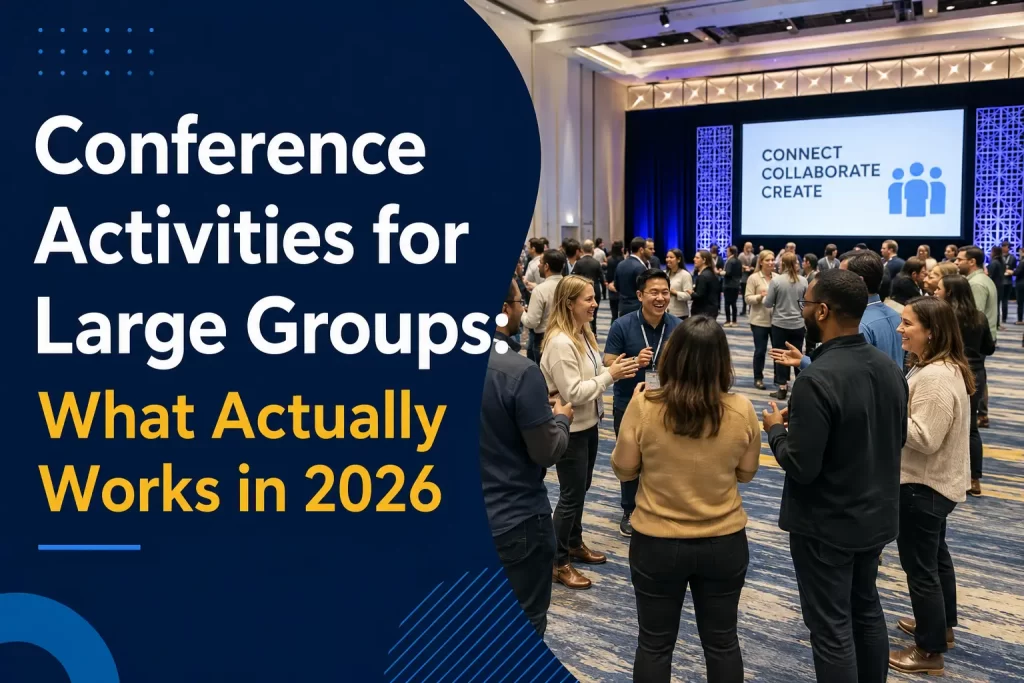

- Why Conference Activities for Large Groups Require a Different Approach
- Build the Foundation First: Energy Architecture
- Conference Activities for Large Groups That Actually Work
- Real Time Execution
- How Music Multiplies Every Conference Activity
- Common Mistakes to Avoid
- Design the Room, Not Just the Agenda
Most conference activities for large groups fail before they start. Not because the activity itself is bad, but because the room wasn’t set up to receive it. The energy wasn’t built. The audience wasn’t primed. The transition into the activity was dead air instead of momentum.
After 21 years designing audience engagement for corporate conferences, sales kickoffs, and leadership summits, we can tell you exactly where the gap is: planners choose what to do without designing when and how the room needs to feel for it to land. Conference activities for large groups are a discipline, not a menu item you add to the agenda.
This guide covers what works, what doesn’t, and how to design conference activities for large groups that your audience actually remembers, whether you’re managing 200 people or 2,000.
Large group results from our own conferences
Every activity below has been tested in front of a real audience. These are large group events where No Stress Zone Entertainment ran the program, the music or both:
- RMS Sales Kickoff, Martin’s Crosswinds, Greenbelt, Maryland, March 22, 2026. 500 attendees, more than 20 segments, zero dead air, booked two years in a row. Case study
- Lidl US Strategy Conference, Renaissance Arlington, 2025. More than 500 attendees, emcee and DJ. How we ran it
- Horizon NJ Health Mental Matters Summit, 2025. More than 500 attendees.
- NEA Representative Assembly children’s program, Walter E. Washington Convention Center, July 4, 2016. 300+ children, all day: DJ, host and activities, booked direct by the National Education Association. Case study
- New Jersey Gamer Con, Crowne Plaza Philadelphia Cherry Hill, July 7 and 8, 2018. Convention DJ for two days of tournaments, free play lounges, retro gaming and vendors.
- 9/11 Day Meal Pack at the Intrepid, New York. Four days in 2026, September 8 to 11, for the 25th anniversary; more than 6,000 volunteers across four days and 4.1 million meals packed in New York. Seven straight years. Case study
Running a multi day convention? See our convention emcee and DJ services.
Why Conference Activities for Large Groups Require a Different Approach
The fundamentals of engagement don’t change with group size. But the execution does, significantly. Conference activities for large groups face four specific challenges that small group facilitation doesn’t:
Energy is harder to build and easier to lose. In a room of 50, a moderately engaging activity can recover quickly from a slow start. In a room of 500, if the first 90 seconds don’t land, you’ve lost the room, and getting it back takes three times the effort. Conference activities for large groups have to start at a higher energy point than you think they need to.
Silence reads differently. A two second pause in a small group feels natural. A two second pause with 800 people in the room feels like failure. Conference activities for large groups need continuous acoustic management, music, hosting, or structured crowd interaction, to fill the space and hold the energy between moments.
Logistics become experience design. When you’re moving 600 people from general session to breakouts, that transition IS an activity. It will either energize the audience or drain them. The best conference activities for large groups treat every transition as a managed moment, not a logistical necessity.
The lowest energy person in the room sets the tone. In a large group, the audience reads each other constantly. If 15% of the room looks checked out, the other 85% starts to wonder if they should be too. Conference activities for large groups must keep the visible energy in the room consistently high, not just the average energy.
Build the Foundation First: Energy Architecture for Large Group Conferences

Before you choose any specific conference activities for large groups, you need an energy architecture, a deliberate design of the emotional arc of the day. This is the framework that makes individual activities compound instead of cancel each other out.
Map the emotional arc alongside the agenda. Every conference has a natural energy shape: high at opening, sustained through morning sessions, dipping post lunch, recovering in mid afternoon, and needing a strong close. Conference activities for large groups should be placed deliberately within this arc, not randomly inserted to fill time.
Identify the high risk windows in advance. The post lunch slot. The 3:45pm breakout. The moment between the last speaker and the networking reception. These are the predictable low energy points in any conference. Conference activities for large groups work hardest at these moments, but only if they’re designed for those windows specifically, not retrofitted from a morning slot.
Design recovery moments, not just peaks. The best conference activities for large groups are not only about building energy, they’re about sustaining it. Recovery moments (intentional breaks, format changes, humor injections) are as important as the high engagement peaks. Without them, energy doesn’t decline gradually. It collapses.
For a deeper dive into this framework, read our guide on interactive conference ideas, the principles overlap significantly with large group design.
Research from the Event Manager Blog consistently shows that attendee engagement drops significantly after the first 20 minutes of any session without an active engagement mechanism. Understanding meeting psychology research from Harvard Business Review can help conference planners design more effective large group experiences from the ground up.
Conference Activities for Large Groups That Actually Work
Walk In and Opening Energy Activities
The five minutes before your program begins are the most undervalued conference activities for large groups available to any planner. What happens during walk in sets the emotional frame for everything that follows.
Programd walk in music. Not background music. A specifically sequenced music program that builds in energy toward the moment your emcee takes the stage. A conference DJ who understands energy management, not just song selection, treats the walk in as a production element, not filler. When executed well, the room arrives already in motion.
Visual countdown with momentum. A branded countdown clock on the main screen, paired with escalating music energy, creates a shared focal point and builds anticipation naturally. Conference activities for large groups that use visual anchors give 600 people something to orient around simultaneously.
The hard open. Rather than a slow drift into the program, design a hard opening, the emcee hits the stage at the peak of an energy build, the lights shift, the music cuts, and the room is already leaning in. This is one of the most impactful conference activities for large groups because it establishes that this event is designed, not just scheduled.
Mid Day Re Engagement Activities
Post lunch is where conferences lose their audiences. The best conference activities for large groups for the mid day window share a common trait: they shift the format before they try to shift the energy.
Structured audience interaction. A skilled emcee using targeted crowd call and response, not awkward participation exercises, but real time engagement tied to the content, re establishes the audience’s active role. This costs nothing and works at any group size. Conference activities for large groups that rely on the host to carry the engagement require investing in a host who can actually do it.
Recognition and awards segments. Done well, recognition is one of the most powerful conference activities for large groups for the mid afternoon window. A recognition moment done wrong is a list read into a microphone. Done right, with music underscores, video packages, and a host who builds genuine celebration, it re energizes 500 people simultaneously by giving them something to feel.
Format breaks. Switching from lecture to panel, from panel to facilitated discussion, or from seated to standing, these are conference activities for large groups that work by changing the physical and mental state of the audience. The content doesn’t have to change. The format does.
Transition and Breakout Activities
The two minutes between sessions are among the most consequential conference activities for large groups, and almost no one treats them that way.
Music bridges between sessions. Silence between a speaker’s exit and the next segment reads as “nothing is happening” to a large group audience. A music bridge, specifically chosen for the energy state you need to create, sustains momentum and signals that the event is still moving. A corporate event DJ who understands this treats transitions as production moments, not breaks.
Emcee transition lines. A strong transition line from the host closes what just happened and opens what’s next. Conference activities for large groups that invest in the connective tissue, not just the set pieces, feel coherent rather than fragmented.
Directional energy for breakouts. When 700 people need to move from general session to breakout rooms, that transition has a right way and a wrong way. The right way: music at high energy during the transition, clear directional signage, and an emcee sendoff that builds anticipation for breakout content before people leave the main room.
Closing and Send Off Activities
The last 20 minutes of a conference are among the highest leverage conference activities for large groups, and among the most neglected. How a conference ends is what people carry home.
The energy send off. A closing that ends at the energy peak, rather than drifting into housekeeping and “safe travels”, leaves the audience with a feeling of momentum rather than completion. Conference activities for large groups designed for the close should build, not wind down.
Shared moment creation. A closing element that gives 600 people a simultaneous shared experience, a musical moment, a collective commitment, a visual that lands, creates a memory anchor. These are what make conference activities for large groups memorable versus merely adequate.
Real Time Execution: The Layer Most Conference Activities for Large Groups Skip
Even well designed conference activities for large groups can fail if the execution layer isn’t in place. Real time execution means someone in the room has the authority and the read on the audience to adjust before a problem becomes visible.
Give your host permission to act. The emcee is the energy manager of any large group conference. But they can only do their job if they’ve been briefed on the emotional objectives, not just the run of show, and given explicit permission to go off script when the room calls for it. Conference activities for large groups executed by a host operating strictly from a script will underperform every time.
Build flex into the program. Conference activities for large groups need room to breathe. A session that’s working, where the energy is alive and the audience is locked in, should be able to run long. A session that’s losing the room should be able to run short. Rigid programming is the enemy of responsive execution.
Coordinate across your production team. The DJ, the emcee, the AV team, the event manager, in the best large group conferences, these aren’t separate vendors operating from their own cues. They’re a coordinated production team operating from a shared understanding of what the room needs moment to moment. This is what separates a professional corporate events team from a vendor list.
How Music Multiplies Every Conference Activity for Large Groups
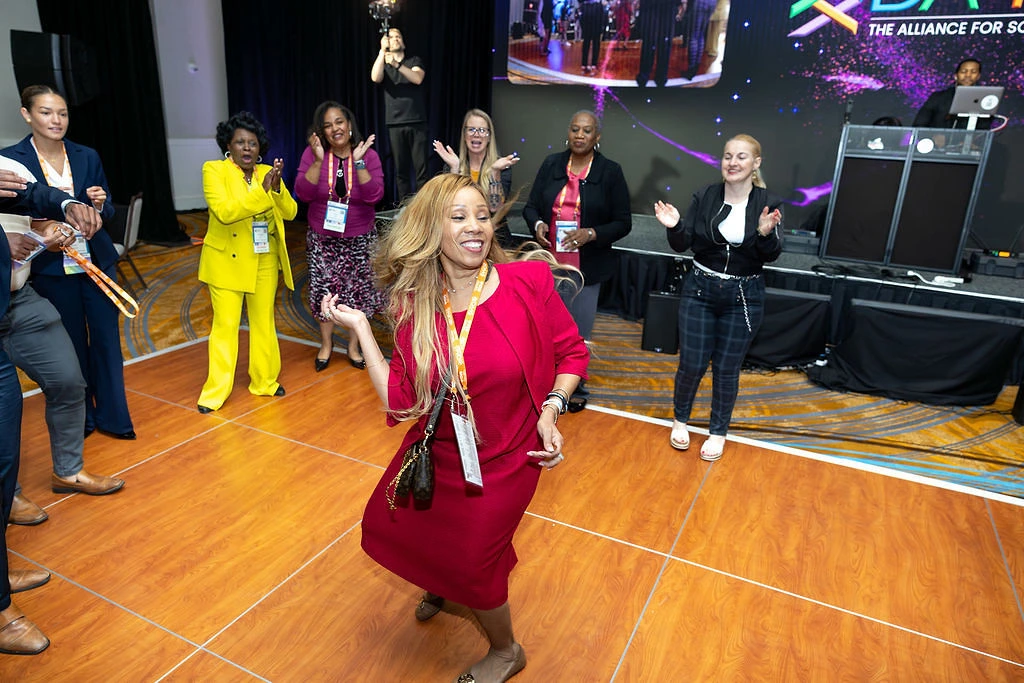
Music is not a background element at a large group conference. It is infrastructure, the most powerful tool available for controlling how a room feels, moves, and sustains energy across an eight hour day.
Conference activities for large groups that are supported by a skilled DJ outperform identical activities without that support every time. The reasons are physiological: music at the right tempo, volume, and energy level primes the audience’s nervous system before the activity begins. It sustains engagement during transitions. It marks moments, making them feel significant rather than procedural.
The difference between a DJ who shows up and plays songs and a conference DJ who understands audience psychology is the difference between ambient sound and an active engagement tool. For conference activities for large groups where energy management is the objective, this distinction is everything.
Common Mistakes That Undermine Conference Activities for Large Groups
Treating activities as agenda items rather than experience design. An activity that’s scheduled but not designed for its specific position in the day’s arc will underperform. Conference activities for large groups must be designed for their emotional context, not just their content.
Over programming. No space for activities to land. No recovery moments between peaks. Back to back sessions with no breathing room. Conference activities for large groups require white space, moments where the audience can process before they’re asked to receive the next thing.
Briefing vendors on logistics instead of objectives. “The activity runs from 2:15 to 2:45” is a logistics brief. “By 2:45, we need the room energized and connected, people should feel like they’re part of something, not just attending something” is an experience brief. Conference activities for large groups work better when every vendor knows the objective.
Measuring success by execution instead of experience. “It ran on time” and “we hit every agenda item” are execution metrics. “The room was electric,” “we didn’t want it to end,” and “we have already told people about this” are experience metrics. Conference activities for large groups should be evaluated by what people felt, not what got checked off.
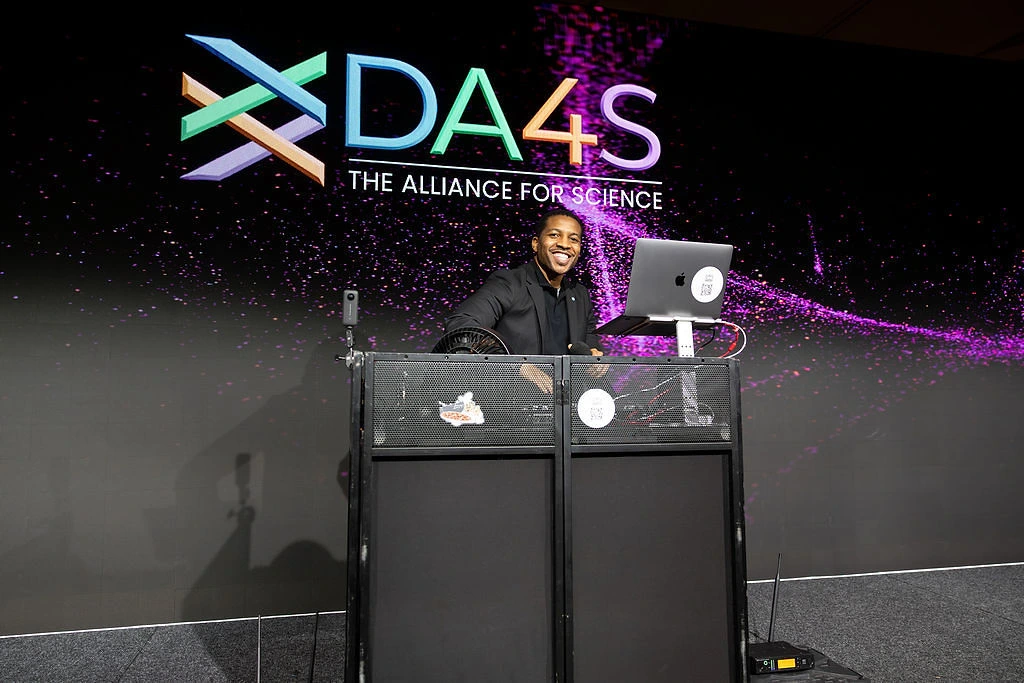
Proof from the room: see how we ran the mic all day at the Alliance for Science East Coast Conference.
FAQ: Conference activities for large groups
What are the best conference activities for large groups of 500 or more?
The most effective conference activities for large groups at scale are ones that work with the room’s energy rather than fighting it: programd walk in music, structured emcee engagement, format breaks between sessions, music supported transitions, and recognition moments designed for genuine celebration. Activities that require every individual to participate simultaneously tend to break down at scale, focus on activities that work with the collective energy of the room instead.
How do you keep a large group engaged throughout a full day conference?
Sustained engagement in a full day conference comes from energy architecture, deliberately designing the arc of the day so that energy builds, has intentional recovery moments, and finishes strong. Conference activities for large groups should be mapped to the day’s natural energy shape: high energy at open, recovery after morning sessions, re engagement after lunch, and a strong close rather than a wind down. Music, emcee hosting, and format variety are the primary tools.
Do conference activities for large groups require special A/V equipment?
Not necessarily, but they require coordination. The most impactful conference activities for large groups (music builds, emcee transitions, recognition moments) require a DJ who understands audience energy, an AV team that can execute cues in real time, and a host who’s been briefed on both the logistics and the emotional objectives. The equipment matters less than the coordination among the people operating it.
How far in advance should you plan conference activities for large groups?
Energy architecture should be mapped at the same time as the agenda, ideally six to eight weeks before the event. Individual activity design can be refined closer to the date, but the emotional arc of the day and the key engagement touchpoints need to be established early enough that vendors can be briefed on objectives, not just logistics.
What’s the difference between a conference facilitator and a conference emcee for large groups?
A facilitator manages process, ensuring conversations happen and outcomes are captured. A conference emcee manages energy, holding the room together, reading the audience in real time, and adjusting before a dip becomes visible. For large group conferences where audience engagement is the primary challenge, the emcee’s role is typically higher leverage. The best large group conferences use both: a facilitator for breakout content and an emcee for main stage moments and transitions.
What are good convention activities?
Opening general sessions with a live host, walk up music for speakers, a networking reception with music at conversation level, exhibit hall programming on a schedule and a closing session that ends on energy. For conventions with families, a separate children’s program keeps delegates in session.
What activities work for a conference of 500 people?
Activities that need no setup and include everyone at once: live polls called from the stage, stand up moments, recognition segments with walk up music and a timed energy reset after lunch. At the RMS Sales Kickoff, 500 people moved through more than 20 segments with zero dead air.
Should a convention include a children’s program?
If delegates travel with families, yes. At the NEA Representative Assembly we ran the children’s program for 300+ kids all day, with music, hosting and activities, so their parents could stay in session.
Design the Room, Not Just the Agenda
Conference activities for large groups are not a checklist. They’re an integrated system, energy architecture, real time execution, music infrastructure, hosting, and transition management working together to create something the audience feels rather than just attends.
The planners who understand this design their events from the audience’s emotional experience outward. The ones who don’t produce events that are technically correct and experientially forgettable.
If you’re planning a conference, sales kickoff, or leadership summit where the audience experience has to match the investment, where your leadership, your sponsors, or your attendees expect something that actually moves the room, No Stress Zone Entertainment is built for exactly this.
We design conference activities for large groups from the ground up: music, hosting, audience psychology, and live event strategy working together so the room feels right from the moment the first attendee walks in. Learn about our approach or start planning your event.
No Stress Zone Entertainment designs audience engagement and event experiences for corporate conferences, sales kickoffs, galas, and leadership summits. Using music, professional hosting, and live event strategy, we control how a room feels and adjust in real time before a dip becomes a problem.
Pingback: The 5 Biggest Corporate Event Planning Challenges (and How to Solve Them Before Day-Of) - DJ Reese | Corporate DJ & MC for Conventions & Sales Kickoffs