You spent months planning a conference. You booked the right speakers, built a thoughtful agenda, chose a venue that fits the group, and invested in a production team that knows what they are doing. Then the post-lunch session hits and you watch the room check out. Heads tilt toward phones. Side conversations start. The speaker on stage is excellent but they are losing the room in real time. This is the challenge every conference organizer faces and almost none of them have a complete solution for it. That’s the standard I hold every program to for conference attendee engagement.
Keeping conference attendees engaged across a full day or multi-day event is one of the hardest things in the event industry. It is not just a content problem. It is an experience design problem. The content can be outstanding and the engagement can still collapse if the experience around the content is not managed with equal intentionality. Conference attendee engagement recovers slower than most planners expect.

Why Conference Attendee Engagement Collapses and When

Conference attendees go through a predictable energy arc across each day of the event. Understanding that arc is the first step toward managing it.
Morning energy is highest at arrival and stays relatively elevated through the first two sessions of the day. This is when the novelty of being at the event is strongest, when the networking energy from the previous evening has not yet worn off, and when the program content is freshest. The morning is the easiest period of the conference day to manage from an engagement perspective. A single flat transition can cost you conference attendee engagement for the rest of the session.
The post-lunch drop is real and it is physiological. When the body diverts energy toward digestion, cognitive engagement drops. Add the accumulated fatigue from morning sessions and the typical conference post-lunch session is fighting biology as much as it is fighting distraction. This is where conference attendee engagement is most vulnerable and where the least planning attention is typically paid.
The mid-afternoon period is where the second energy window opens. If the post-lunch session was managed well, the room can recover and re-engage. If it was managed poorly, the rest of the day is an uphill battle. This is why conference attendee engagement has to be planned, not improvised.
Day two and day three of a multi-day conference add cumulative fatigue to these daily cycles. The overall energy level of the room on day two morning is lower than it was on day one morning. Day three is lower still. A conference attendee engagement strategy that does not account for this cumulative effect will fail to maintain energy across the full event.
The Role of Music in Conference Attendee Engagement
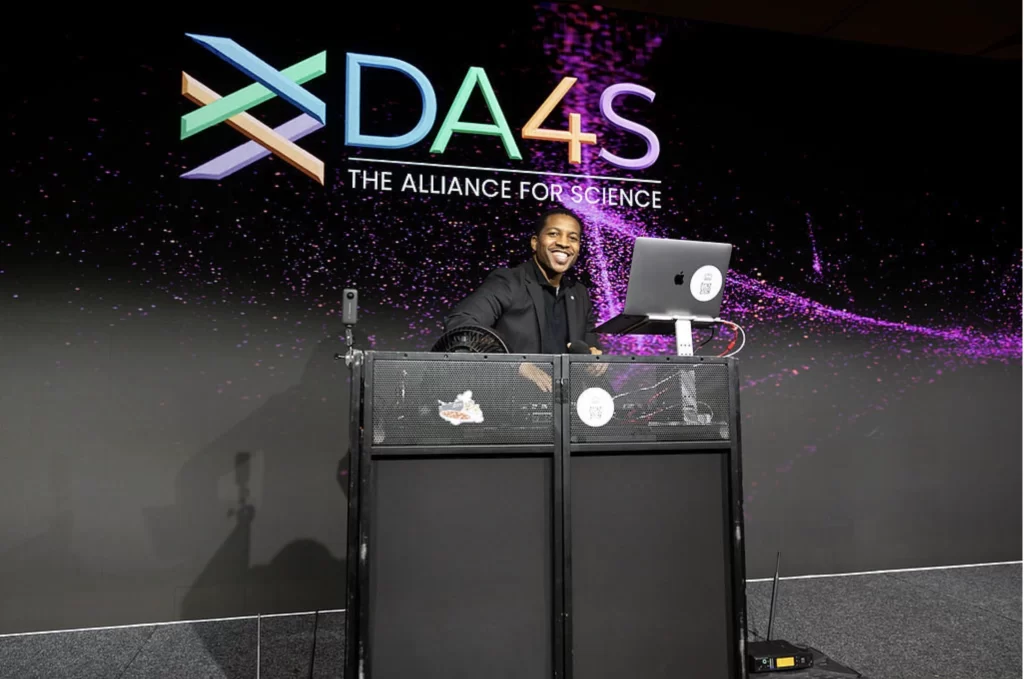
Music is one of the most underutilized and underappreciated tools for managing conference attendee engagement. Most conference organizers think about music as something that happens at the evening event. Professional conference producers know that music works throughout the entire event as an active engagement tool.
The right music during registration and arrival creates a forward-leaning energy that primes attendees for the first session. Studies on auditory priming show that music tempo, key, and genre influence cognitive readiness and emotional state in measurable ways. This is not a soft claim. Music literally affects how your attendees feel when they walk into your general session. Rebuilding conference attendee engagement mid-program is harder than protecting it from the start.
Music during networking breaks serves a dual function: it fills the room acoustically so the silence does not feel awkward, and it manages the pace of movement. The right tempo during a break keeps people circulating and connecting rather than clustering in place or retreating to the lobby. Conference attendee engagement across the full event depends partly on the quality of connection made during these transition moments, and music shapes how those moments feel.
Music during the transition from a general session to the expo floor or a breakout room carries momentum from the large space into the next activity. Get this transition right with the correct musical energy and you move 400 people with purpose. Get it wrong with abrupt silence or the wrong energy and you get a dispersed, deflated crowd. That’s the kind of detail that separates real conference attendee engagement from a checklist.
Conference Attendee Engagement Strategies That Actually Work
Engineered Energy Management Across the Full Day
The most effective conference attendee engagement plans treat energy management as a primary production concern rather than a content concern alone. This means mapping the energy curve of the entire day and identifying where it naturally drops, then building specific interventions for each drop point. Not just better content. Specific environmental and experiential interventions that address the physical and psychological causes of disengagement.
For the post-lunch drop: consider a shorter first session back with higher-energy format — a fireside chat or a panel with audience participation rather than a straight keynote. Pair it with music during the lunch-to-session transition that builds energy rather than sustaining the ambient dining mode. Keep room temperature cooler than feels necessary. All of these factors work together. Conference attendee engagement drops fastest right after lunch, not at the end of the day.
Interactive Moments Built Into the Program
Conference attendees disengage when they become passive receivers for too long. The research on sustained attention is consistent: after about 20 minutes of passive listening, attention begins to decline. Building interactive moments into the program — audience polls, questions to a neighbor, breakout discussions, live response exercises — reactivates engagement by requiring the audience to do something. This is a simple, repeatable way to protect conference attendee engagement.
The key is that these interactive moments need to be well-designed and facilitated, not just announced. A weak transition to an audience discussion produces a room that talks at low energy for 90 seconds and then waits for the speaker to continue. A well-designed interactive moment with clear direction and appropriate energy management can reset a room that has been passive for 40 minutes. Losing conference attendee engagement here costs you the rest of the day.
Entertainment Elements That Break the Pattern
Conference attendee engagement benefits significantly from deliberate pattern interrupts built into the program. Not the same format, delivered in the same way, for six hours straight. The human brain is wired to notice and engage with novelty. Speakers who deliver presentations the same way all day create the conditions for disengagement even when the content is excellent.
Entertainment elements built into the conference program serve as pattern interrupts that reset attention. A brief musical performance between sessions. A corporate entertainment moment at the transition from one program block to the next. A hosted activity during a break that creates social energy rather than leaving attendees to manage themselves. These moments work because they change the stimulus — which reactivates the attention systems that have been habituating to the existing format. That gap is what strong conference attendee engagement closes.
Room Environment Management
Conference attendee engagement is not just a content and entertainment challenge. It is a physical environment challenge. Room temperature is one of the most powerful and most overlooked factors. Rooms that are too warm produce physiologically sleepy audiences regardless of how good the content is. Aim for cooler than feels comfortable to the people managing the room — attendees who are moving around and engaged run warmer than organizers who are standing in the back. Lighting matters too. A well-lit room with strategic focus on the stage keeps attention directed. A poorly lit room with all-ambient light creates the physical conditions for disengagement.
MC Hosting as a Conference Attendee Engagement Tool
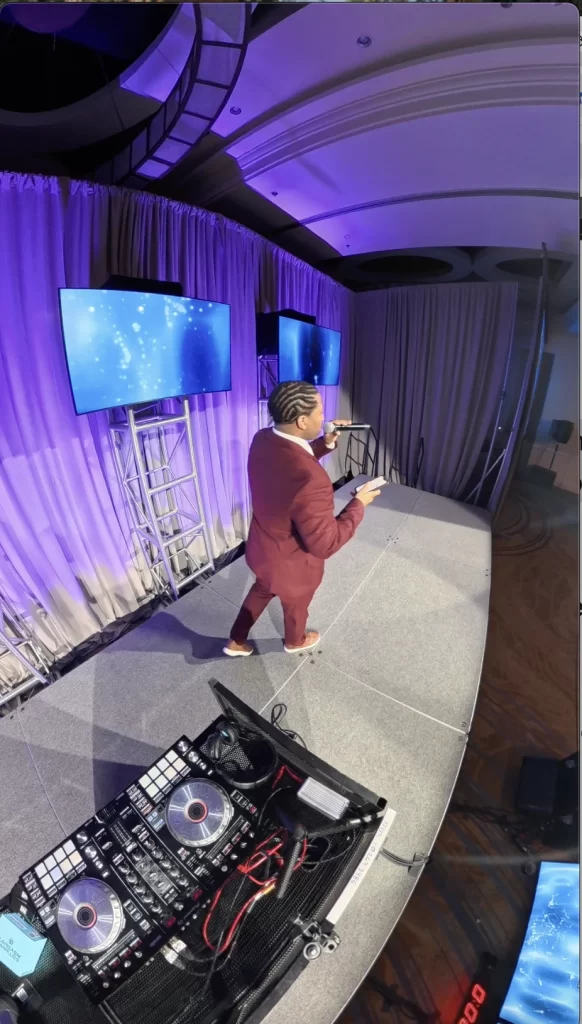
A skilled MC is one of the highest-leverage investments you can make in conference attendee engagement. The MC connects the program segments, maintains energy during transitions, manages the audience through interactive moments, and provides a consistent human point of reference that keeps the audience oriented to the event.
Most conference organizers either skip the MC entirely, assign it to a staff member, or book someone whose primary qualification is being well-known. None of these approaches optimizes for conference attendee engagement. A professional MC who specializes in corporate events brings specific skills: the ability to read a room and adjust energy in real time, the experience to recover gracefully from program disruptions, the presence to keep an audience of several hundred people focused and connected across a full day.
When the DJ and MC role are combined in one experienced professional, the conference attendee engagement impact is even stronger. The person managing the music knows the program, knows the audience, and can adapt the energy strategy in real time based on what they are seeing and feeling in the room. This integration is one of the most effective conference attendee engagement approaches available.
Day Two and Day Three Conference Engagement: A Different Job
Every conference organizer knows day two is harder than day one. Fewer know exactly why or what to do about it specifically. The challenge is not just fatigue — it is the combination of fatigue, familiarity, and the beginning of the mental departure that happens when people start thinking about getting home. A program built around conference attendee engagement plans for that moment.
Conference attendee engagement on day two requires a deliberate energy reset at the start of the day. The opening of day two should not look like the opening of day one — because the audience is in a different place. More connection has been made. More content has been consumed. The shared experience of day one has created a different group dynamic than existed at the opening session.
Great conference producers use this evolved dynamic as an engagement asset rather than fighting it. The day two opening can be more intimate, more conversational, more self-referential to what happened on day one. And the entertainment energy strategy should explicitly account for the fact that you need to re-ignite a room that is starting from a lower baseline than it had 24 hours earlier. This is exactly where conference attendee engagement tends to break down.
Measuring Conference Attendee Engagement
Post-event surveys measure what attendees can articulate in retrospect, which is not the same as what they experienced in the room. Qualitative engagement has real-time indicators that experienced producers and entertainers read throughout the event: room volume during breaks, the speed with which people return to their seats after a break, eye contact with the stage versus phone activity during sessions, the energy of audience laughter and applause, and the density of conversations during networking transitions. Real conference attendee engagement shows up in the room, not on a slide.
These real-time indicators are what a professional corporate entertainment partner tracks throughout your event. They are the signal that allows for adjustments before a dip becomes a problem, before the post-lunch slide costs you the rest of the afternoon, before day two starts flat and stays that way. This is the specific value of live experience management versus pre-programd entertainment. That’s the core problem conference attendee engagement is meant to solve.
At No Stress Zone Entertainment, conference attendee engagement is the north star of everything we do at corporate events. From the opening registration music to the final session close, every entertainment and hosting decision is made with the goal of keeping your audience present, connected, and genuinely engaged with your event. Visit our conference services page or contact us to talk about your next conference.
The Connection Between Social Architecture and Conference Attendee Engagement
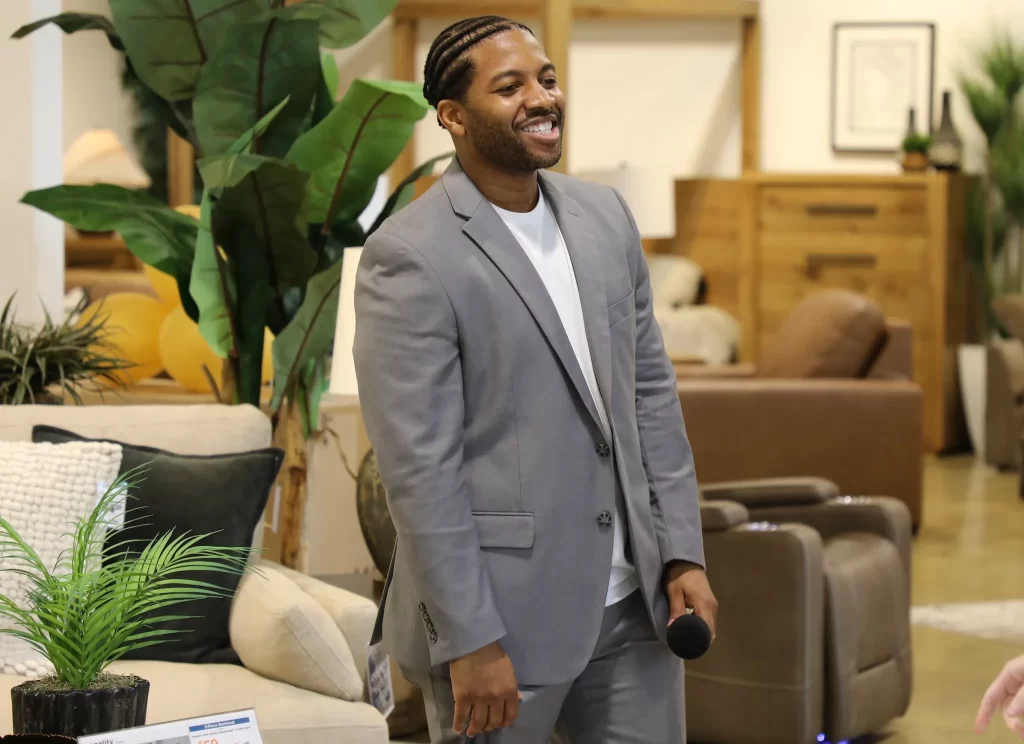
One of the most powerful and least-discussed drivers of conference attendee engagement is what I call social architecture — the intentional design of when, where, and how attendees connect with each other during the event. Engagement is not just about what happens on stage. It is about what happens in the room.
Attendees at a conference are there for the content, yes. But they are also there because of the people. The chance to connect with peers they only see at this event. The opportunity to build relationships with speakers or industry leaders they have been wanting to meet. The possibility of the unexpected conversation during a break that turns into a partnership or a project or a hire. These social moments are often what attendees remember most vividly — and they are deeply influenced by the environment in which they happen.
Music and entertainment directly shape the social environment. A networking break with the right music at the right volume creates an atmosphere where strangers feel comfortable starting conversations. The same break in silence creates social paralysis where people cluster with people they already know and interactions stay shallow. The music does not just fill space — it creates permission for social engagement.
When you design your conference with social architecture in mind — when you think about the physical placement of networking areas, the timing of breaks relative to session intensity, and the musical environment of every transition moment — conference attendee engagement improves not just during the entertainment moments but throughout the entire program.
Technology and Conference Attendee Engagement: What Works and What Backfires
Event technology companies have been selling conference attendee engagement solutions for years: live polling apps, gamification platforms, digital networking tools, virtual Q and A systems. Some of these work. Many of them backfire in ways that are not immediately obvious.
The most common backfire is the phone. Any technology that requires attendees to look at their phones during a session is a double-edged tool. Yes, they are interacting with the event content through the app. But they are also looking at a device that contains their email, their news feed, their social media, and every other distraction they brought to the conference with them. The app engagement lasts 30 seconds. The email they noticed while opening the app keeps their attention for the next four minutes.
The most effective conference attendee engagement technologies are the ones that create shared experiences rather than individual device interactions. Large-format live displays of audience response data, physical movement games that get people out of their chairs, shared challenges that happen in the room rather than on a screen. These technologies support engagement rather than competing with it.
The fundamental principle is that the best conference attendee engagement tools are the ones that bring people into the shared experience of being in the room together — not the ones that give them a more interesting reason to look at their phone.
Conference Attendee Engagement at Industry-Specific Events
Conference attendee engagement strategies need to be customized for the specific culture and demographic of each event. A legal industry conference has different engagement dynamics than a technology conference, which is different from a healthcare conference, which is different from a marketing and advertising conference. The audience norms around formality, participation, and entertainment vary significantly by industry and conference culture.
Understanding these norms before designing your engagement strategy is essential. An interactive gamification element that drives tremendous engagement at a marketing conference might fall completely flat at an audit and compliance conference. Music that energizes a startup sales organization might feel out of place at a professional association annual meeting for a more conservative industry.
This is why the planning conversation with your conference entertainment and engagement partner is so important. The right questions about your audience, your industry culture, and your past event experiences give an experienced partner the information they need to calibrate their approach. Generic engagement strategies applied without this calibration produce inconsistent results. Industry-specific, audience-specific engagement strategies produce rooms that stay alive.
For conference attendee engagement that is built around the specific needs of your event and your audience, contact No Stress Zone Entertainment. We have worked with conference organizers across industries to design and execute entertainment and engagement strategies that keep rooms energized from the opening session through the final event. Visit our conference services page to learn more about how we approach this work.
For more resources on planning your event, visit the Professional Convention Management Association, one of the leading organizations supporting event professionals planning conference experiences.