How to hire a corporate DJ is one of the most searched questions in the events space, and the reason nobody answers it well is because the operators who know the answer do not want to teach the buyer to ask harder questions.
I run these rooms for a living. Here is what actually matters when you are hiring a DJ that will not embarrass your brand on show day.
Decision path: Do I need one? → when to book → how to hire (this page) → switching DJs. Before you hire, read why Your Corporate Event DJ Matters more than you think.
Table of Contents
- 1. Have you worked this room, or a room like it?
- 2. What gear are you bringing?
- 3. Show me a reference from this quarter
- 4. How do you handle program changes?
- 5. What is your emcee coordination protocol?
- 6. Show me the contract language
- 7. What happens if you cannot make it?
Question 1: Have You Worked This Room, or a Room Like It?
The first thing to ask is whether they have worked your venue, or a room like it, and how they will scout it.
Every venue has its own acoustics, its own load in quirks, its own union relationships, and its own house rules. An operator who has never worked your venue is learning your venue on your dime. That is not what hiring should look like.
If they have not worked your venue, ask how they will scout it before the event. A real professional walks the room before load in. Anyone charging you for a corporate room without that walk through is not the right operator.
Venue familiarity helps. The operators who work the same venues repeatedly have relationships with the house audio team, the union stagehands, and the venue coordinator. That saves time on show day.
Question 2: What Gear Are You Bringing?
Question two is about the gear list. Not “professional sound.” Specifics. Make and model.
An operator who cannot give you a gear list on the intake call is sourcing from other vendors on your event day. That means potential last minute swaps, gear you have not vetted, and technical redundancy you cannot verify.
Hiring correctly means demanding the gear list in writing. Speakers, mixer, microphones, cables, and power distribution should all be listed. If the list changes closer to the event, you should be notified in writing, not surprised on show day.
Ask about backup gear too. What happens if the mixer fails at hour two of a three hour keynote? A professional has a backup on the truck. An amateur has a shrug and an apology.
Question 3: Show Me a Reference From This Quarter
Question three is the one operators dread the most. Recent references. Not testimonials from three years ago. Current clients from this quarter who will take your call.
Any operator delivering at your tier should have three current clients available for a reference call. If they cannot produce three current references in your industry, they are not currently delivering at your level. That answers the question by process of elimination.
The reference call should focus on two things. Did the operator show up on time and prepared, and did the operator adapt when something changed on the run of show. Both are common. Both are revealing.
An operator with recent references who avoids putting you on the call is hiding something. Trust the pattern. Move on to the next candidate.
Question 4: How Do You Handle Program Changes?
Question four is about run of show flexibility. Because programs change. Speakers run long. Keynotes get moved. Executives call audibles.
Ask the operator how they handle a 30 minute program shift 20 minutes before it happens. The answer tells you whether they are a technician or a partner.
A technician says they will play what the run of show says and cannot deviate. A partner says they will re cue the mood transitions, adjust the intro music timing, and coordinate with the emcee to bridge the gap. That is the DJ who protects the room.
The best operators build flexibility into their prep so program changes do not require re engineering the entire set. They arrive with contingency playlists, backup transitions, and pre planned pivot points.
Question 5: What Is Your Emcee Coordination Protocol?
Question five is often skipped and it is one of the most important. The DJ and the emcee are running the room together. If they do not coordinate, the room feels choppy.
Ask the operator how they meet the emcee before the event. When do they walk through cues together. How do they signal each other during the show. If the operator does not have a protocol answer, they are treating emcee coordination as improv.
Hiring a DJ who works well with an emcee means finding one who insists on a pre event coordination call. Not a hallway conversation 10 minutes before doors. A proper walk through where cues, transitions, and mood shifts get mapped.
The rooms that feel tight, that flow, that keep executive attention through content transitions, are the ones where the DJ and emcee are locked in from the pre show. That coordination is not optional.
Question 6: Show Me the Contract Language
Question six is about the paper. Send me your standard contract. If they cannot produce one in 24 hours, they are not running a business, they are running a hobby.
The contract should have five specific clauses. Backup gear obligation. Cancellation ladder scoped by weeks. Force majeure with weather and travel definitions. Client change window with clear notice requirements, and post event survey rights.
Any contract missing these five items is either being written by an amateur or an operator hoping you will not read the fine print. Hiring correctly means reading the fine print before you sign.
The best contracts also include a mutual liability limitation and clear payment terms with milestones. Deposit at booking, second payment 30 days out, balance on event day is a standard structure that protects both parties.
Question 7: What Happens If You Cannot Make It?
Question seven is the one nobody wants to ask. What happens if you get sick, or your flight is cancelled, or a family emergency comes up. Do you have a substitute network?
Here is my own answer, because No Stress Zone Entertainment is a single operator business: I keep a vetted backup host on standby for every booking, so a sick day or a cancelled flight does not leave your event without an operator.
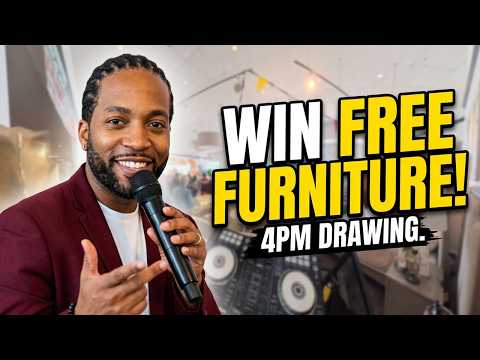
I have also been that backup. Regency Management Services hired me to host an Ashley Furniture grand opening on May 17, 2025, one week before the event, after their original host was double booked.
The right answer is a documented backup protocol. Two or three qualified substitute operators on standby. Contract language covering the substitute performance standard, and notification protocol tied to specific hours before the event.
Ask directly. Do not assume.
The Fastest Way to Filter Bad Operators
If you only have time for two questions, ask these two. Show me your gear list, and give me three current references.
Those two questions filter out most of the operators who cannot deliver at the corporate tier. The ones left are worth the deeper conversation.
Gear list transparency and current reference availability are the two hardest things to fake. Everything else is refinement on top of those two foundations.
Hiring a Conference Emcee
Most corporate conferences need a host on the mic as well as music. If you are hiring an emcee, or one operator for both roles, these are the extra steps that matter.
Define What You Actually Need
Before you contact a single vendor, get specific about the role. “Emcee” covers a wide range of jobs, and vague requests get vague, mismatched candidates.
- Host only: welcomes the room, runs transitions, introduces speakers
- Host and moderator: also runs live Q&A or panel discussions
- Host and program spine: manages a multi track agenda across the full event, not just the general session
- Tone: high energy and entertaining versus buttoned up and executive appropriate
Write this down before you start collecting quotes. It changes who you should even be talking to. If you are unsure whether you need an emcee, a moderator, or a speaker, this comparison breaks down the differences before you go further.
Request an Unedited Demo Reel
A polished highlight reel shows you their best five minutes, cut together from their best events. It tells you almost nothing about how they recover from a dead mic, a confused audience, or a schedule that just fell apart. Ask for raw, unedited footage of a full segment, ideally an opening or a transition sequence, not just a highlight cut. If they cannot produce any raw footage at all, that is worth noting. Once you know what to look for, the rest of the process moves fast, and getting it right the first time avoids a costly do over.
When to Hire a Specialist vs a Generalist
A general corporate host can competently run most standard business meetings. But specific formats reward specialists: bilingual programs need a host who is genuinely fluent, not conversational. Technical or medical conferences benefit from a host who understands the subject matter enough to introduce speakers accurately. Awards programs reward comedic timing and pacing that a straight business host may not have. Match the specialist to the format, not just the budget. Sales kickoffs in particular reward a host who has actually run one before, which is worth confirming directly during your first call. How to hire a conference emcee well means treating it like hiring a key vendor, not booking talent.
Real Event: The 8 Second Mic Save at The Alliance for Science East Coast Conference
I ran the evening program at the Diversity Alliance for Science (DA4S) East Coast Conference in Newark in 2025, about 300 attendees. At the Diversity Alliance for Science conference in Newark, the hotel microphone failed right before the raffles. I kept talking to the room without a mic, had my own wireless mic live in about eight seconds, and the show kept moving.
In most events this is 60 to 90 seconds of dead air. Attendees drift. Attention drops off a cliff. Speaker energy never fully recovers.
My own mic comes to every event, powered on and tested before doors open.
That save was not luck. It was the result of a load in habit I built after a prior post event debrief taught me what 90 seconds of dead air costs.
The same conference is where I had attendees dancing within the first 15 minutes, a year after their previous DJ lost the room. I break that story down in why your corporate event DJ matters more than you think.
Common Mistakes When Booking Corporate Entertainment
The most common hiring mistake is leading with budget. When you tell the operator the budget first, they scope backwards to fit that number. That means corners get cut you will only discover on show day.
The second most common mistake is booking based on price alone. The lowest bid is almost never the right answer. What looks like a savings during procurement becomes a cost when the room does not deliver.
The third mistake is booking too late. 90 days or more gets you input on the program itself; 60 to 90 days, the normal window, gets you full preparation; inside 60 days you get coverage of what is already set. Peak season Saturdays fill 4 to 6 months out. See the three booking windows.
The fourth mistake is skipping the venue walk. Even for events at venues the operator knows, a walk through 48 hours before is standard practice. Any operator who tells you they do not need to walk your specific room configuration is being lazy.
The fifth mistake is not aligning on run of show ownership. Who owns the cue sheet. Who calls audibles. Who has authority to pivot during the show. These need to be defined before load in day.
Hiring for a Multi Day Event
Multi day events change the hiring conversation. You need an operator who can sustain energy across three, five, or seven day programming without burning out.
Multi day events come down to stamina and planning, not headcount. I emceed and DJ’d the 9/11 Day meal pack on the Intrepid for four straight days with more than 6,000 volunteers, and every shift beat its goal count. Ask the vendor how they pace a multi day program: breaks between shifts, a backup plan for each day and who steps in if they get sick. A clear answer to that matters more than the size of the crew.
For related context on this decision, read convention DJ services multi day guide and executive event entertainment before you commit.
Red Flags in the First 10 Minutes of the Intake Call
The intake call tells you everything. If the operator opens with a canned pitch instead of asking about your event, they are treating your booking as a template fill. That template does not survive show day.
Watch for operators who dodge specifics. When you ask about a particular venue or scenario and they give a vague answer, they are hoping you will not ask a follow up. Ask the follow up. See what happens.
Any operator who talks over you during the intake will do the same during show day coordination. That is a communication pattern. It does not change once you sign the contract.
Operators who cannot articulate what makes a corporate room different from a bar are still primarily bar operators. Party skills do not automatically translate to corporate execution. The room dynamics, the client expectations, and the technical scope are all different.
Vetting the Vendor Beyond the Website
Websites are marketing collateral. They tell you what the vendor wants you to believe. Real vetting happens beyond the website.
Check their business registration. Confirm they carry general liability insurance at $1 million minimum and workers compensation if they have any staff. For the record, I carry $1,000,000 in general liability and $1,000,000 in professional liability insurance, and I send a certificate of insurance naming your venue and company as additional insured the same day you book. Ask for the certificate. Verify it is current, not expired.
Look at their equipment invoices if they will share them. A vendor who owns their gear runs at a different reliability level than one who rents everything last minute. Ownership means the gear gets maintained. Renters get whatever the rental house has left in stock.
Check their tax and legal standing with a simple state business search. Operators with dissolved LLCs, tax liens, or judgments are risk vectors for your event. That research takes 15 minutes and protects you from a five figure recovery cost.
Aligning on Success Metrics Before You Sign
Before you sign, get alignment on what success looks like. Attendee energy at closing. Dance floor engagement. Executive satisfaction. Session transition smoothness. Whatever your metric is, name it in writing.
Vendors who resist success metric alignment are protecting themselves from accountability. That is a signal. Real professionals want the metric because it validates their execution and builds the case for the next booking.
The metric conversation also surfaces expectation mismatches early. If you want the room dancing at close but the operator has zero dance track experience, better to find out during vetting than during the event.
Post event survey rights should include the metric agreed to. That way the survey validates or challenges the operator objectively. Not opinion. Data.
Timeline for Booking the Right Operator
Six months before your event, start building your shortlist. Ask peers, look at case studies from vendors in your industry, and check event industry directories. Do not rely on Google search alone. The best operators rank based on reputation, not SEO alone.
Four months out, start intake calls with your top three candidates. This gives you time to ask the seven questions properly, get gear lists in writing, and run reference calls without pressure.
Three months out, get contracts in hand from your finalists. Review the five contract clauses. Negotiate the deltas. Sign the one that meets scope, contract standard, and reference validation.
Sixty days out, schedule the venue walk through. Confirm gear list is still accurate. Send updated run of show. Get emcee coordination call on the calendar.
Thirty days out, review contingency scenarios. Weather backup. Program change protocol. Executive presence adjustments. The prep here is what makes show day feel calm.
Two weeks out, final gear check. Final walk through cue review. Emcee alignment call. Confirmation of load in time and venue contacts. Everyone should have the same version of the run of show.
What a Strong Proposal Should Include Before You Sign
Once you have narrowed the field to two or three operators who answered the seven questions well, the next signal is the proposal itself. A generic one page rate sheet emailed within minutes of your inquiry is a red flag disguised as fast service. A strong proposal references your event by name, names the actual room or venue, and breaks out exactly what is included: hours of coverage, a full equipment list, backup gear on site, proof of insurance, and a direct point of contact for the day of the event. If the proposal reads like it could be sent to any client for any event without a single detail changed, it probably has been.
Look closely at the payment schedule too. A structure that protects both sides typically includes a deposit to hold the date, a second payment closer to the event, and a final balance due at or near load in. Vague payment terms tend to precede vague performance on site. The same logic applies to cancellation and rescheduling language: a professional operator spells out in writing what happens if your event date moves, if the venue changes, or if the program runs long and pushes into overtime. That kind of clarity before you sign is often the clearest predictor of how smoothly the actual event day will go.
One more thing worth checking: does the proposal name a specific person as your point of contact, or does it route every question through a general inbox? Corporate events run on accountability. If nobody on the vendor side is willing to put their name on the run of show, that is worth asking about before you sign anything.
The Bottom Line on How to Hire a Corporate DJ
Hiring is not about finding the cheapest option. It is about finding the operator who will not embarrass your brand when the room shifts.
Ask the seven questions above. Filter out the ones who cannot answer. Then choose based on gear transparency, current references, and contract clarity. That is the shortcut to a DJ who will actually deliver.
The best operators welcome the seven questions. The amateurs get defensive. That defensiveness is your final signal.
Want to skip the vetting and work with an operator who already checks every box on this list? Also see corporate event DJ cost for pricing context and corporate emcee for hire if you need both.
Proof from the room: see every industry I have worked in, with proof.
Frequently Asked Questions
How is corporate DJ and emcee work different from party DJing?
Corporate work focuses on professionalism, preparation and coordination with the event planner and production team. I work from the run of show, manage music and announcement cues, introduce speakers, coordinate walk up music and adapt to schedule changes. I keep the music clean and workplace appropriate and read the room to match the audience and occasion. A corporate event represents the company’s brand, so I keep the program organized and transitions smooth. When additional production is needed, I partner with a professional AV company so clients can coordinate entertainment and AV through one team.
What’s the first question to ask when hiring a corporate DJ?
Whether they have worked your venue, or a room like it, and how they will scout it. Every venue has its own acoustics, load in quirks, union relationships, and house rules, so an operator who hasn’t worked it is learning on your dime.
If a corporate DJ hasn’t worked your venue, what should they do before the event?
Walk the room and scout it before load in. A real professional does this proactively; anyone charging for a corporate event without that walkthrough is a red flag on venue familiarity.