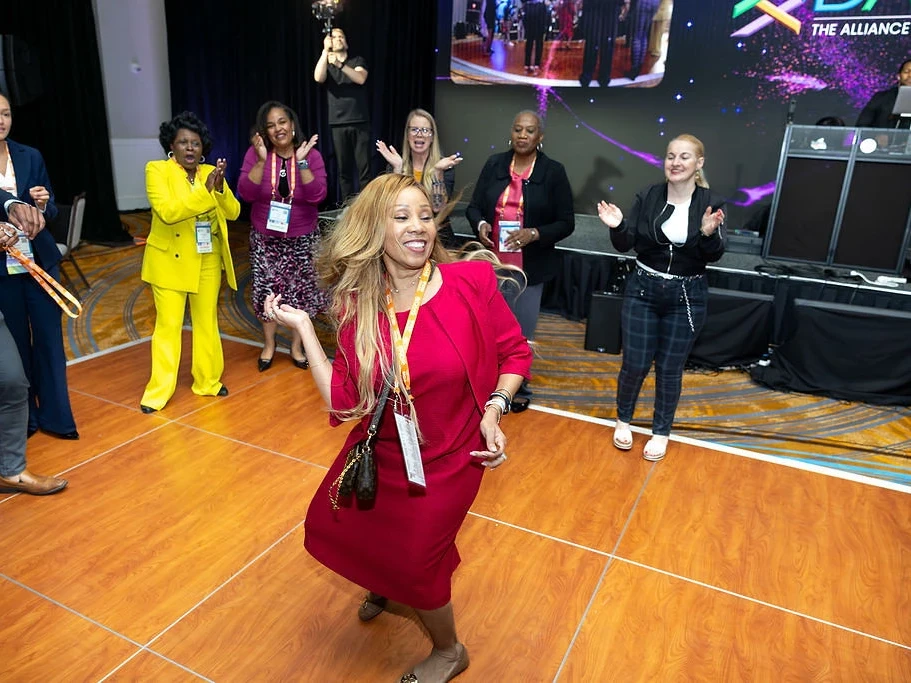
The year before we were hired, the Diversity Alliance for Science East Coast Conference had a corporate event DJ. On paper, the box was checked. In the room, the energy sat flat. So on our first planning call, the CEO and the corporate event planner weren’t asking about our song list. They were asking one question in different ways: will that happen again?
Within the first 15 minutes, people were dancing. At a corporate conference. Attendees pulled out their phones and filmed. The CEO came to the booth to tell us we were amazing and that they couldn’t wait to have us back. They meant it. We were rebooked for 2026, when the conference returned under its new name, The Alliance for Science East Coast Conference.
Same conference. Same kind of audience. Different corporate event DJ. That gap is what this post is about, because most event profs still budget music like a line item when it actually decides how the whole room feels.

“DJ Reese is great! Very professional and kept the crowd engaged. Would definitely work with again. Thank you for such a great set!”
Lizzy Mason, Google Review, October 2025

A Corporate Event DJ Is Not a Playlist
A playlist can’t see the room. It can’t notice that half the audience is between 30 and 60, that the attendees came from a dozen countries, or that the people standing around the edges haven’t nodded once in ten minutes.
At the DA4S conference, we moved across the 70s, 80s, 90s and 2000s: yacht rock, classic rock, funk, soul, pop, retro, reggaeton, Bollywood and salsa. That range looks random on paper. In the room, it’s coverage. Within a few songs, every person in a diverse, multigenerational crowd hears something from their own life. That is audience engagement you can’t download.
Our preparation starts before the event. We ask the event contact exactly who will be in the room: ages, roles, cultures, what the day is for. Then at the booth we watch faces, heads nodding, who is moving and who is standing still, and adjust in real time before a dip becomes a problem.
“His ability to read the crowd made our large corporate event a huge success.”
Kristi Curcio Nolan, Fox Corporation
Your Event Team Doesn’t Always Know Its Room
We overprepare for one reason: event teams don’t always know their room. Not because they’re bad at their jobs, but because a brief is written weeks before the people actually walk in.
At a Danone North America event with Matt James at the Public Hotel in NYC, the brief was afro house only. Within the set, the floor told a different story. We were getting looks that said one thing: what is he playing? Attendees started asking for different music.
We didn’t override the planner, and we didn’t keep playing into a dying room. We walked over and asked whether it was okay to add some pop hits. She said yes. We moved into familiar pop, the energy came back, and an attendee came up to thank us for switching the music up.
The planner had no issues. She rebooked us for business events, and then for her personal events too.
That’s the real skill. Reading the room is half of it. Bringing what you see back to the planner, fast and without drama, is the other half. A DJ who silently ignores your brief is a liability. So is a DJ who follows it straight into a dead room.


Planners notice the difference. Joy Weir, Marketing Manager at Regency Marketing, which runs Ashley Furniture’s promotional events, put it this way in her Google review:
“Often we find DJs tend to want to put their own spin on things, but not what we’re looking for. After explaining the type of music and the overall vibe of the day, DJ Reese was able to deliver just what we needed.”
Joy Weir, Marketing Manager, Regency Marketing
The Moments Nobody Notices Until They Go Wrong
Most of a corporate conference isn’t a dance floor. It’s walk ins, transitions, award walkups and the minutes nobody planned for. Those are the moments a corporate event planner never notices when they go right, and never forgets when they go wrong.
Walk In Music Sets the Tone Before Anyone Speaks
At the FTF News Award Show at the Hard Rock Hotel in NYC, the CEO wanted her walk in to be high energy. She wanted to feel like a boss walking onto that stage. In a brief meeting, we suggested Demi Lovato’s “Confident.” Her answer was immediate: that’s it.

No long playlist review. No back and forth. One conversation, one song that matched the person and the moment. That’s what preparation looks like when it’s done right: effortless from the outside.
“We hired DJ Reese to DJ our Awards event in NYC, and he truly was the best corporate DJ we’ve ever worked with. Professional, responsive, easy to communicate with. He helped take our event up a notch, our clients loved the songs he chose for their walk up music.”
Maureen Lowe, Founder, President and Editor in Chief, FTF News

When a Speaker Runs Late
Dead air is where corporate events leak energy. Phones come out, side conversations start, people drift toward the hallway. A good corporate event DJ treats that gap as part of the program.
We play fun, instantly recognizable music and turn it into a crowd moment. Drop something like “Footloose” and ask the room what they were doing when they first heard this song. Strangers turn to each other and start talking. By the time the speaker walks out, the room is warmer than it would have been if the schedule had run on time.
This is where DJ and host meet. The music holds the room. The mic gives the room something to do.
Five In Room Mistakes That Quietly Kill a Corporate Conference
- Not reading the room. The DA4S team learned this the year before we arrived. The music played. Nobody moved.
- Volume that fights the conversation. During networking, people came to talk. Music should lift the room, not make attendees shout over it.
- Bad transitions. Nobody compliments a clean transition. Everyone notices a jarring one, especially in front of leadership.
- Ignoring what the planner wants. The opposite of the Danone story. The fix is never silence or defiance. It’s a quick conversation.
- Explicit or inappropriate music. One wrong lyric in front of executives becomes the only thing anyone remembers about the night.
Does a Corporate Event DJ Actually Move Business Numbers?
Honest answer: conferences are hard to measure. What we hear most is that the music made someone’s night, and that doesn’t show up on a spreadsheet.
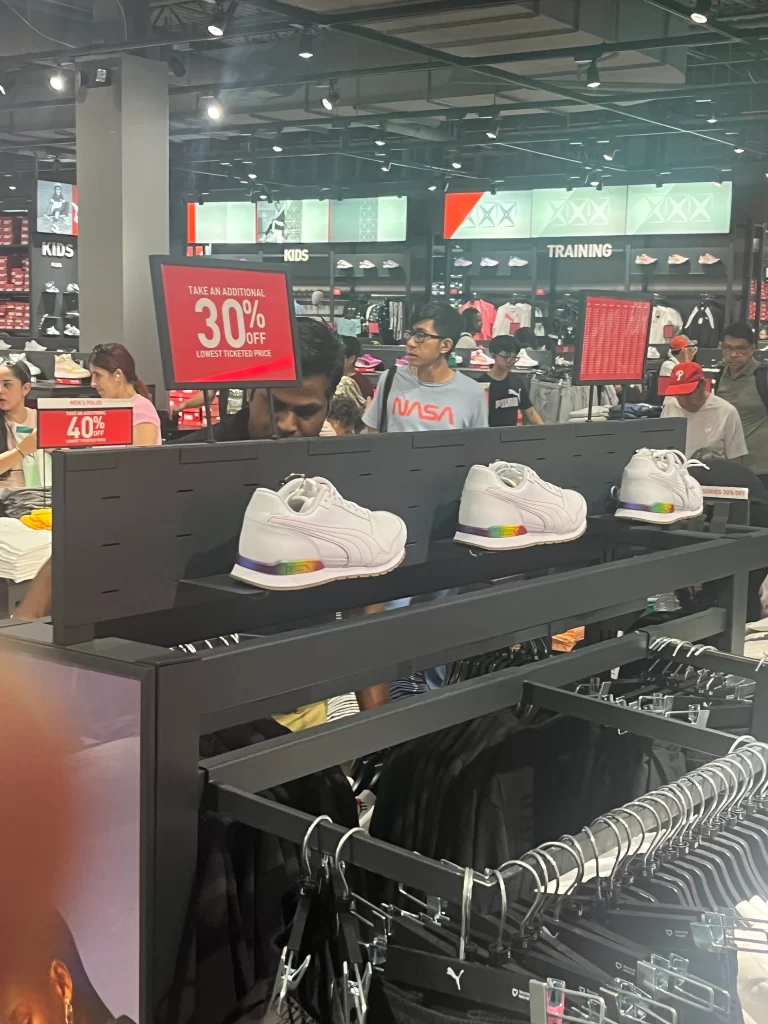
Brand activations are different, because the revenue is counted. At the PUMA Outlet at the Mills at Jersey Gardens, a single retail activation generated $70,000 in sales in three hours and beat its daily goal for the first time. That one booking turned into a recurring engagement over multiple months. Across our Lidl US grand openings, people stayed in the stores longer.
The principle is the same at a corporate conference. When the room feels good, attention stays in the room: people return from breaks, stay for the reception and remember the brand that hosted them. That’s why we treat entertainment as experiential design, not background noise.
It’s also why our record matters: 121 five star Google reviews, and not one below five.
When you’re ready to compare options, use our guide to the seven questions to ask when hiring a corporate DJ and emcee. It covers the hiring side: references, gear, contracts and backup plans.
The Reframe
Entertainment exists to serve the business goal, the event objective and the audience. Not the other way around.
The right corporate event DJ works like an experience designer at the booth: preparing for the room you described, reading the room that actually shows up, and closing the gap between them before anyone feels it. When it’s done right, nobody talks about the DJ. They talk about how the day felt.
If your next corporate conference, gala or awards night can’t afford a flat room, see how we run conference and summit entertainment, or meet our corporate event emcee service.
Frequently Asked Questions
What does a corporate event DJ do at a conference?
Far more than play music during the reception. A corporate event DJ sets the tone for walk ins, scores speaker and award walkups, fills delays, manages volume during networking and builds energy for the moments that matter most.
Do I need a DJ if I already have an MC?
They do different jobs. The MC fills moments with words. The DJ fills them so nobody notices there was a gap. When one person can do both, your run of show gets simpler and the energy stays consistent.
Should I give the DJ a playlist?
Share your must plays, your do not plays and anything tied to your brand. A strong corporate event DJ should build the rest from your audience details and adjust live.
What music works for a diverse, multigenerational corporate audience?
Range. Moving across decades and genres, from classic rock and soul to pop, reggaeton, Bollywood and salsa, gives every guest something familiar within a few songs.
What if the planner’s music brief doesn’t fit the crowd?
The DJ should flag it to the planner right away and suggest a change, not ignore the brief or play it into an empty floor.
How loud should music be during networking?
Low enough that attendees can talk without raising their voices. Volume should rise only when the program calls for energy.
What happens if a speaker runs late?
The DJ keeps the room engaged with familiar music and simple crowd moments, so the delay feels like part of the event instead of dead time.
Can music really affect event results?
In brand activations, yes, measurably. At one PUMA activation, the store generated $70,000 in three hours and beat its daily goal for the first time.
Do you travel for corporate events?
Yes. We work nationwide, including New York City, Philadelphia, Washington DC, Atlanta and Los Angeles.
About the author: DJ Reese is the founder of No Stress Zone Entertainment, an event experience designer, corporate event MC and audience engagement specialist. A former radio personality on Z100 and SiriusXM, he has hosted and DJed live events for Lidl US, PUMA, adidas, Fox Corporation and Marriott. Browse the full case study library.