Booking a corporate conference emcee is nothing like booking a wedding DJ. A corporate conference isn’t a wedding, and it isn’t a nightclub. When the Alliance for Science needed a live emcee and DJ for their East Coast Conference — a 500+ person gathering of pharmaceutical executives, healthcare leaders, and Life Sciences suppliers at the Newark Liberty International Airport Marriott — they weren’t looking for someone to blast Top 40 and hope for the best. They needed a corporate conference emcee who could read a room of decision-makers, hit a run-of-show to the minute, and keep 500 people engaged after a full day of breakout sessions and roundtables.
DJ Reese covered live emcee and DJ duties for the Alliance for Science’s East Coast Conference in 2025 — then got invited back for a second year in 2026. Here’s what that job actually looks like, why a conference emcee is a different hire than a party DJ, and what it takes to get hired back.
The Event: Alliance for Science’s East Coast Conference

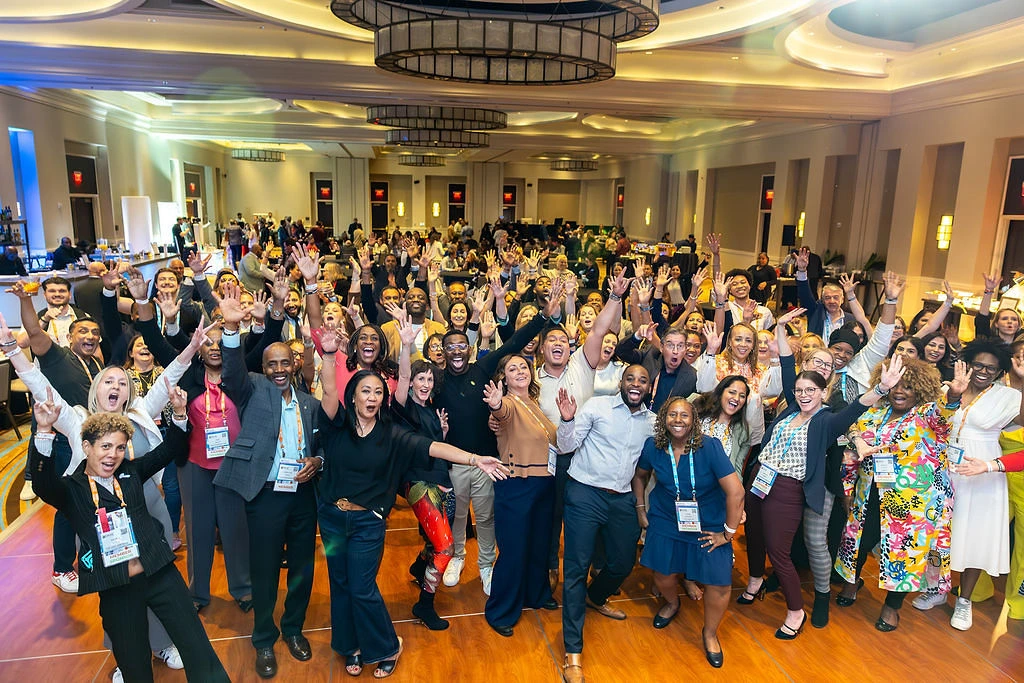
The Alliance for Science is a Life Sciences nonprofit that’s been running its East Coast Conference for close to two decades, connecting suppliers with pharmaceutical and healthcare corporations for real business relationships — not just badge-scanning. The conference caps attendance to keep the room intimate for networking, and 2025 and 2026 both drew 500+ attendees: pharma executives, CEOs of clinical and scientific enterprises, and Life Sciences vendors, all in business casual, all there to do real business.
The entertainment sits inside the evening networking and dinner reception — the part of the day where 500 people who’ve been in sessions since 8 a.m. either check out early or lean into the room. That’s the moment a conference emcee and DJ actually earns the booking, and it’s exactly where a generalist wedding DJ tends to misjudge the room. A corporate conference emcee has to understand that the audience just spent a full day taking notes on supply chain compliance and clinical trial funding — they don’t want a party, they want a well-run close to a long day that still feels worth attending.
The Corporate Conference Emcee’s Role: DJ Duties and the Raffle Segment
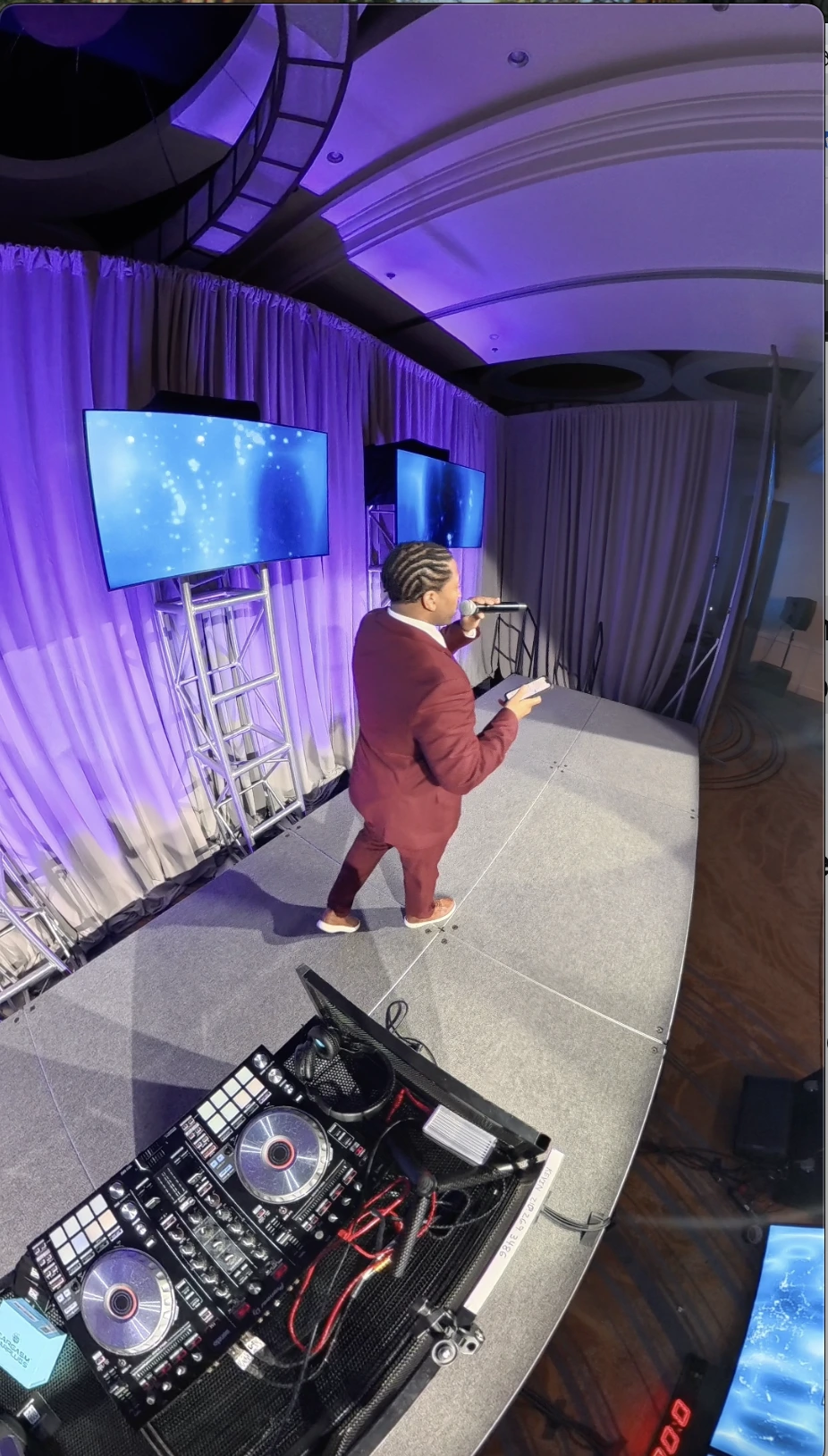
This wasn’t a “press play and stand behind the booth” gig. The role covered:
- Live emceeing — announcements, segment introductions, and transitions between the reception’s moving parts
- DJing — music calibrated to a networking room full of executives, not a dance floor
- Running the raffle segment — building anticipation, pacing the reveals, and keeping the segment tight so it added energy instead of dragging the room down
At an event like this, being on the mic matters as much as being on the decks. The emcee is functionally part of the run-of-show team, cueing transitions in real time with the event coordinator rather than working off a static timeline. A conference emcee who can’t adapt in real time — because a keynote ran long, or a sponsor wants extra stage time, or the caterer needs ten more minutes before dessert — is a liability, not an asset, on a night like this.
A Corporate Conference Emcee’s Run-of-Show: What the Job Looks Like Hour by Hour
People outside the events industry tend to picture “DJ and emcee” as one continuous block of music. In practice, a corporate conference emcee’s evening breaks into distinct phases, each with a different job:
- Doors and cocktail hour: Low-volume, conversation-friendly music. The conference emcee stays largely invisible here — the goal is ambiance, not attention. This is also when the emcee confirms last-minute changes with the coordinator: raffle prize order, any speaker additions, timing shifts from the day’s sessions running over.
- Welcome and room settle: The first live mic moment. A corporate conference emcee has to shift the room’s energy from “cocktail chatter” to “pay attention” without sounding like a nightclub host — a different tone than a wedding welcome or a club shoutout.
- Dinner service: Background music returns, but the emcee stays on standby for any sponsor or award announcements that need to land between courses.
- The raffle segment: The highest-energy moment of the night, and the one place a corporate conference emcee is allowed to actually build excitement — pacing reveals, reading names, keeping the room engaged without letting it run long.
- Closing and networking wind-down: Music comes back up slightly as the formal program ends, giving people permission to keep networking or head out, depending on their next morning’s schedule.
None of this is guesswork if the conference emcee has done it before. It’s the difference between an event that feels produced and one that feels like it’s being figured out live.
Why Corporate Conference Emceeing Isn’t the Same Skill as Wedding or Club DJing
This is the part most people planning a corporate conference don’t think about until it’s too late: a conference crowd behaves nothing like a wedding reception or a club floor, and the entertainment has to match. A corporate conference emcee has to operate by a completely different rulebook.
A few things that change:
- The room is reading you differently. Executives at a networking reception aren’t there to dance — they’re there to talk business. The job of a conference emcee is to support that energy, not compete with it.
- Timing is non-negotiable. Speakers, breakout rooms, and dinner service all run on a schedule. A conference emcee has to hit cues to the minute, not “whenever feels right.”
- Tone has to match the audience. A 500-person Life Sciences conference full of pharmaceutical and healthcare leaders calls for a different register than a birthday party — professional first, energetic second.
- Segments need structure. A raffle at a conference isn’t a wedding bouquet toss. It needs pacing that respects people’s time while still building a moment.
- Sponsors and stakeholders are watching. A wedding DJ answers to the couple. A corporate conference emcee answers to an event coordinator, a marketing team, and sometimes a board — all of whom have opinions about how the brand should sound on stage.
This is the difference between hiring “a DJ” and hiring a corporate conference emcee who has actually run a conference floor before.
What Pharma and Life Sciences Conferences Specifically Need From a Conference Emcee
Not every corporate conference emcee is a fit for every industry. A tech sales kickoff wants high energy and big personality. A Life Sciences or pharmaceutical conference — like the Alliance for Science’s East Coast Conference — wants something more restrained but still confident.
Specific to this audience, a corporate conference emcee needs to:
- Respect regulatory-adjacent professionalism. Pharma and clinical executives operate in a highly regulated industry. A conference emcee who leans too casual or too “hype man” reads as out of step with the room.
- Understand the business context. Knowing that the room is full of “movers and shakers” in healthcare and clinical research — and framing announcements accordingly — makes a corporate conference emcee sound informed rather than generic.
- Handle a business-casual, not black-tie, dress code. The Alliance for Science’s conference famously asks attendees to wear their best sneakers — a detail a corporate conference emcee should reflect in tone: professional, approachable, not stiff.
- Celebrate wins the way this industry celebrates them. This conference exists to celebrate suppliers who’ve won contracts. A conference emcee needs to frame the raffle and any recognition moments with that spirit of business achievement, not just party excitement.
Corporate Conference Emcee vs. Keynote Speaker vs. Moderator: Where the Role Fits
Event planners sometimes lump every person who holds a microphone into one category. A corporate conference emcee, a keynote speaker, and a panel moderator do three very different jobs, and confusing them leads to booking mistakes.
- A keynote speaker delivers prepared content on a specific topic — leadership, industry trends, a case study — usually for 20 to 60 minutes, and then steps off stage.
- A panel moderator guides a structured discussion among multiple speakers, asking questions and managing time within a single session.
- A conference emcee owns the entire event’s flow from start to finish — welcoming the room, introducing other speakers, running transitions, managing energy, and in cases like this one, also serving as the DJ.
A corporate conference emcee is the only one of the three who’s on the hook for how the whole event feels, not just their own segment. That’s why the role requires someone who can read a room in real time rather than simply deliver prepared remarks.
Common Mistakes Companies Make When Hiring a Corporate Conference Emcee
After running the room for hundreds of corporate events, the same booking mistakes show up again and again:
- Treating the emcee search like a wedding vendor search. Wedding entertainment sites and marketplaces are optimized for a completely different buyer. A conference emcee should be evaluated on conference experience specifically, not overall event count.
- Not sharing the agenda in advance. A corporate conference emcee can’t hit cues to the minute if they don’t know what’s coming. The agenda should be shared weeks out, not the morning of.
- Assuming DJ and emcee are interchangeable roles that anyone can double up on. Plenty of DJs can play music. Far fewer can hold a room’s attention on the mic for a live announcement. Ask for examples of both skills specifically.
- Skipping the pre-event call. A short call between the corporate conference emcee and the event coordinator resolves 90% of day-of surprises before they happen.
- Underestimating how different industries need different tones. What works for a sales kickoff will misfire at a pharma or Life Sciences event, and vice versa. A conference emcee should ask about your industry and audience before your playlist.
The Result
The Alliance for Science invited DJ Reese back for a second consecutive year — the clearest signal that the room, the pacing, and the energy landed the way it needed to. Here’s what the event’s coordinator said afterward:
“DJ Reese is great! Very professional and kept the crowd engaged. Would definitely work with again. Thank you for such a great set!”
— Lizzy Mason, Event Coordinator, Alliance for Science
Getting invited back is the real scorecard for a corporate conference emcee. Anyone can have one good night. A second booking means the corporate conference emcee understood the room, the industry, and the brand well enough that the organization didn’t want to gamble on someone new.
Planning a Conference in NJ, NYC, Philadelphia, or DC? What to Look For
If you’re hiring a conference emcee for an event in the mid-Atlantic corridor, the questions to ask are different from what you’d ask a wedding DJ:
- Have they actually run a corporate conference before — not just corporate parties, but the specific format of breakout sessions, keynote transitions, and networking receptions?
- Can they emcee, not just DJ? Conferences need someone who can hold a mic and manage a room, not just queue up music.
- Do they work off a run-of-show document? If they’re not asking for one, that’s a red flag.
- Do they understand the audience? A pharma executive crowd, a sales kickoff, and an association convention all need different energy — someone who asks about your attendees before your playlist is doing it right.
Each mid-Atlantic market has its own flavor, too. A corporate conference emcee working Newark or the broader New Jersey market needs to be comfortable with the airport-hotel conference circuit — venues like the Newark Liberty Marriott that host national associations precisely because they’re easy to fly into. In New York City, a corporate conference emcee is often working tighter ballroom footprints and tighter timelines, since Manhattan venues charge by the hour in ways suburban NJ venues don’t. Philadelphia’s conference market leans heavily on medical, pharmaceutical, and higher-education institutions — a natural overlap with the Life Sciences work described above. And in DC, a conference emcee frequently works around association and government-adjacent audiences, where tone and messaging discipline matter even more than usual.
For more on planning the entertainment side of a conference, see how to hire a conference emcee, explore corporate conference theme ideas, or check out interactive conference ideas that keep a room engaged between sessions.
What to Send Your Entertainment Team Before the Event
The best results come from planners who treat the entertainment team as a working part of the production, not a last-minute add-on booked off a vendor directory. A short list of things worth sending ahead of time makes a real difference on the night:
- The full agenda, with real times. Not “reception starts around 6” — the actual schedule, including when speakers are likely to run long, so transitions can be planned instead of improvised.
- A sponsor and VIP list. Anyone who needs a shout-out, a thank-you, or a specific pronunciation of their name should be flagged in advance, not spelled out on a sticky note two minutes before showtime.
- Brand or tone guidelines, if you have them. A pharma company with strict messaging standards should say so. It shapes how announcements get phrased.
- AV and room details. Ceiling height, power access near the DJ setup, house sound system compatibility, and whether there’s a stage or just a floor mic all change how the night gets set up.
- Who’s the point of contact during the event. One person, reachable by phone or radio, who can make real-time calls if the schedule shifts.
None of this is complicated, but skipping it is the single biggest reason events feel disjointed. The organizations that get invited back — the way the Alliance for Science brought DJ Reese back for a second year — tend to be the ones on both sides of the mic who treat this kind of prep as standard practice rather than optional.
FAQ
What’s the difference between a corporate conference emcee and a DJ?
A DJ handles the music. An emcee handles the room — announcements, transitions, and keeping the event on schedule. Larger conferences often need both, and having one person cover both roles (as DJ Reese did for the Alliance for Science) keeps the run-of-show tighter since there’s a single point of coordination instead of two vendors working off separate cues.
How much does it cost to hire a corporate conference emcee and DJ?
Pricing depends on event size, duration, and whether you need live emceeing in addition to DJ services. Conferences in the 300-600+ attendee range with a full evening reception and multiple segments (like a raffle) typically fall at the higher end of corporate event pricing. Use the pricing calculator for an estimate based on your event.
Can a conference emcee also handle DJ duties for a 500-person event?
Yes, provided they have real experience with conference-scale events. The advantage is coordination — one person managing both music and mic means transitions happen on one person’s timing instead of being relayed between two vendors.
Do you travel outside New Jersey for conferences?
Yes. Newark’s East Coast Conference sits inside a broader mid-Atlantic focus that includes New York City, Philadelphia, and Washington, DC — markets where convention-scale corporate work happens regularly, and where demand for an experienced corporate conference emcee is consistently high.
How far in advance should I book a corporate conference emcee?
For conferences in the 300+ attendee range, 3-6 months out is ideal, especially if the date falls during peak conference season (spring and fall). That gives time to review the agenda, understand session timing, and build a real run-of-show together instead of winging it day-of.
What should I ask a corporate conference emcee before booking them?
Ask about conference-specific experience (not just weddings or club work), whether they’ll request your agenda in advance, how they’ve handled industry-specific tone in the past, and whether they can provide references from past corporate clients — ideally repeat bookings, which is the strongest signal a corporate conference emcee actually delivers.
Does a corporate conference emcee need to know our industry?
Not intimately, but a good corporate conference emcee should ask enough questions to understand the audience’s expectations. A pharma and Life Sciences crowd, a sales organization, and a nonprofit association all respond to different tones, and an emcee who asks about that in advance is far more likely to get it right on the night.
Planning a conference and need entertainment that can handle the room, not just the playlist? Get in touch or check pricing for your event.