You can book the venue, print the agenda, and order the food, and still watch half the room check their phones through the keynote. That’s not bad luck. Low employee participation in corporate events is almost always a design problem, not a people problem, and this guide breaks down why employees disengage and the specific moves that fix it, from how you open the room to how you follow up once everyone has gone home.
Table of Contents
- Why Employee Participation in Corporate Events Drops in the First Place
- Strategy 1: Explain the ‘Why’ Before the Event, Not During It
- Strategy 2: Build the Agenda Around the Audience, Not the Podium
- Strategy 3: Design In Interactivity, Don’t Bolt It On
- Strategy 4: Use Live Entertainment as a Participation Tool, Not Just a Break
- Strategy 5: Incentivize Without Making It Feel Like a Bribe
- Strategy 6: Make Leadership Visibly Participate, Not Just Present
- Strategy 7: Fix the Logistics That Quietly Kill Energy
- Strategy 8: Close the Loop After the Event
- What This Looks Like in Practice
- How No Stress Zone Entertainment Builds Participation Into Every Program
- FAQ: Employee Participation in Corporate Events
- Planning Checklist for Higher Employee Participation in Corporate Events
- Budgeting for Participation, Not Just Production
- Employee Participation in Corporate Events for Hybrid and Remote Attendees
- Common Mistakes That Undermine Employee Participation in Corporate Events
- The Long Term Payoff of Getting This Right
- How This Plays Out by Industry
- A Simple Way to Start Small
- What to Watch in the First 20 Minutes
- Reading the Room Mid Event
Why Employee Participation in Corporate Events Drops in the First Place
Before you can fix employee participation in corporate events, you need to know what’s actually killing it. In our experience running hundreds of corporate programs, the same five culprits show up over and over.
1. Nobody explained why the event matters. If employees are told to show up without understanding what’s in it for them or the company, participation drops immediately. People show up physically and check out mentally.
2. The agenda is built for leadership, not for the room. A lot of corporate events are designed around what executives want to say, not what the audience wants to experience. That imbalance is one of the fastest ways to tank it.
3. There’s nothing to actually do. Passive sitting for 90 minutes straight, even with a great speaker, is not participation. It’s attendance. Real participation requires built in moments of action: voting, moving, talking, competing, creating.
4. Timing and logistics work against people. Bad scheduling, uncomfortable rooms, no food until 2pm, or events stacked on top of a heavy deadline week will quietly kill enthusiasm no matter how good the content is.
5. There’s no follow through. When employees give feedback or energy at an event and never hear about it again, they learn that participating doesn’t matter. That lesson sticks, and it shows up as apathy at the next event.
This isn’t just anecdotal. Gallup’s ongoing workplace research consistently finds that disengagement is a structural, fixable problem, not a personality trait of the workforce. The same holds here.
Strategy 1: Explain the ‘Why’ Before the Event, Not During It
If you want stronger employee participation in corporate events, the work starts before the doors open. Send a short, honest note from leadership explaining what the event is for and why it matters to the people attending, not just the company. “We’re gathering to align on Q3 goals” gets a shrug. “We’re gathering because the last two quarters were rough and we want your input on what’s actually broken” gets people leaning in.
Pre event communication is one of the most overlooked levers for it. Even a two line email from a direct manager, rather than a company wide blast from HR, dramatically changes how people show up.
Strategy 2: Build the Agenda Around the Audience, Not the Podium
Every agenda item should answer one question: what does the audience get from this? If a segment exists purely to let an executive check a box, cut it or shrink it. Protecting it means being willing to trim leadership airtime in favor of interactive segments, breakout discussions, and audience driven moments.
A good rule: no single passive segment should run longer than 12 to 15 minutes without some kind of interaction, whether that’s a live poll, a table discussion, a Q&A pause, or a physical break. Attention spans in a room of 200 people are not the same as attention spans in a boardroom of eight.
Strategy 3: Design In Interactivity, Don’t Bolt It On
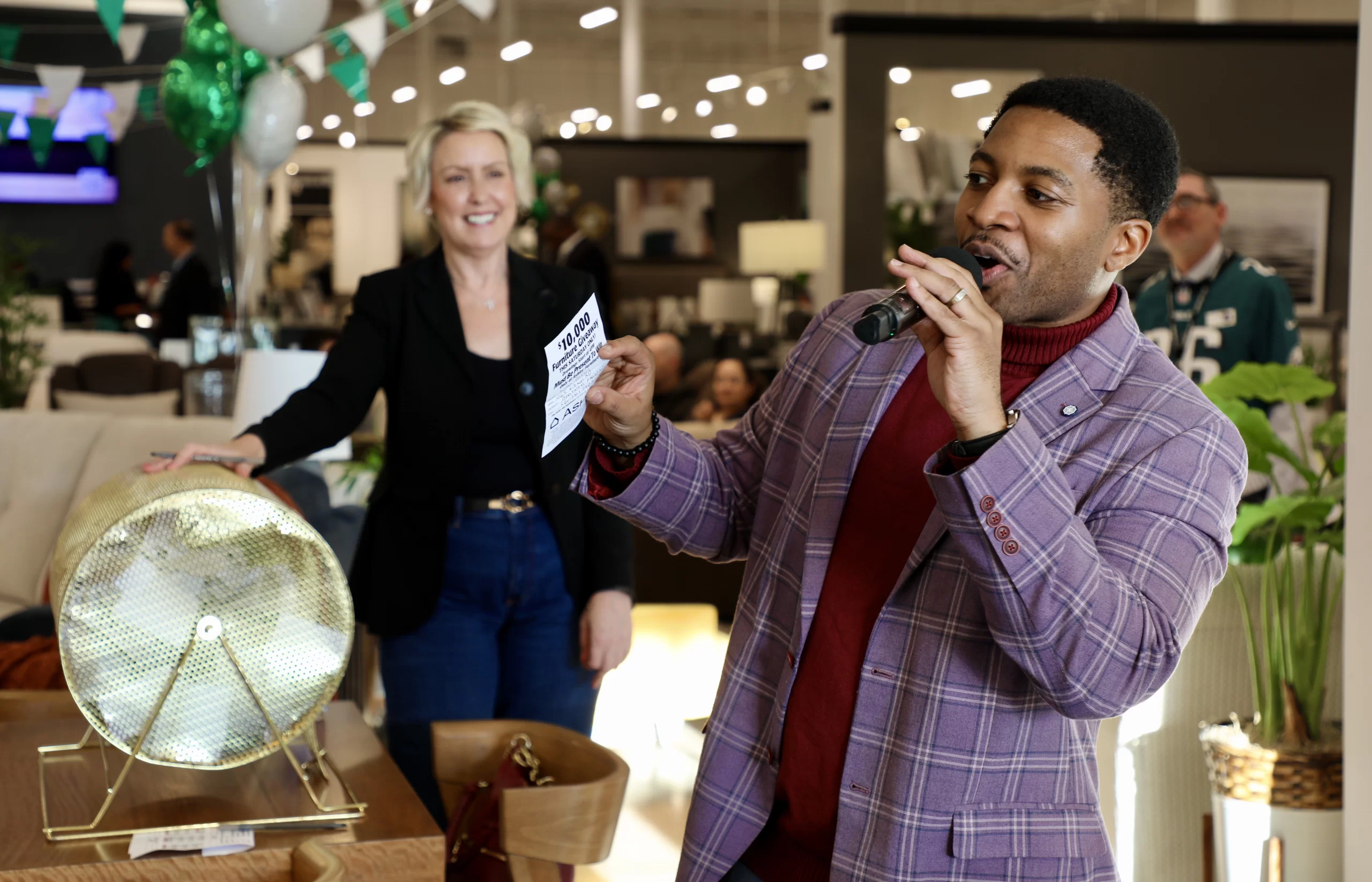
The events with the highest employee participation in corporate events aren’t the ones with the biggest budget. They’re the ones where interactivity is baked into the structure from the start, not added as an afterthought five minutes before doors open.
This can look like live trivia between segments, team based challenges tied to company goals, real time polling displayed on the main screen, or interactive booths employees can visit during breaks. The common thread is that people are doing something, not just watching something. That distinction is the entire ballgame.
Strategy 4: Use Live Entertainment as a Participation Tool, Not Just a Break

This is where most planners leave value on the table. A skilled emcee or DJ isn’t just filling dead air between speakers. Done right, live entertainment is one of the most reliable tools for driving it, because it gives people permission to loosen up, respond, and engage without feeling like they’re “on.”
A good emcee reads the room and adjusts energy in real time, calling out departments, running light competitive segments, or opening the floor for shoutouts. That kind of live, responsive programming does more for it than another slide deck ever will. If you’re planning an event where audience energy matters, our corporate event DJ and MC services page breaks down exactly how we build that into a program.
Strategy 5: Incentivize Without Making It Feel Like a Bribe
Prizes and giveaways can boost employee participation in corporate events, but only if they’re tied to something people actually want to do, not just show up for. A raffle ticket for attendance doesn’t drive participation, it drives attendance, which is a different problem. Tie incentives to actual engagement: answering a poll, contributing an idea in a breakout, or participating in a team challenge.
Strategy 6: Make Leadership Visibly Participate, Not Just Present
Employees take their cues from leadership. If executives are on their phones in the front row, the rest of the room will mirror that energy. Leadership needs to be seen doing the same things they’re asking employees to do: answering polls, joining breakout tables, competing in team challenges. Visible leadership participation is one of the fastest ways to raise the participation ceiling for everyone else in the room.
Strategy 7: Fix the Logistics That Quietly Kill Energy
Room temperature, seating that faces away from the action, food served too late, and schedules that ignore basic human needs are all silent killers of it. None of these show up on a post event survey as “the room was too cold,” but they show up as low energy, early exits, and phones out. Walk the room from an attendee’s perspective before finalizing any run of show.
Strategy 8: Close the Loop After the Event
If you collected input, votes, or ideas during the event, follow up. Send a short recap that shows what was said and what’s happening as a result. This single step does more for long term participation than almost anything else on this list, because it proves to employees that showing up and engaging actually changes something.
What This Looks Like in Practice
We’ve seen this play out directly. On the case studies page, you can see how programs built around real interaction, from live music cues to on the spot audience shoutouts, consistently outperform passive, presentation only formats. The pattern holds across industries: tech launches, sales kickoffs, healthcare conferences, and retail activations all respond to the same fundamentals.
How No Stress Zone Entertainment Builds Participation Into Every Program
As a corporate event DJ and MC team, we build participation into the run of show itself, not as an afterthought. That means coordinating with planners on timing, reading the room live, and creating moments where the audience is doing something rather than watching something. If you’re planning a sales kickoff, a conference, or a company wide gathering and want the room actually engaged instead of politely quiet, that’s the exact problem we solve.
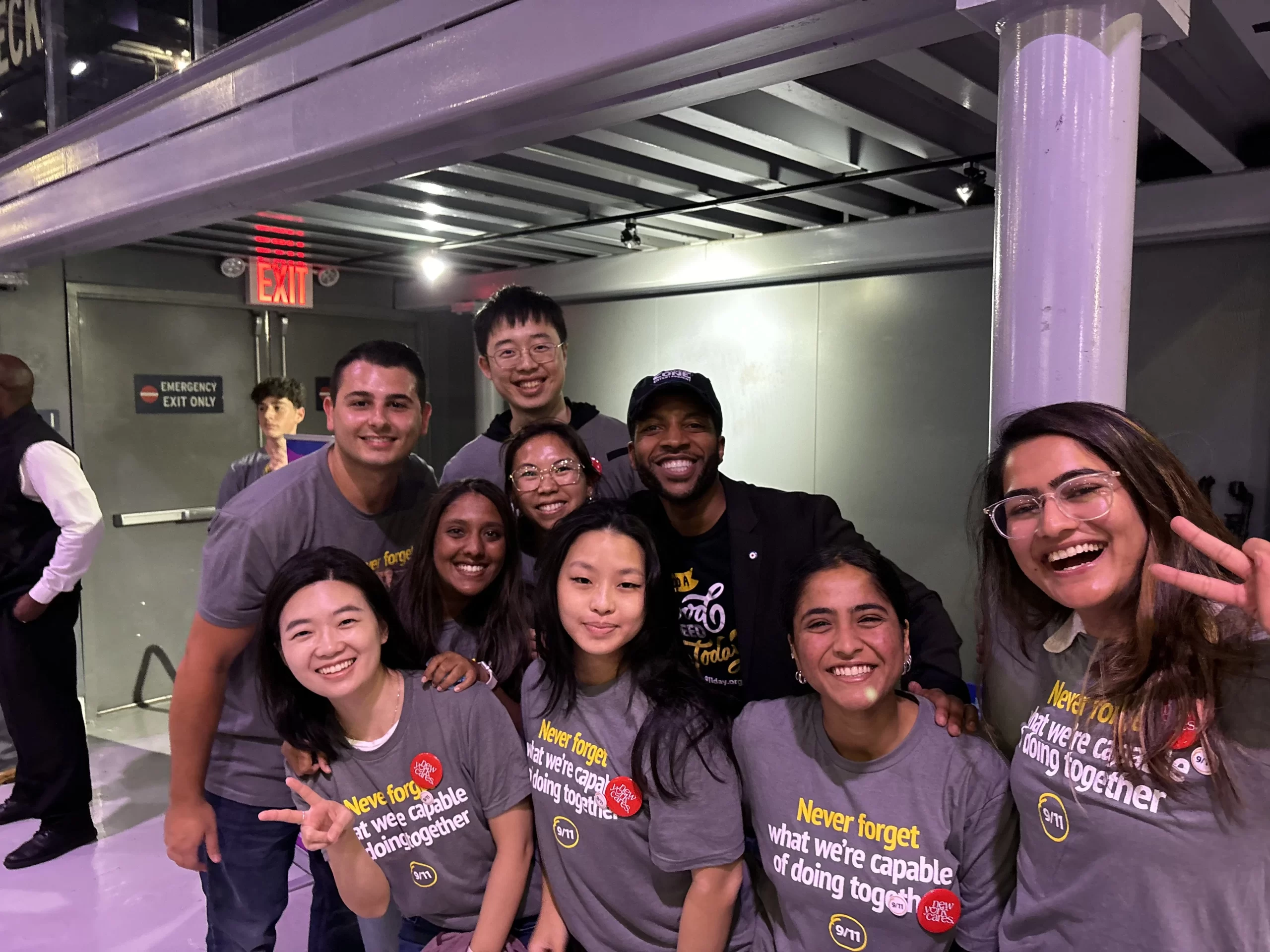
Proof from the room: see how we hosted 45 Johnson & Johnson volunteers through a first aid kit build.
FAQ: Employee Participation in Corporate Events
How do you increase employee participation in corporate events?
Explain why the event matters before it happens, build the agenda around the audience instead of the podium, design in real interactivity like polls and team challenges, and make leadership visibly participate rather than just attend.
Why is employee participation in corporate events important?
Events with low participation waste budget and send a signal that company gatherings don’t matter. High employee participation in corporate events improves morale, strengthens alignment on company goals, and makes future events easier to get people excited about.
What activities increase employee participation in corporate events?
Live polling, team based challenges, interactive emcee segments, breakout discussions, and incentives tied to actual engagement (not just attendance) all reliably increase employee participation in corporate events.
How do you measure employee participation in corporate events?
Track poll response rates, breakout attendance, post event survey completion, and qualitative signals like how many people stayed for open networking versus leaving immediately after the formal program ended.
Does entertainment actually improve employee participation in corporate events?
Yes. A skilled emcee or DJ who reads the room and creates responsive, live moments gives employees permission to engage without feeling put on the spot, which is one of the most effective and underused levers for employee participation in corporate events.
What kills employee participation in corporate events the fastest?
Long passive segments with no interaction, poor communication about why the event matters, uncomfortable logistics, and no follow up after the event are the biggest, most common culprits.
Planning a corporate event and want the room actually engaged? Get in touch with No Stress Zone Entertainment to talk through how we build employee participation in corporate events into your specific program.
Planning Checklist for Higher Employee Participation in Corporate Events
If you’re building a run of show and want to protect employee participation in corporate events from the first planning meeting onward, work through this checklist before you lock the agenda.
Confirm the “why” is written down in one sentence leadership can repeat consistently. If nobody can explain in a sentence why the event matters, it will suffer no matter how good the production is.
Map every agenda block against a simple test: is the audience doing something here, or just watching something? Any block longer than 15 minutes that fails this test needs an interactive moment added before it goes on the final run of show.
Confirm leadership has a specific, visible role in at least one interactive segment. Participation rises when leadership is seen doing the same things employees are asked to do, not just introducing them.
Walk the physical space at the actual time of day the event will run. Lighting, temperature, and sightlines change dramatically between a morning walkthrough and a 2pm session, and those details quietly shape it more than most planners expect.
Assign someone specific to own post event follow up before the event happens, not after. If closing the loop isn’t someone’s job in writing, it usually doesn’t happen, and participation at the next event pays the price.
Budgeting for Participation, Not Just Production
A common mistake is spending the entire event budget on production value, staging, and swag, while treating interactivity as a free add on. Participation actually scales more closely with how much of the budget goes toward things that create it than with how polished the stage looks.
A realistic allocation for a mid size corporate event might reserve 15 to 20% of the total budget specifically for interactive elements: live polling technology, a skilled emcee who can run audience segments, team challenge materials, or breakout facilitation. That reserved percentage is often the single highest leverage line item for employee participation in corporate events, even though it’s rarely the biggest number on the invoice.
When budgets get tight, cut production polish before you cut interactivity. A slightly less elaborate stage with strong audience engagement will outperform a stunning stage with a passive audience every time.
Employee Participation in Corporate Events for Hybrid and Remote Attendees

Hybrid formats make employee participation in corporate events noticeably harder to sustain, because remote attendees default to passive watching unless something is specifically built for them. If part of your audience is remote, treat that as a separate design problem, not an afterthought bolted onto the in room agenda.
Give remote attendees a parallel way to participate in every interactive moment: a chat based version of the live poll, a way to submit questions that get read aloud, or a dedicated remote host whose only job is representing that audience in the room. Without a deliberate remote strategy, participation for that segment of your audience will approach zero regardless of how engaged the in person room is.
Common Mistakes That Undermine Employee Participation in Corporate Events
Over scripting the entire program. When every minute is scripted and there’s no room for a genuine unscripted moment, audiences sense it and disengage. Some of the best participation happens in the unscripted seconds between segments.
Treating the icebreaker as filler. A rushed, low effort icebreaker signals to the room that engagement isn’t actually a priority, which sets the tone for weak participation for the rest of the day.
Ignoring the room’s actual energy. A run of show that doesn’t allow for reading and adjusting to the room in real time will miss opportunities to boost employee participation in corporate events when energy is high, and won’t know how to recover it when energy dips.
Measuring success only by attendance. Attendance numbers say nothing about whether people actually engaged. Tracking poll response rates, breakout participation, and post event survey completion gives a far more accurate picture of it than a headcount at the door.
The Long Term Payoff of Getting This Right
Companies that consistently deliver strong employee participation in corporate events build a compounding advantage: employees start showing up expecting to be part of something instead of expecting to sit through something. That expectation shift makes every future event easier to plan, easier to fill, and more effective at whatever business goal it’s meant to serve, whether that’s alignment, culture, sales performance, or morale. Getting this right isn’t a one time production trick. It’s a standard you build into how your company runs events going forward.
How This Plays Out by Industry
Sales organizations tend to see the fastest, most visible results. Sales teams already respond well to competition and recognition, so structured team challenges and live leaderboards translate naturally into stronger participation.
Tech and product teams often respond better to hands on demo stations and breakout problem solving than to competitive formats, since the culture tends to reward depth over speed.
Healthcare and life sciences organizations usually need to balance interactivity with compliance requirements. Structured audience Q&A and moderated polling tend to work better than freewheeling open floor formats.
Retail and consumer brand teams often get the most value from energy driven formats: live music cues, on the spot recognition, and fast paced segments that mirror the pace of a store floor rather than a boardroom.
Regardless of industry, the underlying pattern holds. Audiences respond to being given something real to do, a reason that’s been explained honestly, and visible proof that leadership is in it with them rather than presenting at them from a stage.
A Simple Way to Start Small
If a full redesign of your next company gathering feels like too much at once, start with one change: pick a single passive segment on your current agenda and convert it into something interactive. Add a live poll to a status update. Turn a Q&A into a structured audience challenge with a small prize. Give your emcee explicit permission to call out departments or teams by name during transitions instead of reading a script. Small, deliberate changes compound quickly, and the improvement in energy is usually noticeable within a single event.
What to Watch in the First 20 Minutes
The opening twenty minutes of any company gathering set the tone for everything that follows. If people are still finding seats, checking phones, and chatting quietly through the welcome remarks, that energy tends to hold for the rest of the day. A strong open does three things well: it gives the room a reason to put phones away, it establishes early that something interactive is coming, and it lets people feel the room fill with energy rather than just fill with bodies.
One practical move is to open with a low stakes interactive moment before any formal content begins, something as simple as a live poll on a screen as people walk in, or a quick round of applause based recognition for a recent team win. It costs almost nothing to produce and it does more to set the tone than an expensive open ever will on its own.
Pay attention to the transition out of the opening remarks specifically. This is the moment where a lot of events lose the room, because leadership hands off to the next segment without giving the audience anything to do in between. A skilled host or emcee will bridge that gap deliberately, using humor, a quick audience prompt, or a physical cue like standing and stretching to reset attention before the next block begins.
Reading the Room Mid Event
Even a well designed agenda needs adjustment in real time. Rooms have moods, and those moods shift based on things outside anyone’s control: a long morning of travel, a heavy news cycle, or a previous meeting that ran long and cut into break time.
A host who’s paying attention will notice when energy dips and adjust on the fly, whether that means shortening a segment, adding an unplanned interactive moment, or simply acknowledging the room’s mood directly. That kind of responsiveness is difficult to script in advance, which is exactly why it matters so much in practice.
Planners who build in flexibility consistently see better outcomes. Those who treat the run of show as fixed and unchangeable usually see the opposite.
None of this requires a massive budget or a total overhaul of how your company runs events. It requires treating engagement as a design decision made early, not a hope pinned on a good speaker or a nice venue. Start with the checklist above, pick one or two changes to test at your next gathering, and measure what actually happens instead of guessing. The data will tell you quickly whether it worked.