Grocery store grand opening is an enterprise operator category that most vendors misunderstand. This post breaks down exactly how grocery store grand opening works at the enterprise level and what marketing directors should look for when evaluating vendors for it.
Grand opening events look easy from the outside, cut a ribbon, hand out samples, thank the mayor, unlock the doors. Then thirty minutes in the line at the deli counter breaks, a corporate photographer misses the ribbon cut because nobody cued them, and a first time shopper walks back out because the store feels chaotic instead of celebratory. That is what most retail openings actually look like when nobody is running the room.
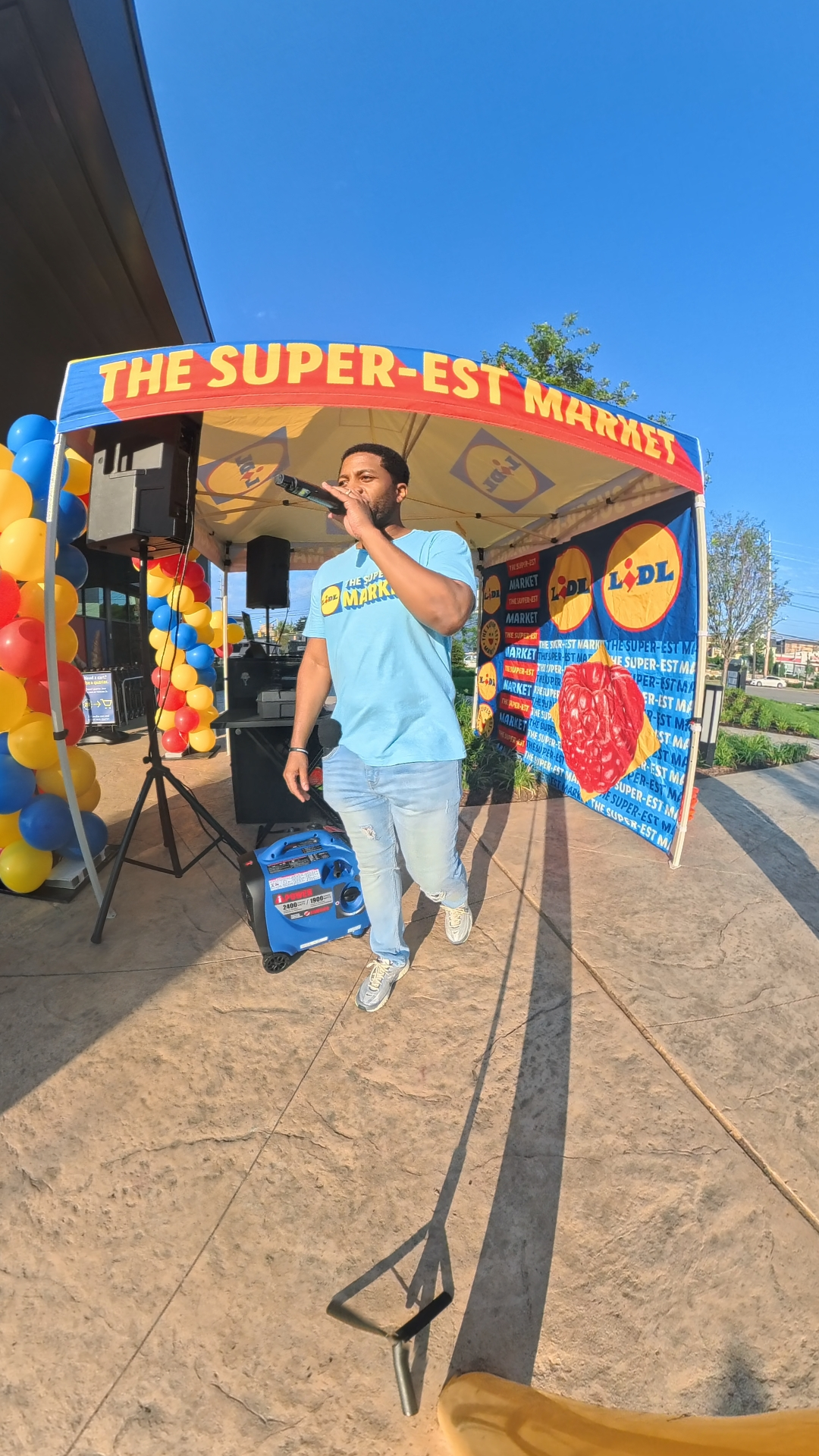
This is a working post about how to run a grocery store grand opening that actually moves foot traffic, the kind of opening that fills the parking lot, holds the community’s attention through the ribbon cut, and converts opening day energy into repeat visits for the next 90 days. It is written from the perspective of the operator who has hosted 60+ grand opening activations across the East Coast for LIDL US, including the flagship first in market openings produced with agency partner Soho Experiential.
On This Page
Why Most Grocery Store Grand Opening Events Underperform
Most retail openings are produced by a marketing team that is excellent at brand strategy and average at live event operations. That is not a criticism, it is a resourcing reality. Brand teams build the campaign, pick the giveaway items, coordinate press, and hand the physical morning of the event to whoever has bandwidth. The result is a well branded opening that has no operational spine on the actual day.
A grand opening has a specific choreography that has to hold from 6:30 AM (line begins forming) through 12:00 PM (peak lunch shopping window). Miss any of the beats and the community walks away thinking the new store is disorganized. Hit the beats and shoppers walk out talking about the day. The difference between the two outcomes usually comes down to who is holding the microphone and who is choosing what plays through the speakers.
According to The Food Industry Association, first-90 day sales at a new grocery location are the single strongest predictor of that location’s five year revenue trajectory. Opening day sets the anchor. A well run grocery store grand opening does not just create a nice moment, it establishes the community’s baseline perception of the store, the staff, and the brand for years to come.
The three moments a grocery store grand opening has to nail
Every retail opening lives or dies on three moments. First, the pre open line hold, the 60 to 90 minutes before doors open where shoppers are standing in a parking lot with nothing to do. Second, the ribbon cut and speaker moment, usually 15 minutes involving the mayor, corporate leadership, and community stakeholders. Third, the first hour rush, the 60 minutes after doors open where the community forms its first impression of the store, the staff, and the brand.
- Pre open line hold, 60 to 90 minutes of shopper commitment before doors open
- Ribbon cut and speaker program, the photographed moment with mayor and corporate leadership
- First hour rush, the 500+ shoppers whose first impression window sets the store’s neighborhood reputation
Moment 1: The Pre Open Line Hold
The pre open line is the moment most grocery store grand opening events lose their audience without realizing it. Shoppers arrive early because there is usually a giveaway for the first 100 in line, free reusable bag, free branded item, sometimes a gift card. Then they stand in a parking lot for 60 to 90 minutes with no shade, no seating, and no reason to stay engaged.
The energy job during this window is not to entertain, it is to keep the crowd committed. If people peel off the line, the ribbon cut happens to a half empty parking lot and the corporate photographer sends back photos of empty space. That is the single most visible failure mode of an opening day, and it is 100% preventable.
Music selection during the opening day line hold
The pre open music should match the community, not the brand deck. A LIDL opening in Ward 7 Anacostia Washington DC sounds different from a LIDL opening in a suburban New Jersey market. Playing generic pop for a neighborhood that responds to different music is the quickest way to signal “corporate outsider” instead of “we belong here.” Read the parking lot, adjust the queue, keep the tempo moderate, nothing that fights the neighborhood, nothing that reads as trying too hard.
Line side hosting from the mic
Every 10 to 15 minutes the mic should come on for 30 to 45 seconds. Not to entertain, to keep the crowd oriented. What time doors open. What the first 100 in line get. Where the ribbon cut is happening. Who is speaking. What the myLidl app does and why to download it before doors open. Short, useful, warm. Keep it moving.
Moment 2: The Ribbon Cut and Speaker Program
The ribbon cut is where the grocery store grand opening formally becomes an event. Mayor. Deputy mayor. Corporate leadership. Sometimes a community organization representative. Sometimes a state or federal official if the store fills a documented food desert. This block usually runs 10 to 15 minutes and it is the most photographed, most videoed, most press covered moment of the day.
The host job during the speaker program is invisible on purpose. Introduce each speaker cleanly with correct title and correct pronunciation, hand off the mic without stepping on the moment, cue applause at the right beats, keep the audience quiet during remarks, and cut the music at exactly the second the first speaker takes the mic. Every one of those beats is a place where an under prepared host embarrasses the corporate team on camera.
Cueing the ribbon cut moment for the corporate photographer
The single most preventable failure of a grand opening is the corporate photographer missing the ribbon cut because it happens without cue. The host from the mic is responsible for calling out the ribbon cut countdown, cueing the crowd to gather, and giving the photographer the second by second warning they need to be in position. Miss this and the corporate team is stuck asking speakers to fake the ribbon cut a second time. That footage never looks real.
Moment 3: The First Hour Rush After Doors Open
Doors open. The first 100 shoppers stream in for their free bags and giveaways. The next 500 follow within the first 60 minutes. This is when the store’s first impression window is set, the produce section, the bakery, the checkout lanes, the app download station, the sample tables all get their first exposure to the community.
The energy job during the rush is to shift the music from pre open hold energy to peak in store shopping energy, bright, welcoming, upbeat without being aggressive. The mic still comes on periodically for the myLidl app push, sample table shout outs, and giveaway announcements, but with much lighter touch. Nobody wants to be actively hosted while they are picking out produce.
The myLidl app moment during a grocery store grand opening
Every LIDL US grocery store grand opening has a specific app download push. Shoppers who download the myLidl app on opening day get discounts, first shopper rewards, and access to weekly promos. The download conversion happens on the mic, not on the signage. A trained host will hit the app push three to four times during the first hour with different framings, never the same script twice, and drive measurable download numbers back to the brand team.
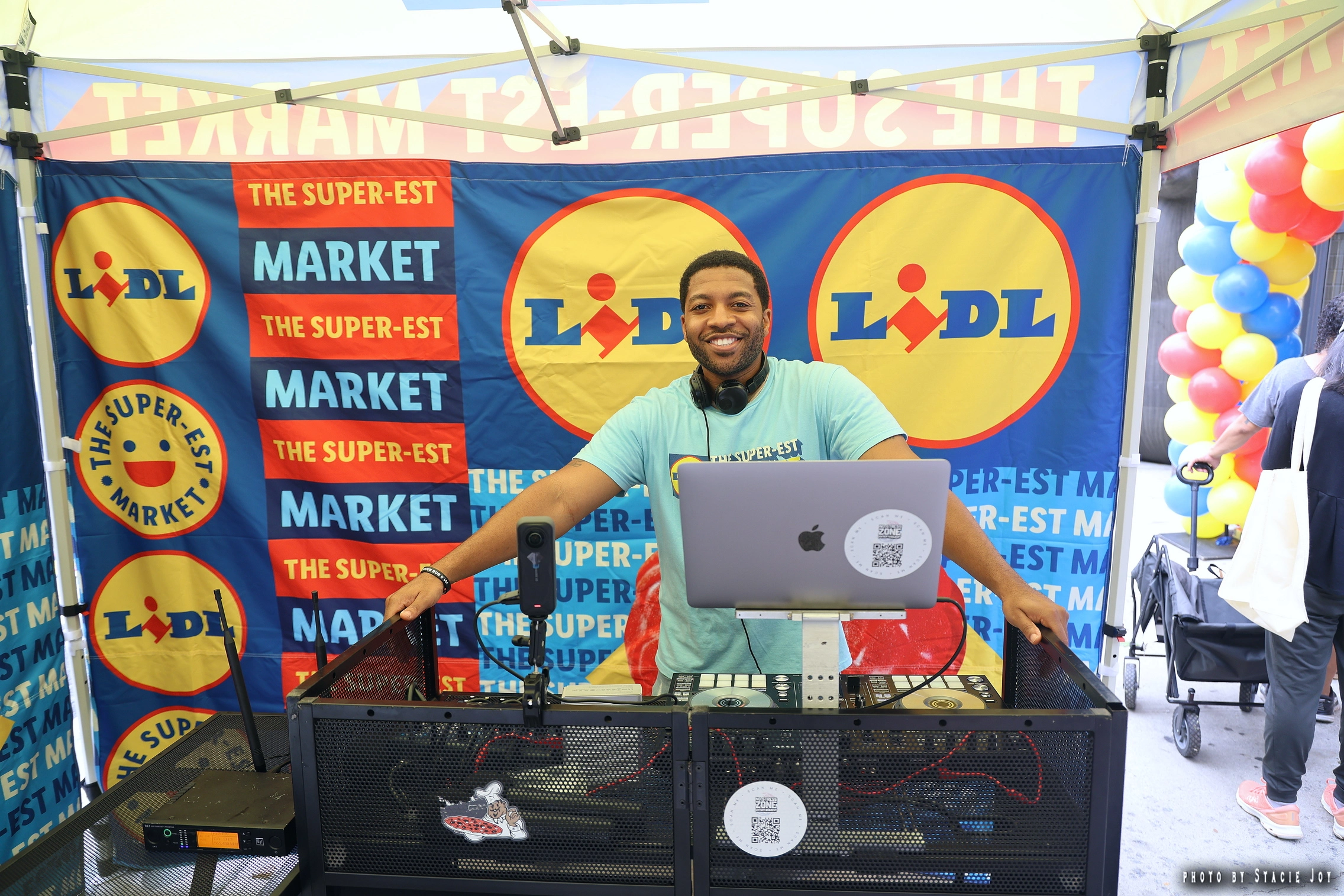
How LIDL and Soho Experiential Structure Their Grand Openings
LIDL US has opened 60+ locations across the East Coast where this exact grocery opening playbook has run. The LIDL US case study covers the multi year program in detail, 7 year relationship, myLidl app conversion focus, community first market entry approach. The Soho Experiential agency partnership case study covers how the experiential agency structures the on the ground execution for LIDL and similar retail brands across 20+ activations.
The pattern that emerges across those openings is consistency of the on the ground team. LIDL does not want a different host at every opening. The community first approach means the same voice on the mic across markets so the brand signals consistency to shoppers even when the city changes. That is why the same corporate DJ and host gets rebooked across 60+ activations.
Soho Experiential specifically brings the operational spine that most brand marketing teams do not build in house. The agency handles run of show, vendor coordination, community liaison, on site staffing, and the moment by moment production of the day. That leaves the corporate marketing team free to focus on brand messaging, press coordination, and stakeholder engagement, the parts they are best at.
What Marketing Teams Should Look For When Booking A Vendor
If you are on the corporate marketing side and evaluating vendors for a grocery store grand opening, the questions to ask are direct. Has this vendor done a grand opening at scale before? Can they name the brand and the market? Do they have community side references, not just brand side references? Do they read a neighborhood or do they play the same set everywhere? Can they cue a mayor without embarrassing anyone? Do they know what an app download conversion push sounds like when it works?
Those questions filter out about 90% of the vendors who bid on grocery opening work. The remaining 10% understand that a grand opening is a service position, not a performance one, and that the outcome that matters is whether the community walks in and out talking about the day.
Grand opening vendor references matter more than portfolios
A retail opening portfolio full of photos does not tell the marketing team what they actually need to know. Photos show that the vendor was there. References tell the marketing team whether the vendor delivered on the operational spine, whether the ribbon cut got cued, whether the app download push converted, whether the community walked out warm on the brand. Ask for the brand side contact, ask for the agency side contact, and ask both what would have gone wrong if this vendor had not been on the mic.
Book Your Grocery Store Grand Opening
If your marketing team or agency has a grand opening on the calendar and you want the same operator playbook that runs across the LIDL US and Soho Experiential programs, use the contact page to open a conversation. Most bookings for named enterprise brands start with a 15 minute call to walk the run of show, discuss the market, and map the community specific beats. See the full brand activation DJ services menu or browse the complete corporate DJ case studies portfolio for additional examples across LIDL, PUMA, MLS Red Bulls, CBRE, Fox Corporation, and other named client programs.
Common Grand Opening Mistakes That Kill Foot Traffic
Every retail opening playbook has a set of mistakes that repeat across markets, brands, and vendors. Understanding what goes wrong is often more useful than understanding what goes right, because the wins compound while the failures repeat. Here are the seven mistakes we see across the LIDL US calendar and across other retail activations produced with agency partners.
Mistake 1: Treating the pre open line as dead time
Most brand teams see the 60-to-90 minute pre open window as “the line hasn’t opened yet, so nothing matters.” That is exactly backwards. Everything that happens before doors open sets the emotional temperature of the day. Shoppers who stand in a parking lot bored for 90 minutes walk into the store irritated, buy less, and leave faster. Shoppers who stand in a parking lot engaged for 90 minutes walk into the store excited, buy more, and stay longer.
Mistake 2: Booking a wedding DJ or club DJ
Wedding DJs and club DJs are professional at their categories. They are not professional at retail activations. The energy management, mic technique, corporate stakeholder handling, and community reading required for a retail opening are different skill sets. Brands that hire outside their category to save budget on the vendor line item pay for it in on the day execution failures.
Mistake 3: Skipping the myLidl app push (or equivalent brand conversion moment)
Every retail opening has a conversion moment built into the day. For LIDL it is the myLidl app download. For other brands it is a loyalty program signup, an email capture, or a first purchase discount code. That conversion moment only fires if it is on the mic multiple times with different framings. Skipping the conversion push means the corporate marketing team gets no measurable business outcome from the opening, they get warm feelings and no data.
Mistake 4: One host, no backup
Retail opening days run 6+ hours from setup through wind down. A single host handling the entire day means vocal fatigue by hour 4 and dropped energy in the second half of the shopping window. Agencies that treat this like a wedding, one person, one microphone, all day, miss the operational reality of a retail floor.
Mistake 5: No community pre brief
A retail opening in Ward 7 Anacostia DC is a different room than a retail opening in a suburban New Jersey market. A vendor who shows up without pre briefing on the community, the demographics, the music preferences, the recent local news, the political landscape, the neighborhood organizations that matter, signals “corporate outsider” immediately. The community reads it. The store’s first-90 day trajectory takes the hit.
Mistake 6: Fake ribbon cuts
If the ribbon cut happens without being cued for the photographer, the corporate team asks the mayor and executives to fake it a second time. Those photos never look real. The corporate photographer knows. The mayor’s staff knows. The comms team eventually knows. And the photos that make it to press and internal decks look staged because they are.
Mistake 7: Wind down with dead air
Most vendors pack up the moment the peak rush ends. The last 60 to 90 minutes of the shopping window then run with no music, no host, no energy, and the shoppers who came in during that window get a dead quiet store instead of the celebration they expected. The last shopper of the day should get the same welcome as the first.
Reading the Community Before Opening Day
The single biggest predictor of whether a retail opening lands with a neighborhood is whether the operator on the mic did the community homework before opening day. This is not a soft skill. It is measurable in real time by whether the crowd energy climbs or flatlines across the morning.
A community pre brief covers demographics, dominant music preferences, recent local news that might affect tone (a recent tragedy, a political flashpoint, a school district win), the neighborhood organizations that will send representatives, the elected officials whose names must be pronounced correctly, and the specific way the community sees the incoming brand. A brand entering Ward 7 Anacostia after a decade of no grocery access is entering a different room than a brand entering a fifth suburban location.
Music curation as market research
The music queue is the fastest signal a brand can send to a new community. Play the right music and the neighborhood hears “we respect who you are.” Play the wrong music and the neighborhood hears “we did not do our homework.” Every activation across the LIDL US calendar and the Soho Experiential program includes a market specific music brief before the vendor arrives on site. That brief is what separates a professional retail activation vendor from a generic entertainment booking.
Working With Your Experiential Agency on the Vendor Brief
Most corporate marketing teams do not book the on site talent directly. They work through an experiential agency like Soho Experiential or Legacy Marketing that handles vendor selection, run of show, and on the ground production. The agency to vendor brief is where opening day quality is set, long before the vendor ever arrives on site.
A strong vendor brief covers the market, the community, the corporate stakeholders and their titles, the run of show minute by minute, the conversion moment (app, loyalty, email), the giveaway logistics, the media coordination, and the wind down expectations. Corporate teams that trust their experiential agency to handle this properly free themselves to focus on the campaign and the press strategy.
Measuring the Return on a Retail Opening Day
A well executed retail opening produces measurable outcomes that the corporate marketing team can walk into a review meeting and defend. The metrics that matter are opening day foot traffic, app download conversion count, opening day sales versus first week averages, press coverage volume and sentiment, community social sentiment in the first 72 hours, and rebooking signals from stakeholder speakers who attended.
Weaker openings produce feelings, “it was a great day, everyone had fun.” Stronger openings produce numbers, 847 app downloads, 3,200 opening day shoppers, 12 media hits, positive local sentiment, mayor’s office follow up interest in the next opening. The difference is not the enthusiasm of the vendor. The difference is whether the on the ground team hit the operational spine of the day.
Frequently Asked Questions
What is the most preventable failure at a grocery store grand opening?
The corporate photographer missing the ribbon cut because it happens without a cue. The host is responsible for calling out the ribbon cut countdown, cueing the crowd to gather, and giving the photographer a second by second heads up before the cut happens.
What does the host actually do during the speaker program at a grand opening?
The job is invisible on purpose: introduce each speaker cleanly with correct title and pronunciation, hand off the mic without stepping on the moment, cue applause at the right beats, keep the audience quiet during remarks, and cut the music at the exact second the first speaker takes the mic.
How many grocery store grand openings has this operator run?
60+ grand opening activations across the East Coast for LIDL US, including flagship first in market openings produced with agency partner Soho Experiential.
Why do most grocery store grand openings underperform on foot traffic?
Nobody is running the room, a photographer misses the ribbon cut because nobody cued them, and a first time shopper walks back out because the store feels chaotic instead of celebratory. A structured program across the pre open line hold, the ribbon cut and speaker program, and the first hour rush converts opening day energy into repeat visits.