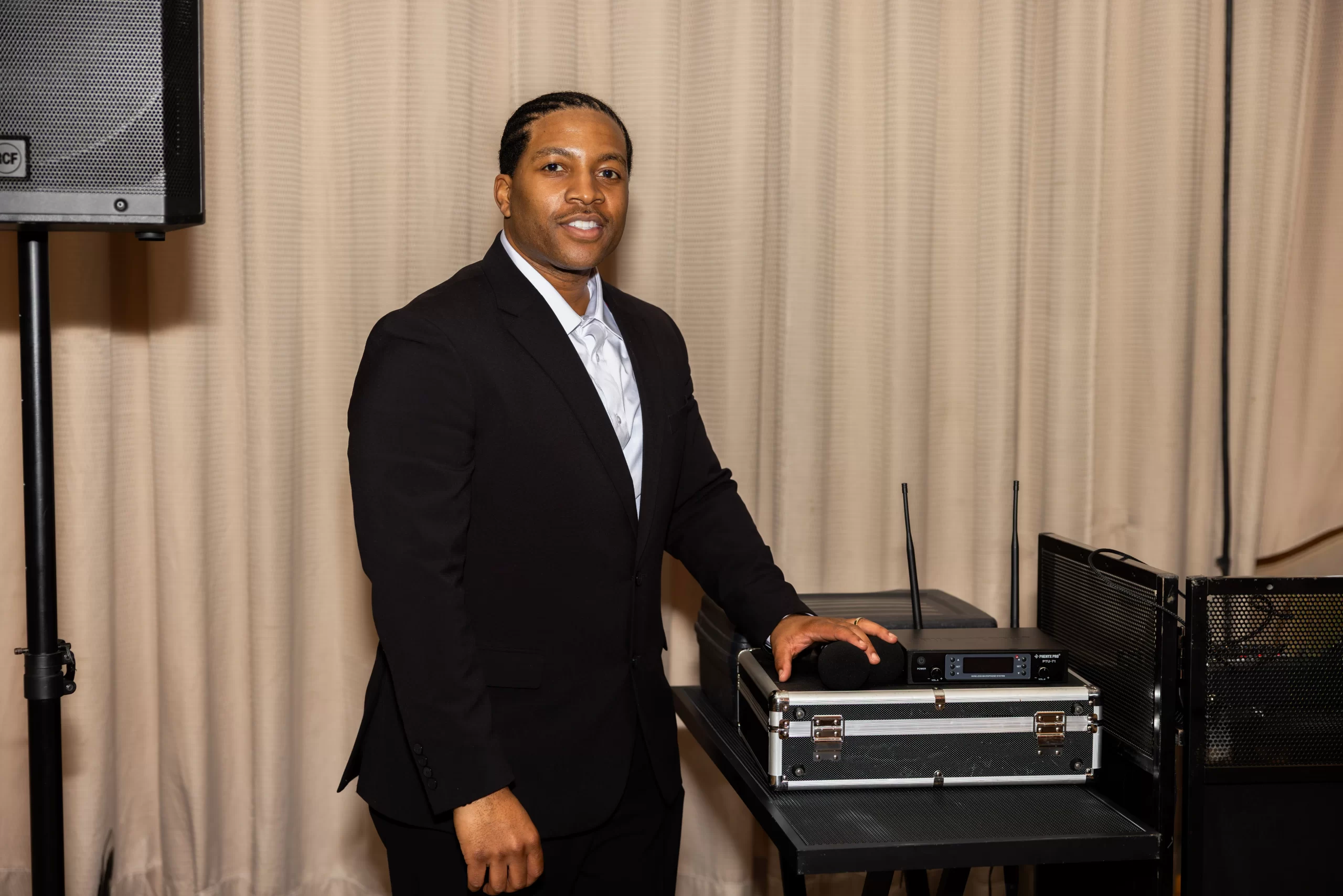
DJ Reese is a sales kickoff DJ and emcee who runs hosting and music as a single role. He has hosted two consecutive annual kickoffs for Regency Management Services, including a 500-attendee full-day program at Martin’s Crosswinds in Greenbelt, Maryland, and works corporate events for Fox Corporation, Danone North America, PUMA and LIDL US.
Most articles about kickoff entertainment are written by people who have never run one.
This one is a breakdown of an actual program. Six segments, one room, 500 people, a full day, and the decisions behind each cue.

The run of show from a real 500-person kickoff
Regency Management Services runs a national sales team that spends most of the year in the field. The kickoff is the one day everyone is in the same room. Leadership needed the room held from walk-in through close without breaking corporate tone.
Here is what that actually looked like, segment by segment.
1. The 45-minute walk-in
The pre-show set runs 45 minutes and it is the most misunderstood part of the day. Most people treat it as background. It is not. It is the only chance you get to set the room’s baseline before anyone speaks.
The brief is narrow: build energy without dominating conversation. People are finding seats, finding coworkers they have not seen since last year, and getting coffee. Music that is too loud kills the reunion. Music that is too soft leaves the room flat when the CEO walks on.
2. The opening host segment
Formal welcome, agenda framing, energy set for the CEO keynote. This is the handoff that decides the next two hours. A keynote that starts into a warm room lands differently than one that starts into a room still settling.
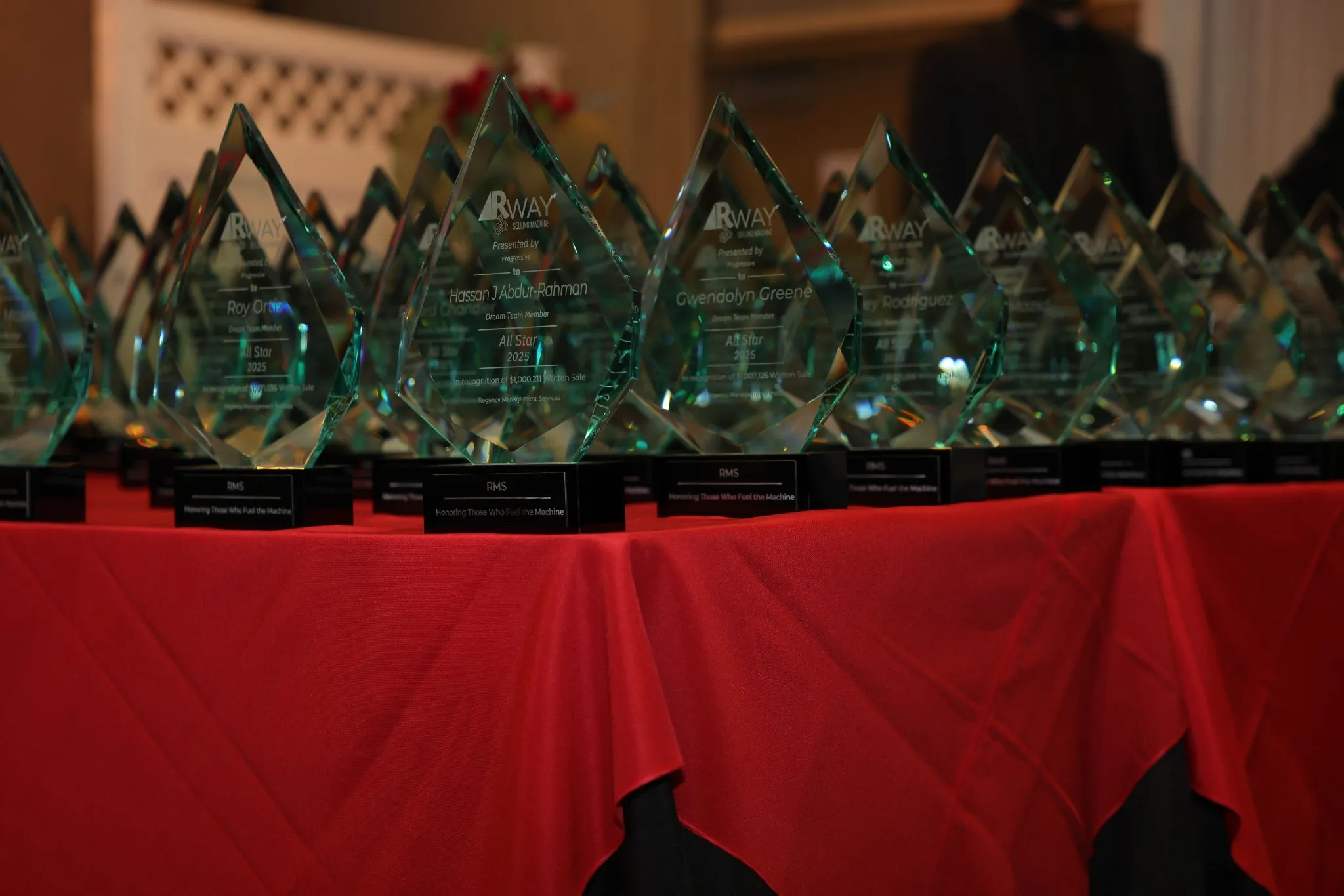
3. Award recognition
Music beds under recognition moments, presenter intros, stage crossings for winners. The stage crossing is the part nobody plans and everybody notices. A winner walking twenty feet in silence is twenty feet of dead air, and it happens at almost every awards segment I have watched from the outside.
4. Panel and breakout transitions
Stings and host bridges that close a panel cleanly and move 500 people into breakouts without dead air. Transitions are where full-day agendas leak time. Five minutes lost four times is twenty minutes off the back of the day, and the last speaker pays for all of it.
5. Networking and reception
A post-general-session program that holds the room. The failure mode here is people leaving to check email and not coming back. Music is what keeps a reception a reception instead of a hallway.
6. The closing set
A send-off program that keeps energy peaked through the final leadership close. The last thing the room feels is the thing they carry into the field on Monday.
Every transition was scripted. Every music cue was mapped to a specific leadership moment. The mic handoffs were rehearsed so leadership never had to fight for attention when they took the stage. Full RMS case study.
Three vendors or one
Most kickoffs hire a host, a music operator and a production coordinator. Three vendors, three contracts, three points of failure.
RMS ran one person in both chairs. The reason is simple: the mic handoff and the music cue are the same decision, made by the same person, watching the same room in real time.
The alternative is a host telling a music operator to fade out over a headset while the room notices. Everyone in that room has seen it happen. Nobody names it afterward, they just say the day felt choppy.
Where kickoffs lose the room
Three soft spots, and they are predictable enough to plan for.
- The first session after lunch, when the room comes back full and slow
- The stretch right after the numbers slide, when nobody wants to be the first to talk
- Day two, when the energy from day one has worn off and the agenda is still long
None of that is solved by a louder playlist. It is solved by someone watching the room and changing the plan while it is running. A keynote goes twelve minutes long and the walk-on cue I had ready is now wrong for the mood. A leadership panel lands harder than expected and the break should start on that energy instead of fighting it.
Music, mic work and pacing are the tools. Reading the room is the skill.
What year two changes
RMS booked a second consecutive kickoff after the first one delivered. A repeat booking is a different job than a first one.
Year one you are learning the company: who the leaders are, which awards carry weight, what the culture will and will not tolerate. Year two you already know, so the planning moves from discovery to refinement. You are not asking what the awards segment is. You are asking what was slow about it last time.
That is the argument for booking the same host twice. The second year is where the program actually gets sharp.
What it costs
Most corporate bookings land between $2,500 and $7,500. A single general session sits at the low end. A full-day program with awards, breakouts and an evening reception sits at the top. Multi day and travel scale from there.
Detail on emcee cost and corporate DJ cost, or use the pricing calculator.
Other corporate work
Fox Corporation. Three events across two years, including Fan Fair at Current at Chelsea Piers in New York. Case study.
PUMA. Brand activation built around one question: why would someone want to stay. $75,000 in sales in three hours. Case study.
LIDL US. Seven years as their activation specialist across Manhattan, Brooklyn and Queens.
Twenty years in live events. Ten in radio, including Z100 New York, SiriusXM and 98.7 Kiss FM. 111 Google reviews at 5.0.
Questions I get asked
How far ahead should we book?
Six months. Most companies run kickoffs January through March, so the calendar compresses hard in Q4. Book before you finalize the agenda, not after.
Do you emcee, or only DJ?
Both, and at a kickoff you want both from one person. Splitting them adds a handoff, and handoffs are where timing breaks.
Can you work with our AV team and producer?
Yes. In most hotel and conference center rooms that is the arrangement. I settle who owns what in pre-production, before load-in.
Do you travel for multi city programs?
Yes. Running one host across every city is what keeps a national program feeling like one program instead of four different events.
What do you need from us before the event?
Run of show, speaker order, award count, load-in window, and the two or three points in the agenda you are already worried about.
Book a sales kickoff DJ and emcee
Tell me what you are building and I will tell you how I would run it.