

People Think Corporate Event Management Is About Events. It’s Not.
Here’s what most people picture when they think about corporate event management:
Someone with a clipboard. Vendor calls. A mood board. Floor plans and catering minimums. An inbox full of confirmations and a walkie talkie on event day.
That picture is not wrong. Those things are real. But they’re not the actual job.
The actual job of corporate event management is managing complexity. Specifically, corporate event management means managing the hundreds of interdependent variables that have to align simultaneously for a room full of people to have the experience you promised them. And making it look like none of those variables exist.
That’s a different job. And it requires a fundamentally different way of thinking about events. Which is what corporate event management, done right, actually demands.
Table of Contents
- What Corporate Event Management Actually Means
- Hidden Variables in Corporate Event Management
- Why Energy Is a Variable in Corporate Event Management
- What Happens When Corporate Event Management Goes Wrong
- The Role of Audience Psychology in Corporate Event Management
- Corporate Event Management Complexity in Real Time
- Who Is Managing Your Corporate Event Management Room?

What Corporate Event Management Actually Means
Walk into any corporate event that felt effortless. A gala where the energy never dropped, a conference where every session flowed cleanly into the next, a sales kickoff where the room stayed locked in from morning to close. And know that behind it was a team managing an enormous amount of complexity in real time.
The AV ran on cue because someone ran three tech rehearsals. A standard that Meeting Professionals International (MPI) identifies as essential to live event production. And had a contingency for every failure point. The transitions between speakers felt smooth because someone choreographed exactly how each handoff would be managed and who would fill the thirty second gap while the next presenter walked to the stage. The energy in the room after lunch didn’t crash because someone designed an intentional reset into the schedule before the afternoon sessions began.
None of that is visible to an attendee having a great experience. That invisibility is the goal.
Corporate event management done well means the complexity is yours to carry, not the audience’s to feel.
Hidden Variables in Corporate Event Management
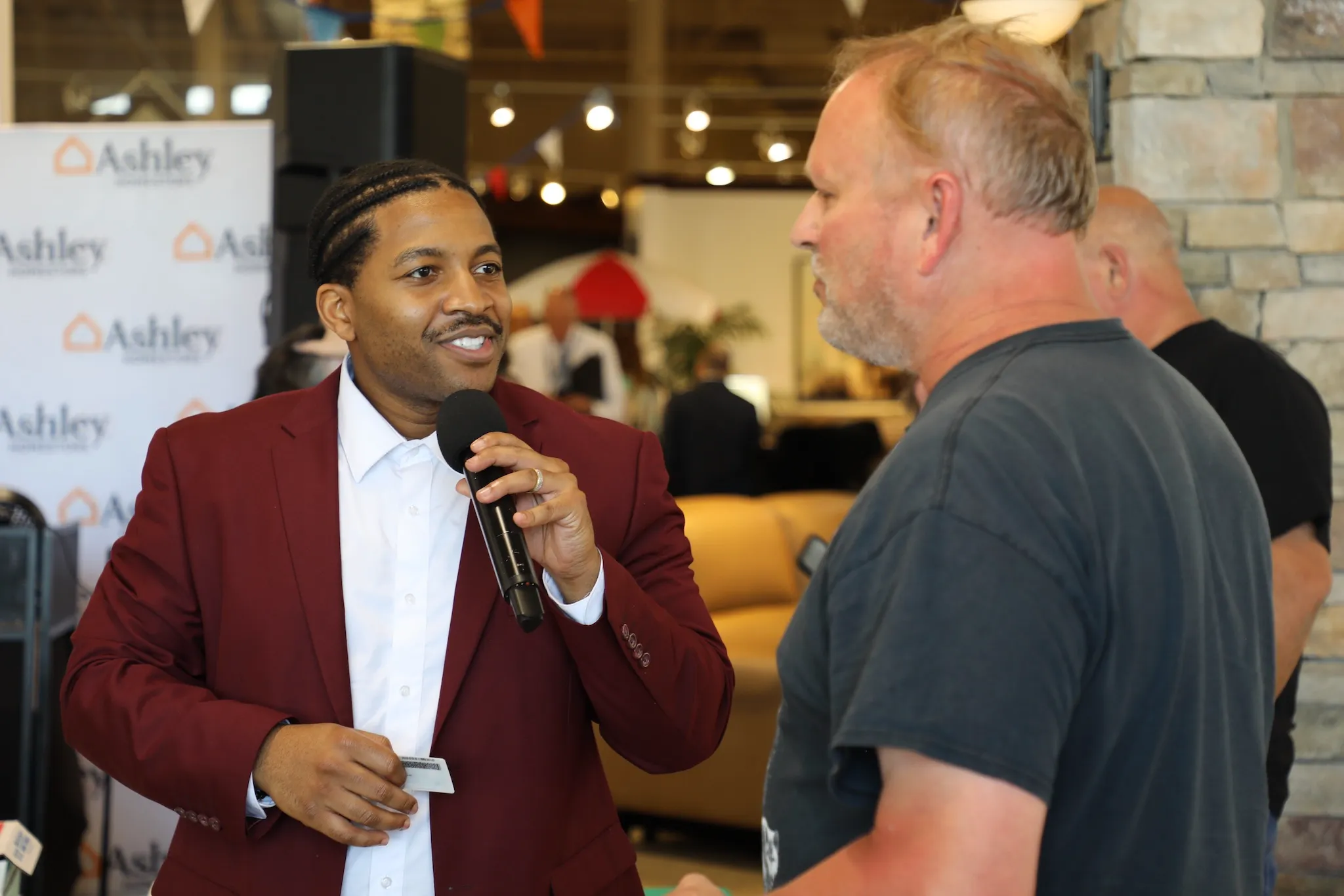
In any corporate event management plan, the run of show is the timeline that documents what’s supposed to happen and when. It’s an essential tool. But the run of show only captures the things that can be scheduled.
What it doesn’t capture is everything else.
The room itself is a variable. Temperature, acoustics, sightlines, the way light changes as the day progresses, the way the space feels at 30% capacity versus 90%. These affect how the audience experiences the event, and none of them are fixed. A room that felt perfect in the walkthrough can feel completely different when 300 people walk into it.
The audience is a variable. Not just who shows up, but what they bring with them. A team that just had a difficult quarter walks into a sales kickoff with a different energy than a team coming off a record year. An audience that’s been sitting through three hours of content has different attention capacity than one that just arrived. Reading that energy accurately. And adjusting the program in response. Is part of the job.
Every vendor is a variable. The AV team has a lead tech who knows the system and a backup who learned it that morning. The catering service runs 8 minutes late on the main course, which compresses the time available for the CEO’s remarks before the awards segment. The lighting operator had a different briefing than the director expected. These things happen constantly at live events. Managing them requires anticipating failure points, building recovery time into the schedule, and having clear decision making protocols when something goes off script.
The schedule is a variable. A keynote that was supposed to run 25 minutes runs 38. A breakout session produces such rich discussion that the facilitator doesn’t want to cut it off. A technical issue costs 12 minutes at the top of the afternoon. Every one of these deviations cascades through the rest of the day. And someone has to decide in real time what to compress, what to cut, and what to protect.
This is the practice of holding all of those variables simultaneously and making adjustments fast enough that the audience never sees the seams.
Why Energy Is a Variable in Corporate Event Management
One of the variables that gets the least attention in most event planning conversations is also one of the most consequential: the energy of the room.
Energy is not a fixed property of an event. It’s not generated by the venue or the budget or the quality of the catering. It’s built, moment to moment, by what happens in the room. And it can be managed or mismanaged with equal ease.
A room full of people arrives with baseline energy. Some level of enthusiasm, anticipation, and attention. That energy can be raised by the right opening, sustained through good pacing, and protected through intentional transitions. Or it can be allowed to dissipate through dead air, passive content delivery, and the specific kind of post lunch stillness that makes even good speakers feel like they’re presenting to a wall.
Managing energy through corporate event management means making it an explicit part of the plan. Not hoping that the speaker lineup or the venue will handle it on their own.
This is where experienced Corporate Event DJ and Emcee Services, Nationwide serve a different function than what most people assume. They’re not playing background music. They’re managing an energy variable that runs across the entire event. At arrival, during breaks and transitions, between formal program segments, through the social portions of the evening. When that variable is managed well, the event feels cohesive. When it isn’t, the best content in the world feels flat.
What Happens When Corporate Event Management Goes Wrong

Here’s something anyone who has managed live events knows deeply: it’s not whether a variable will go wrong. It’s when, and whether you’re ready.
A speaker gets ill 48 hours before the event. A keynote that was approved runs 22 minutes over, eating into the breakout time that the afternoon program depends on. The audio cuts out for 90 seconds during the most important moment of the CEO’s address. A table collapses at the gala. A flight delay keeps half the executive team from arriving for the opening session.
These aren’t hypotheticals. They’re Tuesday.
What separates excellent corporate event management from average corporate event management is not the ability to prevent every problem. That’s impossible. It’s the ability to absorb the problem quickly, recalibrate, and make a decision that protects the experience for the audience.
That requires a specific kind of preparation: knowing your contingencies before you need them. Having the conversation about “what do we do if X happens” before X happens. Building recovery time into the schedule rather than optimizing every minute. Knowing which elements of the program are essential and which are expendable if you need to make cuts under pressure.
Effective corporate event management also requires a team that has done this enough to know how to stay calm when things go sideways. Because the audience reads the room, and if the team managing the event is visibly stressed, the audience will feel it.
The Role of Audience Psychology in Corporate Event Management
Understanding how audiences actually experience live events changes how you make every decision in the planning process.
A few principles that matter:
Attention is a limited and depleting resource. People cannot sustain deep attention for hours. Attention peaks early in a session, starts declining around the 10, 15 minute mark, and requires an active interruption to reset. Every session longer than 30 minutes needs something built into it that requires the audience to do something other than listen passively.
Transitions are emotionally significant. The moment between one thing and the next is when audiences recalibrate. If that moment is filled with awkward silence, fumbled AV, or a speaker who doesn’t know when to walk off stage, the audience disengages. If that moment is managed. With music, a clear handoff, a brief emcee moment that fills the gap with intention. The emotional continuity of the event holds.
The beginning and the end are disproportionately remembered. This is a well established principle in cognitive psychology: people’s memories of an experience are most influenced by how it started and how it ended. A finding documented in Harvard Business Review’s research on meeting and event design, not by what happened in the middle. The implication for Working With Your Corporate Event Production Team is significant: invest heavily in the opening and the close. They define the memory of the event.
Collective experiences create stronger bonds than individual ones. When an entire room of people responds to the same moment at the same time. A recognition that moves someone to tears, a joke that makes 400 people laugh together, a musical moment that the whole room feels. The social bonding effect is significant. Designing for those moments isn’t entertainment for its own sake. It’s creating the shared experience that makes the event worth having.
Corporate Event Management Complexity in Real Time
Most of the actual work of corporate event management happens in the moments nobody plans for.
The emcee notices that the room’s energy dropped after the third back to back presentation and calls an audible. Extending the break by five minutes and running a quick interactive moment to reset before the next speaker. The event producer makes a real time call to cut the third breakout session from 45 minutes to 30 because the agenda is running behind and the CEO’s close is non negotiable. The DJ reads that the room isn’t ready for the high energy set he planned and spends another twelve minutes building energy before pulling the trigger on it.
None of these decisions appear on the run of show. None of them were planned. All of them are why the event worked.
Effective corporate event management in real time requires three things: deep experience with how events actually behave (versus how they’re planned to behave), clear authority to make calls without committee approval in the moment, and the confidence to act before the problem becomes visible to the audience.
The best corporate event management teams practice this. They’ve seen enough events go sideways that the variables no longer feel like emergencies. They feel like the job.
Who Is Managing Your Corporate Event Management Room?
Here’s the question worth asking before your next corporate event management challenge:
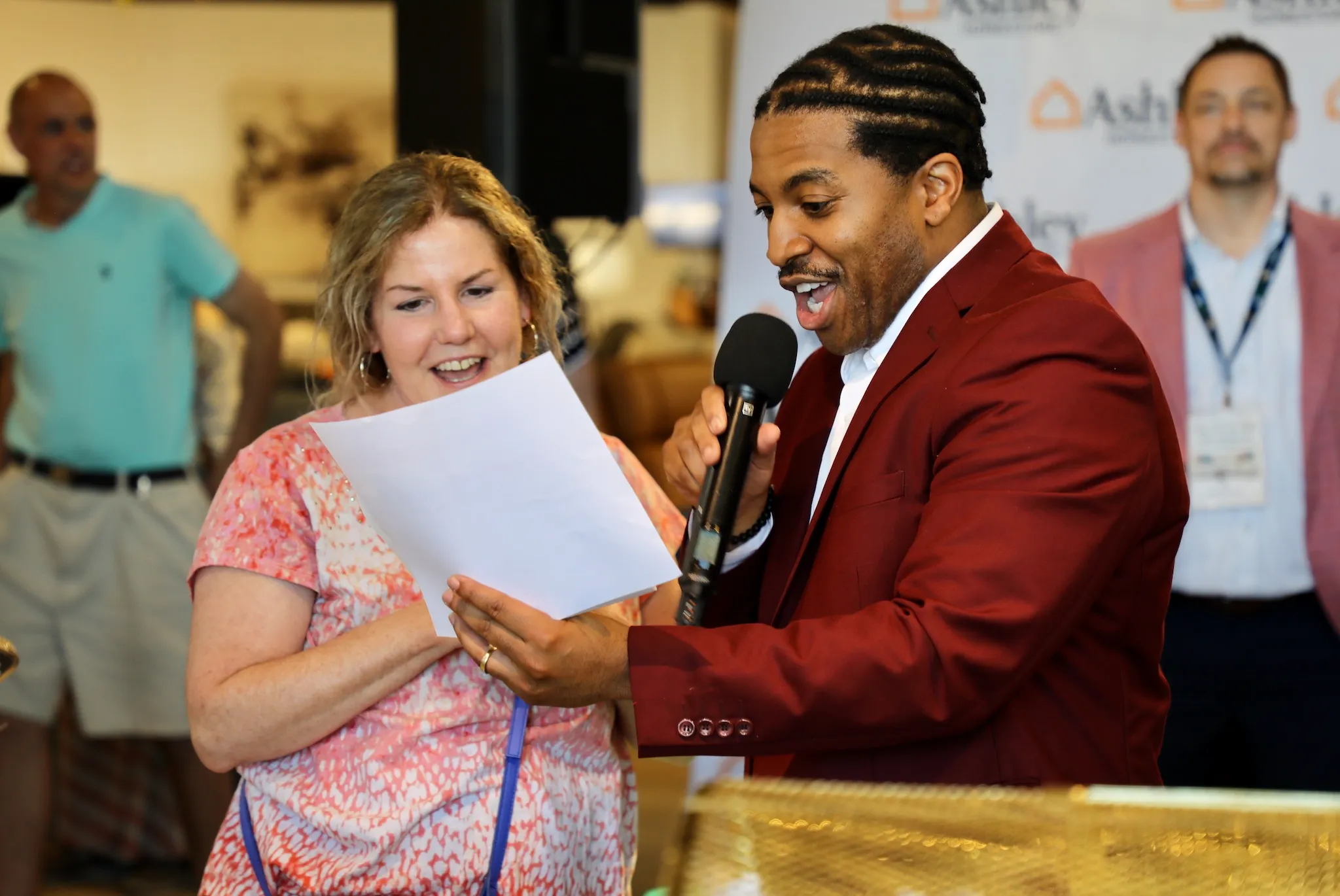
Who is explicitly responsible for the live experience of the room. Not the logistics, not the content, but the actual experience your audience is having in real time?
In many corporate events, that question has no clear answer. The meeting planner is managing vendors. The AV team is managing technical execution. Speakers are managing their content. And nobody is watching the audience, reading the energy, and making adjustments before a problem becomes visible.
That gap in corporate event management is where events lose their impact.
The answer isn’t necessarily hiring a full production team for every event. But it does mean someone in the room needs to own the experience variable explicitly. To be watching the audience rather than the agenda, making real time calls rather than executing a fixed plan, and treating the energy in the room as something to be actively managed rather than left to whatever happens.
For high stakes Conference and Summit DJ and Emcee Services where the audience experience has real business consequences. National sales kickoffs, leadership summits, brand conferences. That role deserves to be filled by someone who has done it professionally, many times, in rooms just like yours.
The Budget Conversation Nobody Has About Corporate Event Management
Ask most finance teams what they’re paying for in corporate event management and you’ll get a line item: venue, catering, AV, entertainment. What that line item doesn’t capture is the labor of holding all of those pieces together in real time, which is the actual value being purchased.
Corporate event management gets budgeted like a series of separate vendor contracts because that’s how it shows up on an invoice. But the coordination layer between those vendors, the person making sure the AV cue lines up with the speaker transition and the catering timing doesn’t collide with the keynote, is rarely priced as its own line item. It’s assumed to happen for free.
That assumption is where a lot of corporate event management budgets quietly fail. Organizations pay full price for every individual vendor and then wonder why the event still felt disjointed. The missing piece wasn’t more vendors. It was someone accountable for the seams between them.
Good corporate event management treats coordination as a deliverable, not an afterthought. That means someone on the team, whether that’s an internal planner, an outside producer, or the person on stage managing the room, has to own the transitions explicitly, in writing, before the event date, not improvised on the day of.
When organizations start budgeting for that coordination layer directly instead of hoping it happens for free, the quality of corporate event management improves immediately, often without spending significantly more money. The spend just gets allocated to the part of the job that was actually causing problems.
This is also where corporate event management gets confused with simple event planning. Planning schedules the pieces. Management owns what happens when the schedule meets a room full of unpredictable people, and that ownership is worth budgeting for on purpose.
None of this requires a bigger team or a bigger budget to start fixing. It requires naming the coordination work out loud, assigning it to a specific person, and holding that person accountable for the transitions the same way you’d hold a caterer accountable for a cold entree. Most organizations have never done that once, which is exactly why it feels invisible until the night it goes wrong.
The Best Corporate Event Management Looks Easy
That’s the goal of great corporate event management.
An attendee at a well managed corporate event doesn’t think about the complexity behind it. They don’t think about the contingency plans that were exercised quietly in the background. They don’t notice the transition management, the energy resets, the real time schedule adjustments. They don’t feel the variable management.
They just feel like the event was great.
That experience of “great” is the product of dozens of professionals managing an intricate system of interdependent variables in real time. And doing it well enough that it all looks effortless.
That’s what excellent corporate event management actually is. Not the clipboard or the floor plan or the vendor calls. Though those matter too. In great corporate event management, the real work is the complexity you carry so your audience doesn’t have to.
No Stress Zone Entertainment specializes in the live experience layer of corporate event management. Audience engagement, energy control, real time room management, and the transitions and moments that make events feel intentional from start to finish. Working With Your Corporate Event Production Team or Corporate Event DJ Contact DJ Reese | Trusted Expert 500+.
Related Reading
- Accidental Conferences: The 5 Best Hidden Costs to Fix Fast
- Seamless Corporate Event: 5 Best Fixes for Perfect Nights
Frequently Asked Questions
What does corporate event management actually mean?
It means managing the hundreds of interdependent variables that have to align simultaneously for a room full of people to have the experience you promised, and making it look like none of those variables exist.
What kinds of things go wrong during live corporate events?
Real examples include a speaker getting ill 48 hours before an event, a keynote running 22 minutes over and eating into breakout time, audio cutting out for 90 seconds during a CEO’s address, a table collapsing at a gala, or a flight delay keeping half the executive team from the opening session.
Why is energy considered a variable in corporate event management?
Energy has to be actively managed throughout an event, at arrival, during breaks and transitions, and between program segments. When it’s managed well the event feels cohesive; when it isn’t, even the best content feels flat.
Pingback: The Communication Breakdown Between DJs, Emcees, and Hosts | DJ Will Gill | DJ Will Gill