
CBRE Has Booked Us Every Year Since 2019: The World Cup Watch Party
The Program
When a Fortune 500 brand books the same team every year since 2019, it is because the room never lets them down. CBRE has booked us for DJ and emcee work every single year since 2019, directly through Evan Samer on the CBRE side. When the 2026 World Cup landed on the calendar and the USA opening match hit June 12, CBRE booked the World Cup Watch Party at The Yard at Rutgers New Brunswick. The brief was straightforward. Bring the community out. Turn the corporate real estate footprint into a moment the neighborhood remembers. Make sure the room was ready when the USA took the field.
What we Did
Full DJ and emcee coverage across the full afternoon into the match window. Pre game set built to warm the room without burning the energy. Live microphone hosting for community welcomes, sponsor recognitions, and match countdown moments. Music selection paced to match the arc of a watch party: build during pregame, controlled peaks during warmups, held tight through kickoff so the room stayed with the game.
One operator running the room from doors open through the match. No handoffs. No dropped transitions between the community moments and the sports moments.
Event Photos
The Outcome
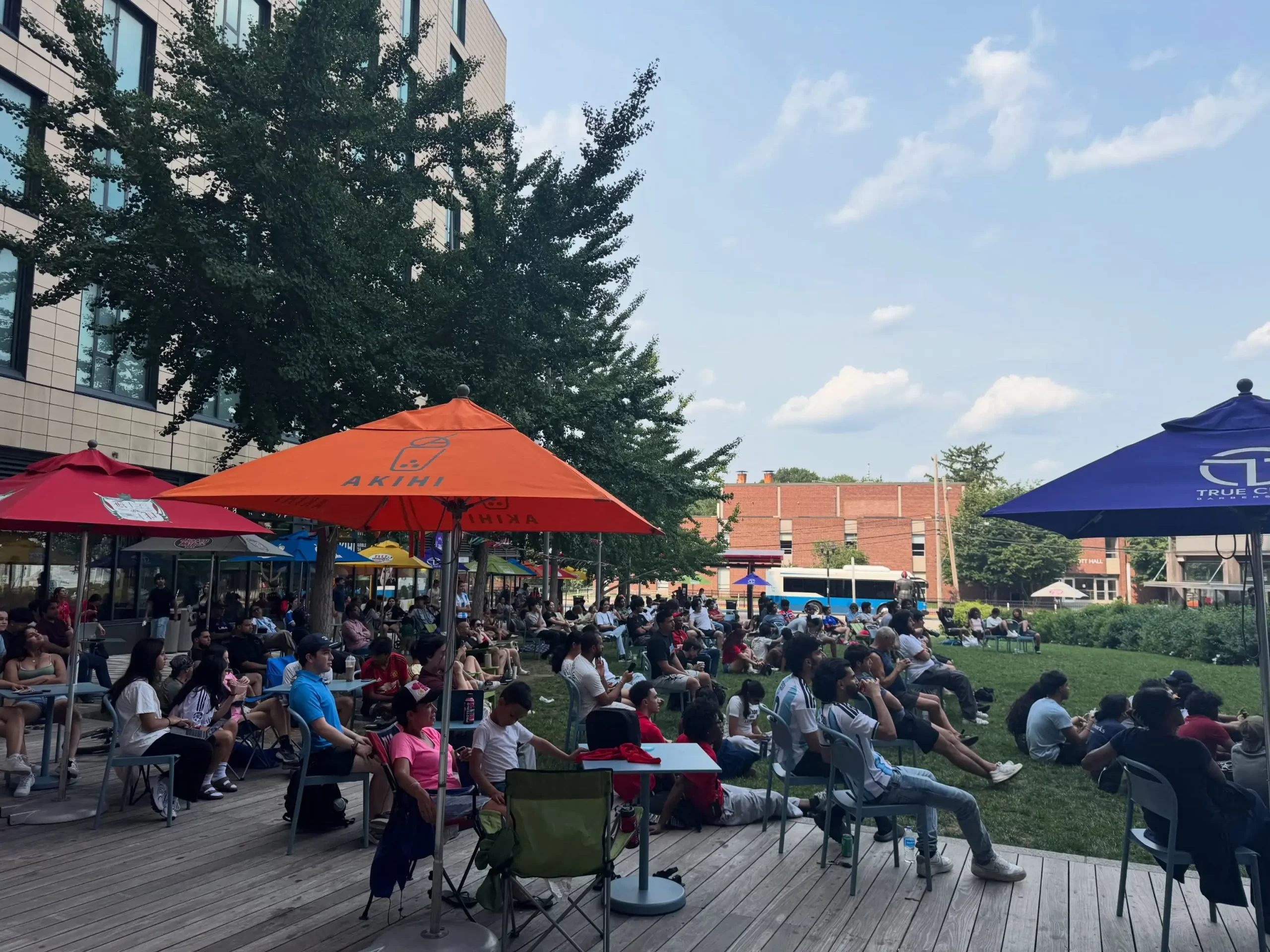
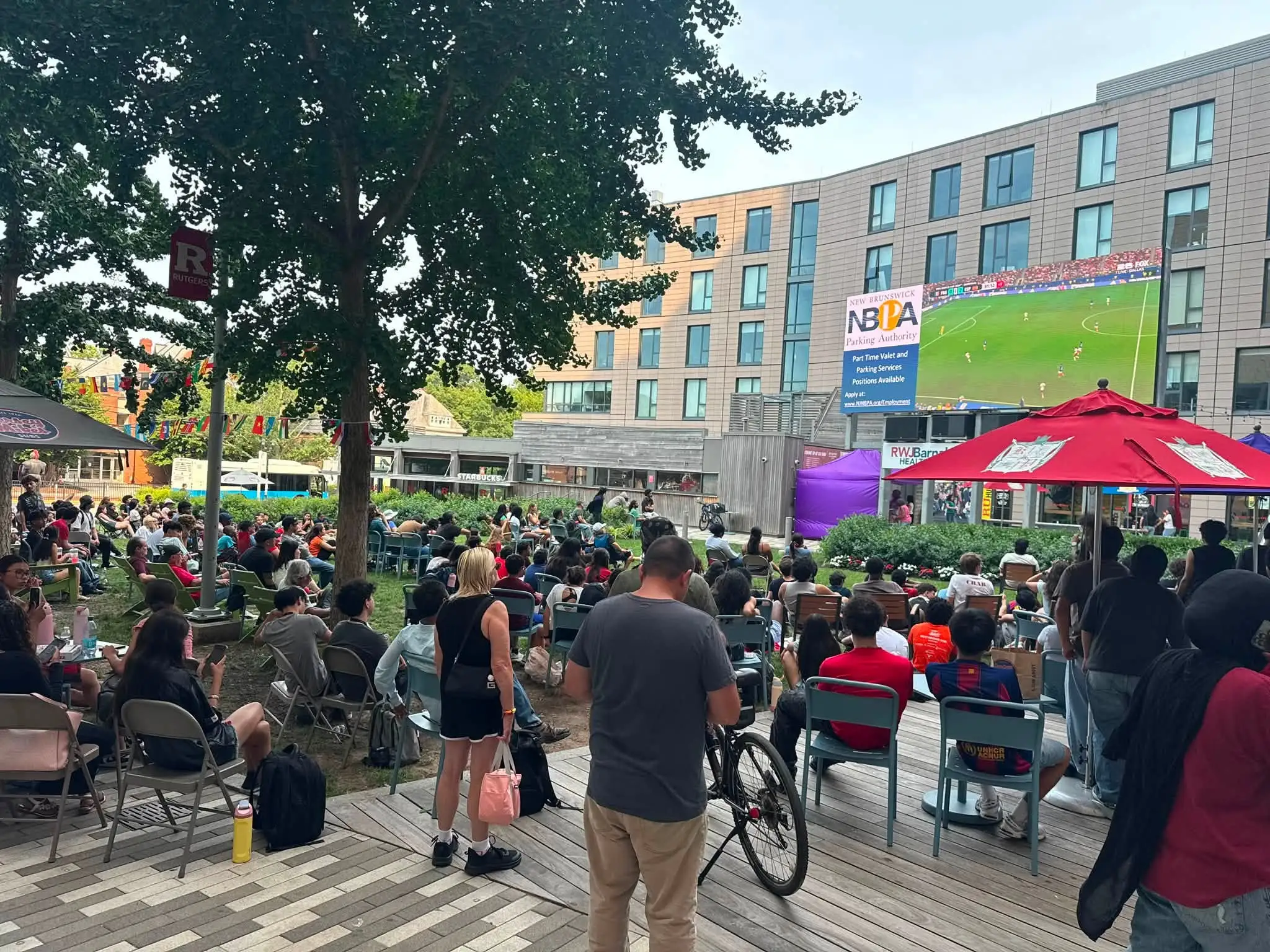
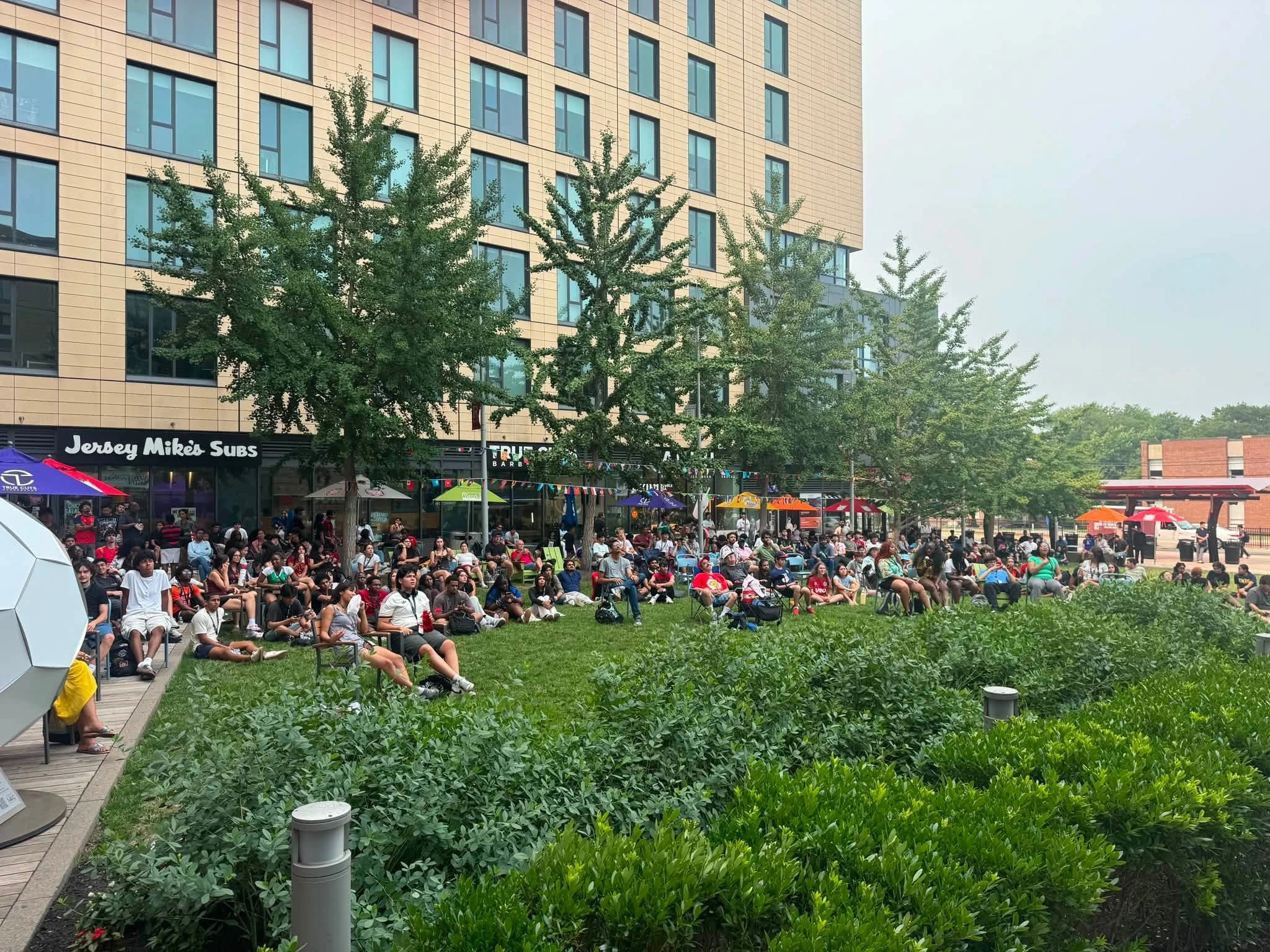
Massive turnout from the community. The Yard filled through the pregame window and stayed packed through kickoff. CBRE’s corporate real estate program became the reason a neighborhood showed up for the biggest sporting moment of the summer.
Why It Worked
Corporate real estate programs live or die on community activation. CBRE does not run watch parties to be noticed. CBRE runs watch parties because the corporate real estate footprint has to translate into something the neighborhood shows up for. When it works, the property becomes a fixture. When the operator holds the room during moments the community actually cares about, like the USA’s opening World Cup match, the corporate program earns its place in the local calendar. Seven years of repeat bookings is what that looks like on the vendor side.
How This CBRE Watch Party Was Planned
A CBRE World Cup Watch Party at The Yard Rutgers is not a standard office party. It sits at the intersection of corporate real estate branding and community facing programming, CBRE is showing up in a neighborhood venue for a global sporting event, which means the planning conversation starts with tone before it starts with logistics. Who is the crowd (employees, local community members, or both), what does CBRE want the room to feel like during match moments versus downtime, and how does the host balance corporate messaging with genuine sports viewing energy.
From there, the build is about the physical realities of a watch party: screen placement, sound levels that do not compete with match commentary, and a run of show that respects the unpredictable rhythm of a live sporting event. Goals can shift minute to minute depending on what is happening on screen, so the host has to be ready to read the room and adjust in real time rather than sticking rigidly to a pre built script.
Because this is a CBRE branded event, brand guidelines matter, how the CBRE name and colors are represented, what messaging plays during breaks in the match, and how the host introduces company speakers without disrupting the viewing experience. That coordination happens in advance with CBRE’s local marketing team, not improvised on site.
What Corporate Real Estate Brands Ask Before Booking a CBRE Style Watch Party
Brands evaluating a host for a CBRE style watch party tend to ask a consistent set of questions. First: has this host worked a live sporting event environment before, where the energy of the room is dictated by what happens on screen rather than a fixed script? That is a different skill than a typical corporate event, where the host controls the pacing throughout.
Second: can the host balance corporate brand messaging with authentic sports fan energy without either one feeling forced? A watch party that leans too corporate feels sterile. One that leans too far into pure fandom loses the brand presence the sponsor is paying for. Finding that balance is the actual skill being evaluated.
Third, brand partners ask about community fit, does the host understand how to read a mixed crowd of employees and local community members, and can they make both groups feel like the event was built for them. On this CBRE account specifically, that read has translated into seven years of repeat bookings.
How a CBRE Watch Party Differs From a Standard Corporate Event
A standard corporate event runs on a host controlled script, the host decides when energy builds, when speeches happen, when the room quiets down. A CBRE World Cup Watch Party runs on the match. Goals, momentum, and crowd energy are dictated by what happens on screen, which means the host has to function more like a live sports broadcaster reacting in real time than a traditional emcee working from a fixed run of show.
Music selection works differently too. A corporate event can build toward one energy peak. A watch party needs music that fills dead air between match action without ever competing with the moments that matter, goals, saves, controversial calls, where the room’s attention needs to be entirely on the screen and the crowd’s own reaction.
Measurement of success also differs. A corporate event is judged on guest satisfaction and program flow. A CBRE watch party is judged on whether the brand successfully inserted itself into a community moment without disrupting it, a harder, more nuanced outcome to hit, and one that depends heavily on the host’s ability to read the room minute to minute.
How This CBRE Watch Party Measures Success
Success on a CBRE World Cup Watch Party is measured differently than a typical corporate function. There is no guest satisfaction survey to reference. Instead, The company’s marketing team is watching whether the brand felt like a natural part of a community sports moment rather than an intrusive corporate presence, whether attendance and engagement held throughout the match rather than trailing off, and whether local community members left with a positive association tied to the The client name.
Social proof matters too. A watch party built around a global event like the World Cup generates organic phone footage and social posts from attendees regardless of what the brand plans, so part of the host’s job is creating moments worth capturing, a well timed crowd reaction, a genuine community connection, that reflect well on The CBRE team without feeling engineered.
What to Expect When Booking a Host for a Corporate Watch Party
Brands booking a host for a CBRE style watch party typically start the conversation three to five weeks out, with the match schedule itself often dictating the final timeline. The first call covers the venue, expected crowd size and composition, brand messaging requirements, and how much of the event should lean corporate versus purely social.
From there, the host typically requests details on screen placement, sound system capability, and any brand assets that need to be worked into the program, banners, giveaways, speaker moments. A loose run of show gets built around the match schedule, with flexibility built in since live sports do not follow a fixed script. On the day itself, the host arrives early to test sound levels against the venue’s existing AV setup and confirm any speaker or brand moment cues with the on site marketing team before the match begins.
Frequently Asked Questions About Booking a CBRE Style Watch Party Host
What does a host actually do during a corporate watch party? The host manages crowd energy around the unpredictable rhythm of a live sporting event, fills dead air between match moments, and represents brand messaging without ever competing with the moments that matter on screen.
How is this different from a standard corporate event booking? A watch party has no fixed script. Energy is dictated by the match itself, which means the host has to react in real time rather than follow a pre built run of show the way a typical corporate event would.
Does the venue affect how the event is run? Yes. A community venue like The Yard Rutgers shapes crowd composition, sound constraints, and how corporate the event can reasonably feel, a heavy handed brand presence in a community space can backfire.
Can this format scale to other sporting events or brand partners? Yes. The same planning sequence, tone setting conversation, venue walk through, flexible run of show built around live match rhythm, applies to other corporate watch party activations beyond The company specifically.
Internal Corporate Events vs. Public Watch Parties
It is worth separating what a The client World Cup Watch Party is from a standard internal corporate event, because the two require different instincts. An internal event, a sales kickoff, a holiday party, has a captive, invited audience that already wants to be there and follows a host controlled script. A public watch party at a community venue has a mixed audience of employees and neighborhood attendees, with energy dictated by a live match rather than a run of show.
That distinction is why not every corporate event host is a fit for a The CBRE team style watch party, and it is the specific skill, real time crowd reading tied to unscripted live sports action, that has kept this account on a seven year rebooking cycle.
What Scaling This Watch Party Model to More Venues Would Involve
The current program runs through The Yard Rutgers, but the same operating model, tone setting planning call, venue walk through, flexible run of show built around live match rhythm, is portable to additional community venues. Scaling it would mean repeating that planning sequence for each new location, confirming local venue AV capability and crowd composition rather than assuming every stop behaves identically to the flagship.
What stays constant is the core skill: a host who can read a crowd in real time against an unscripted live event, balance corporate brand presence with authentic community energy, and know instinctively when to lean into the match and when to step in with brand messaging. That consistency is what has kept this CBRE account on a seven year rebooking cycle, and it is the same standard any additional venue would be held to. A watch party host who has only ever worked scripted corporate events will default to over talking during the match itself, which is the single most common mistake CBRE’s marketing team has flagged when evaluating alternative vendors for other markets.
For a brand evaluating whether a host can handle a The company caliber watch party, the track record on this specific account, repeat bookings across multiple World Cup cycles, is the clearest signal available. Reading a room that is reacting to a screen, not a script, is a specific and learnable skill, but it is one best evaluated through direct experience rather than a resume line.
Why Community Facing Programs Matter for Corporate Real Estate Brands
The client is not a consumer facing brand in the way a retail or apparel company is, which makes a community watch party a different kind of investment than it would be for a typical consumer brand. The goal is not direct product sales, it is presence, goodwill, and local relationship building in the markets where The CBRE team does business. That changes what “success” looks like and it changes what the host is actually optimizing for during the event.
A corporate real estate brand showing up at a neighborhood watch party is making a statement about being part of the community, not just doing business in it. The host’s job is to make that statement land authentically, never overselling the corporate angle, never underselling it either, and keeping the focus on a genuinely good shared experience that happens to be sponsored well.
That is a more delicate needle to thread than a typical branded activation, and it is part of why this account has stayed with the same host across seven years of rebooking rather than treating the role as an interchangeable vendor booking.
Running a corporate real estate activation, community event, or watch party?
Community forward music. Live mic hosting. One operator holding the room across pre event, main moment, and everything in between.
Request a Discovery CallWhat This CBRE Engagement Illustrates About Working With Large Enterprise Clients
Large commercial real estate and enterprise clients like CBRE bring a different set of expectations to event entertainment than a mid size company does, mostly around process. Procurement reviews, vendor insurance requirements, multi stakeholder sign off on the run of show, and coordination across regional offices are all part of working with an organization this size, and treating those steps as part of the job rather than friction is what makes repeat engagements possible.
Brand consistency across a national or regional enterprise client’s events matters more than it does for a single location company. A The company event in one market needs to feel consistent with how the brand shows up in another market, even with a different local team planning each one, and we coordinate with whoever owns the national event standards to make sure music, MC tone, and overall energy stay aligned with what leadership expects regardless of which office is hosting.
Enterprise clients also tend to have a longer relationship arc than a one off booking. What starts as a single regional event often becomes a recurring engagement across multiple offices or business units once the internal events team has a vendor they trust to represent the brand correctly without heavy oversight on every detail. That trust gets built the same way on an enterprise account as it does on a small business booking: by delivering exactly what was promised, on time, without drama.
Booking Timeline for a Community Watch Party
Programs like this one typically start with a planning call eight to twelve weeks out, giving enough runway to lock the venue partnership, confirm branding guidelines with the internal marketing or communications team, and build a run of show that accounts for the unpredictable nature of a live sporting event. World Cup and playoff style watch parties are especially date sensitive, since the actual match schedule isn’t finalized until closer to the tournament, so the plan has to stay flexible on timing while locking everything else early.
The two to three weeks before the event are where most of the real coordination happens: confirming headcount estimates with the venue, finalizing the giveaway or activation elements if any are planned, and doing a final walkthrough of the space to confirm sightlines, sound placement, and crowd flow. For a public facing community event, crowd management matters more than it would for a closed internal function, since attendance is harder to predict and the room has to work whether forty people show up or two hundred.
On the day of, arrival is built around the match start time working backward, with enough buffer to handle sound check, signage placement, and a run through of any branded moments the client wants highlighted during breaks in the action. Live sporting events don’t pause for a production schedule, so the host has to be ready to work around commercial breaks, halftime, and momentum shifts in the room rather than a fixed script.
For organizations considering a similar activation, the biggest planning variable isn’t the entertainment booking itself, it’s aligning the venue partnership and the marketing approvals early enough that the on site team isn’t finalizing brand guidelines the week of the event. Getting those two pieces locked first is what makes everything downstream, including the actual watch party, run smoothly.