
LIDL US Grand Opening Activations
The Program
Seven years running LIDL US grand opening activations across new US store locations. 74 store openings to date. Every activation is a coordinated program: ribbon cutting moments, community welcomes, in store engagement, and driving shoppers into the doors during the first weeks a new LIDL US comes online in a market. Read what 74 Lidl US grand openings taught us about crowd timing.
Our 72nd opening: the Lidl US grand opening in Tappan, New York on September 16, 2026, where we were emcee and DJ.

As seen on News 12 Westchester. News 12 covered the Tappan opening at Tappan Plaza on Route 303, where shoppers lined up around the building before the doors opened. We are in their video on the mic, building the crowd toward the ribbon cutting. Watch the News 12 coverage.
Our 74th opening came on October 7, 2026, booked through Soho Experiential. Our 73rd opening: the Lidl US grand opening in Staten Island, New York on September 30, 2026, where we were emcee and DJ.

As seen on Staten Island Advance. SILive covered the Staten Island opening ahead of the ribbon cutting at 1545 Forest Avenue, and Lidl US’s own corporate account commented on our announcement post before the event. Read the SILive coverage or see the official Lidl US press release.
Retail grand openings are their own discipline. A first day store activation is not a party. It is a marketing engine built to convert curious foot traffic into first purchase customers, sign up new shoppers to the myLidl app, and give the community a reason to remember that this store opened on this day. The operator inside that program has to run four jobs at once.
What we Do at Every LIDL US Activation
The operator role across every store opening
- Emcee and host for ribbon cutting, executive remarks, and community welcome moments
- DJ and music curation paced to the arc of a grand opening day, from doors open through peak traffic hours
- myLidl app introduction to shoppers throughout the activation window, driving app sign ups and first purchase engagement
- Foot traffic driver holding energy at the store entrance and inside the aisles so shoppers stay and browse instead of grabbing and leaving
- Community uplift, reading the neighborhood the LIDL US is opening in and pacing music selection to the local demographic without missing the corporate brand voice
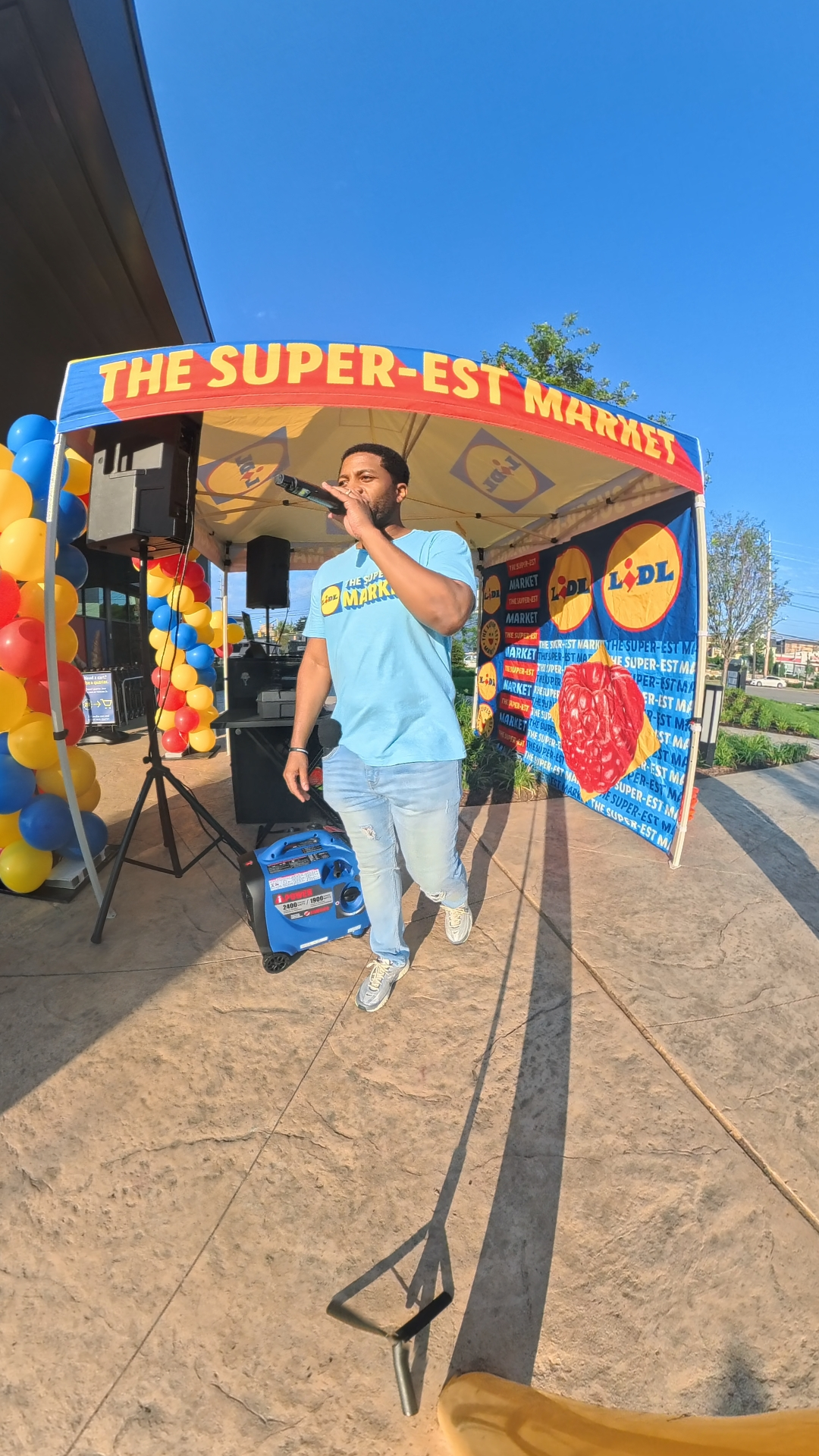
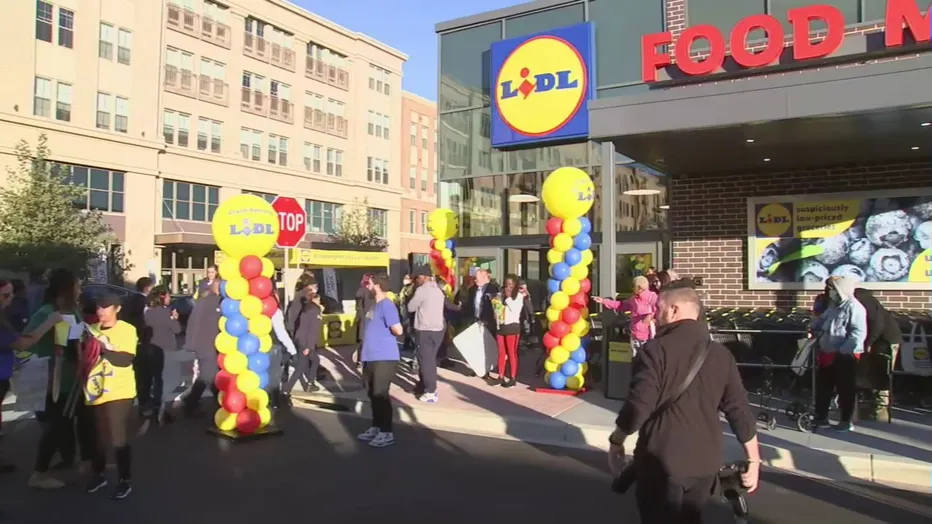
Event Photos
The Outcome
Seven years of continuous grand opening activations across a national retail brand is not a marketing statement. It is a track record. LIDL US does not send the same operator to 74 new store openings unless that operator delivers what the marketing team briefed on every single activation. First store. Sixtieth store. Same standard.
Why It Works
National retail grand openings compound. Each activation carries the brand into a new community that has never shopped LIDL US. The first impression that opening day makes decides whether that community becomes recurring customers or one time visitors. The operator inside that activation is doing brand work in real time. Music selection has to align with LIDL US’s corporate voice. Live microphone hosting has to move shoppers to the myLidl app without sounding like a hard sales pitch. Energy has to hold across a full day of doors open through peak hours without dipping.
Seven years and 74 store openings tells a corporate buyer everything they need to know. This is not a vendor. This is a program partner.
The seventy four openings did not come through one door. Forty five were booked through Legacy Marketing and twenty nine through Soho Experiential, and LIDL US has also hired us directly. Two agency rosters changed underneath this program across seven years and the host did not. That is the part a retail marketing team should read twice, because agencies get replaced and the brand still has to open the store.
How This LIDL US Grand Opening Program Was Planned
A LIDL US grand opening is a repeatable retail launch format, not a one off event, which changes how it gets planned. With 74 activations across seven years, the playbook has been refined stop by stop: confirm the store layout and parking lot footprint, walk the entrance zone where foot traffic will concentrate, and build a run of show that ramps energy toward the doors open moment without peaking too early and losing momentum before customers actually arrive.
Because this is a recurring national program rather than a single booking, consistency matters as much as energy. LIDL US’s marketing team expects the same reliable execution at store fifty as at store one, same professionalism, same read of the crowd, same ability to adapt to whatever the specific location throws at the day, whether that is weather, parking constraints, or a bigger than expected turnout.
Timing is built around the doors open moment specifically. Everything before that is about building anticipation in the parking lot and entrance line. Everything after shifts into sustaining energy inside and near the store as shoppers move through their first visit. That shift, planned in advance, is what keeps a grand opening feeling like an event rather than a long promotional announcement.
What Retail Brands Ask Before Booking a LIDL US Style Grand Opening Host
Retail brands evaluating a host for a grand opening program tend to ask a consistent set of questions. First: can this host deliver the same quality at store fifty as at store one? A national retail rollout cannot afford a host whose energy or professionalism drops off after the novelty wears thin, consistency across dozens of activations is the actual product being purchased.
Second: does the host understand outdoor, parking lot adjacent activations, which behave differently than an indoor venue? Sound carries differently outside, crowd flow is less controlled, and weather is a constant variable. A host who has only worked indoor corporate events may not have solved for these realities.
Third, brands ask about scale and logistics, can the host’s schedule and setup process handle a rollout across many markets without each stop requiring a from scratch onboarding. Seven years of continuous rebooking on this LIDL US program is the direct answer to that question.
How a LIDL US Grand Opening Differs From a Standard Corporate Event
A standard corporate event happens once, for an invited audience, in a controlled indoor venue. A LIDL US grand opening happens repeatedly, for a walk up public audience, in a parking lot and storefront environment that the host does not control. That difference shapes everything from equipment setup to how the host thinks about crowd safety and flow.
The energy curve is also different. A corporate event can build steadily toward one peak. A grand opening needs to hit a hard peak right at doors open, then sustain a different, calmer kind of energy as shoppers move through their first store visit, closer to ongoing ambient hosting than a single climactic moment.
Measurement of success differs too. A corporate event is judged on guest experience. A grand opening is judged on whether the launch moment felt like an event worth showing up for, and whether that translates into first day foot traffic and a positive local impression of the new store, outcomes that compound across 74 activations into a program LIDL US keeps rebooking.
How This LIDL US Grand Opening Program Measures Success
Success on a LIDL US grand opening is measured in first day foot traffic, how the launch moment felt to the local community, and whether the store’s opening got the kind of local buzz that translates into repeat customers in the following weeks. There is no post event survey, the signal is whether the parking lot filled, whether the doors open moment felt like an event, and whether the store’s opening day sales reflected that energy.
Consistency across the program is its own success metric. LIDL US’s marketing team is not evaluating a single grand opening in isolation, they are tracking whether the program holds its quality bar across dozens of markets and store types. A host who delivers a great activation at one location but an inconsistent one at the next does not survive a program built on this kind of scale.
What to Expect When Booking a Host for a Retail Grand Opening
Brands booking a host for a LIDL US style grand opening typically start the conversation two to four weeks out per location, though a rolling national program like this one often has activations scheduled well in advance on a recurring calendar. The first call for each new stop covers store address, parking lot layout, expected opening day crowd size, and any local market considerations.
From there, the host typically requests details on the store’s outdoor space, any local permitting or noise restrictions, and the exact doors open time the entire program builds toward. A tight run of show gets built around that single fixed moment, with flexible pre show content to fill the lead up and a shift into ambient in store hosting once doors open. On the day itself, the host arrives early enough to test sound levels outdoors and walk the parking lot footprint before the crowd builds.
Frequently Asked Questions About Booking a LIDL US Style Grand Opening Host
What does a host actually do during a retail grand opening? The host builds anticipation in the parking lot and entrance line before doors open, delivers a clear peak moment right at the doors open threshold, then shifts into ambient in store hosting as shoppers move through their first visit.
How is this different from a standard corporate event booking? A grand opening happens outdoors in a parking lot adjacent environment with a walk up public audience, rather than an indoor venue with an invited guest list, and it repeats across dozens of markets rather than happening once.
Does weather affect how the event is run? Yes. Outdoor activations require backup plans for sound and equipment in variable weather, and a host with grand opening experience has already solved for that rather than treating it as a surprise.
Can this format scale across a national retail rollout? Yes, this specific LIDL US program has run 74 activations across seven years, which is the direct proof that the format holds consistency at scale rather than degrading after the first few stops.
What Scaling This Grand Opening Model to More Markets Would Involve
The current LIDL US program has already scaled to 74 store openings, but the underlying question for any brand considering a similar rollout is what makes that repeatability possible. It comes down to a documented playbook, layout walk through, doors open focused run of show, ambient in store follow through, applied consistently rather than reinvented at every stop.
What does not scale automatically is the host’s read of each specific market. A grand opening in a dense urban lot behaves differently than one in a suburban strip center, and a host has to adjust for that even while holding the core format constant. That adaptability, proven across 74 markets, is what has kept this program on a seven year continuous relationship rather than a one off vendor engagement.
The same program has run in markets that look nothing alike. The Skyland Town Center store in Washington DC was the first full service grocery to open east of the Anacostia River in more than a decade, and the line started forming at 4am. The Paramus store in New Jersey was a suburban opening with a different rhythm entirely. Same run of show, same brand standard. The adjustment happens on site, not in the brief. The program has also run in Dover, Delaware, another market outside our home base handled to the same standard.
Internal Corporate Events vs. Public Grand Openings
It is worth separating what a LIDL US grand opening is from a standard internal corporate event, because the two demand different instincts entirely. An internal event has an invited, captive audience already inclined to be there. A grand opening has a walk up public audience with zero advance buy in, every person engaged has to be pulled in cold, from a parking lot or sidewalk, with no guest list to lean on.
That distinction is why this program has stayed with the same host across 74 activations rather than treating each opening as an interchangeable local vendor booking. The specific skill, reading a walk up crowd, building doors open anticipation from nothing, then sustaining ambient energy through a first visit shopping experience, is a narrower and more repeatable discipline than most corporate event hosting, and it is the discipline this program has been built around.
Why LIDL US Keeps Rebooking This Program
Seven years and 74 activations is not a coincidence, it reflects a specific set of criteria LIDL US’s marketing team keeps evaluating stop after stop. Reliability tops the list: a national retail rollout cannot afford a host who is inconsistent, late, or unprepared for the specific realities of an outdoor parking lot activation. Every LIDL US grand opening runs on the same tight timeline, and there is no room for a learning curve at store forty when the standard was already set at store one.
Beyond reliability, LIDL US has continued to rebook because the format itself keeps working, the doors open energy peak, the pre show anticipation build, the shift into ambient in store hosting once shoppers arrive, all of it maps directly to measurable first day outcomes the brand can point to. That combination of consistency and proven format is what has kept this a seven year relationship instead of a rotating cast of local vendors.
What Makes This Grand Opening Program Repeatable
Seven years and seventy four openings didn’t happen by accident. Every LIDL US grand opening runs on the same short list of essentials: a confirmed dignitary schedule, a run of show built around the doors open moment, a weather contingency plan for outdoor storefront conditions, and a single point of contact who can make real time calls if the schedule shifts.
That consistency, applied store after store, market after market, is what turns a single successful opening into a seven year program. LIDL US doesn’t have to re evaluate the vendor relationship with every new store, and that reliability is the actual product being delivered here, not any single event.
Lessons From Seven Years of Grand Opening Bookings
A few patterns became clear across dozens of store openings that apply to any national retail rollout. First, the dignitary segment is the highest risk part of every event, and reading a speaker’s comfort level in real time, extending a moment for a confident official or gracefully wrapping one for someone visibly nervous, keeps the whole day feeling smooth regardless of who’s at the podium.
Second, outdoor storefront logistics matter more than almost any other event category. A parking lot or entrance activation has none of the climate control of an indoor venue, and a run of show has to account for wind affecting sound and direct sun affecting crowd comfort, with a real backup plan for rain built in from the start.
Third, and most important for a multi year retail program: consistency beats novelty. The store team isn’t looking for a different, more creative experience at every single opening. They’re looking for the same reliable standard, market after market, because that predictability is what lets a national rollout calendar move forward with confidence instead of treating every new store as its own production challenge from scratch.
Running a retail grand opening, brand activation, or multi location program?
Brand aligned music. Live microphone hosting. Community forward energy. One operator holding the standard across every activation, every location, every opening day.
Request a Discovery Call