
Legacy Marketing × LIDL US Grand Openings
4 year agency partnership. 45 grocery store grand openings across the East Coast, including LIDL’s historic first Washington, DC store at Skyland Town Center in Anacostia.
The Program
Legacy Marketing is one of the experiential agencies LIDL US trusts to bring their new store openings to life. Over four years and more than thirty grand openings across the East Coast, Legacy has booked No Stress Zone Entertainment to anchor the on the ground energy, the music, the microphone, the crowd flow, the community welcome.
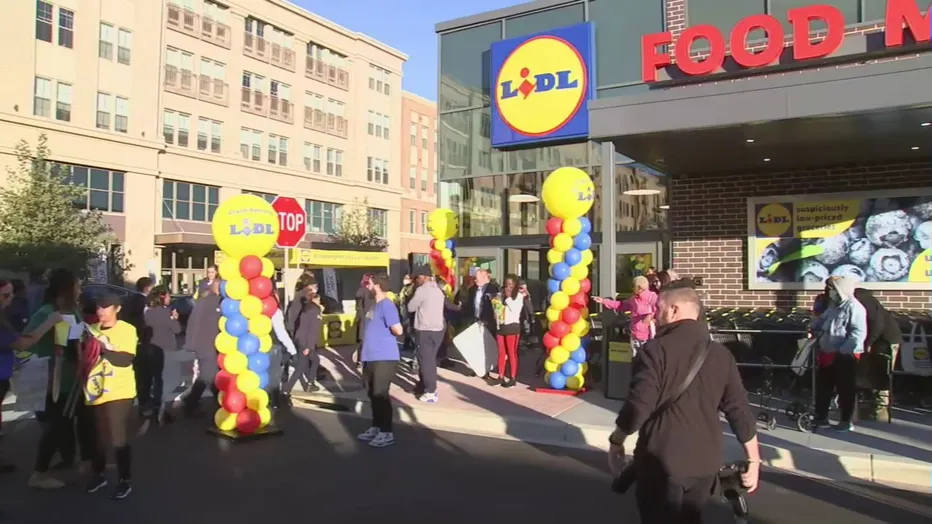
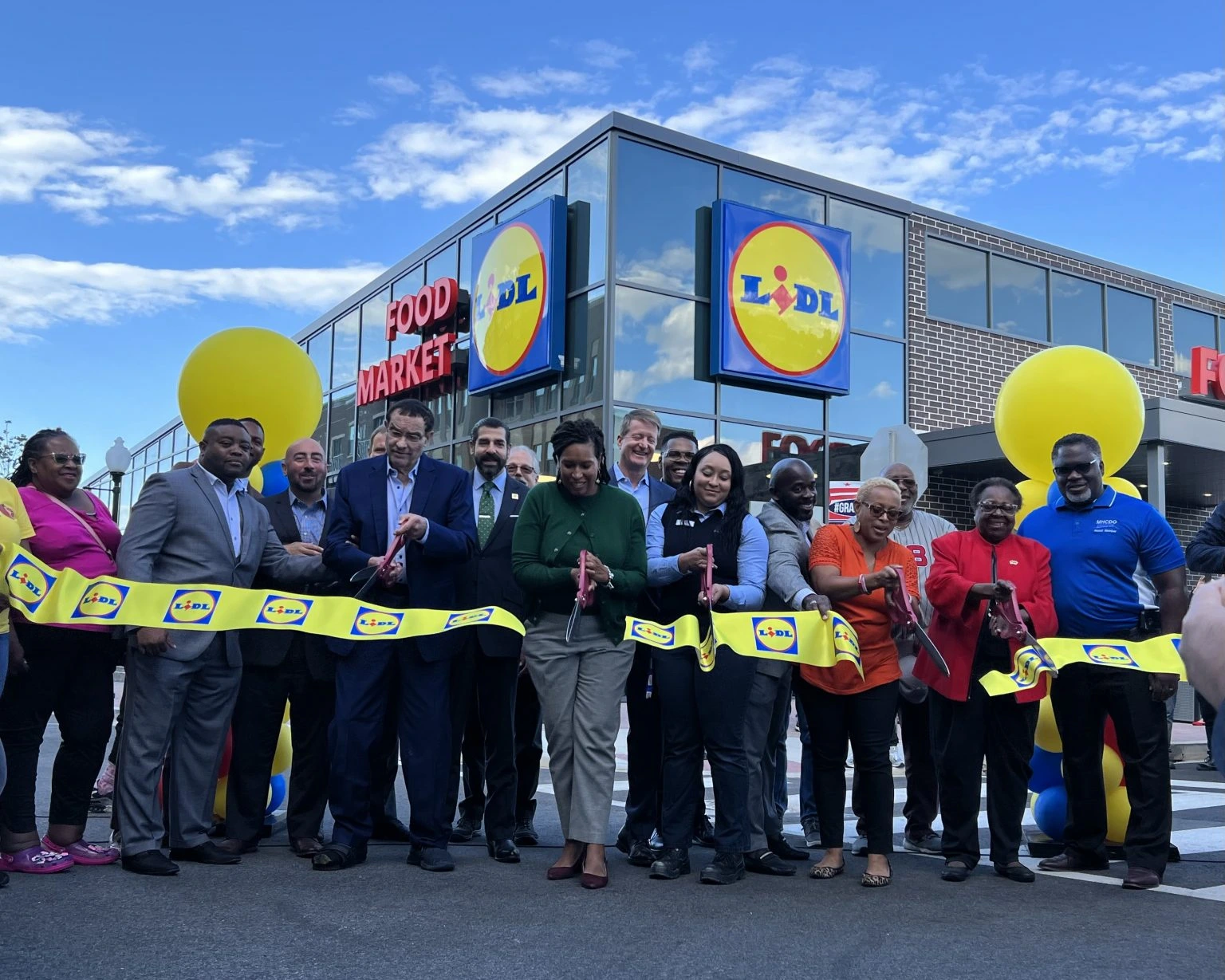
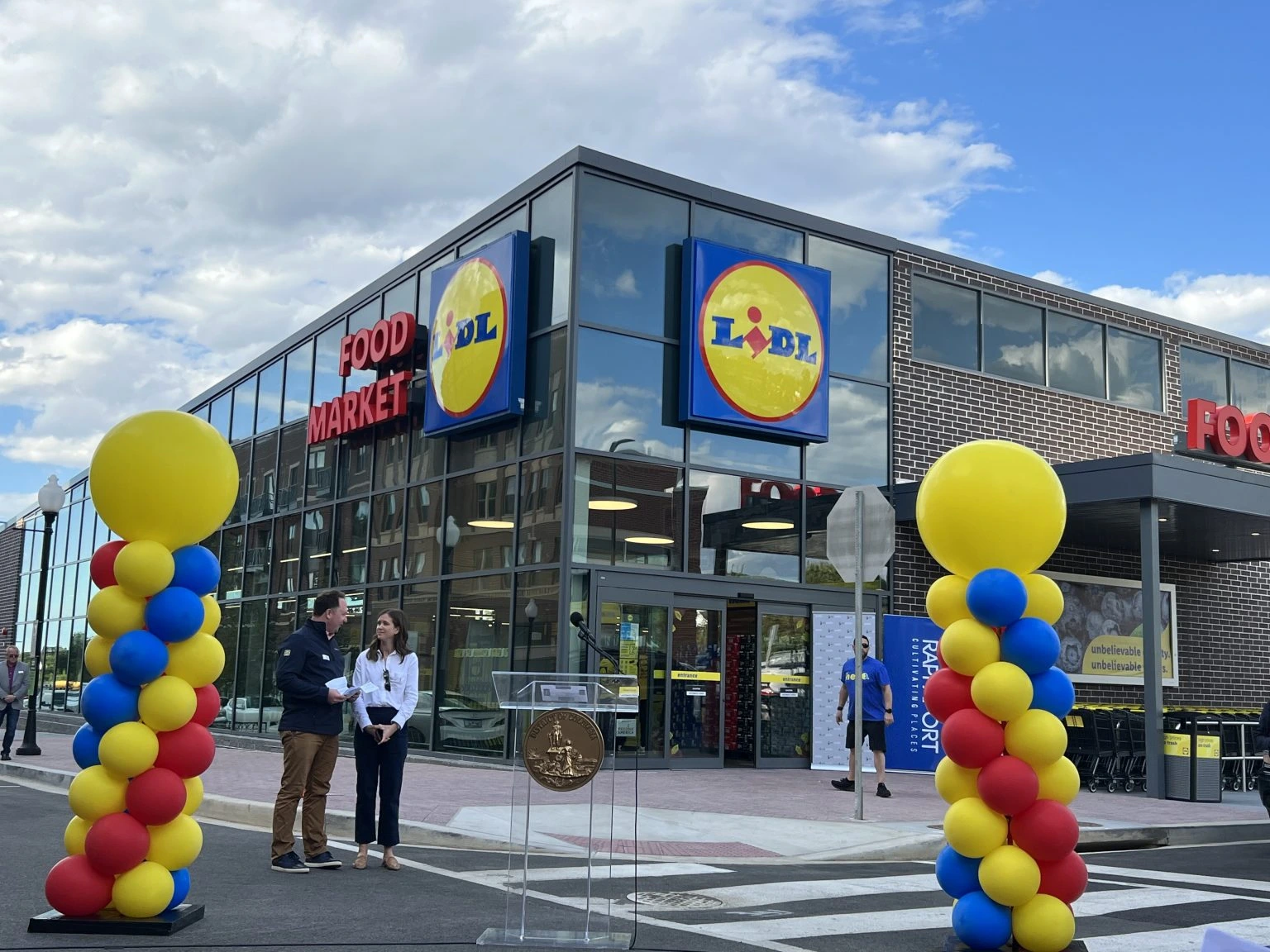
The featured activation on this page is LIDL’s first Washington, DC store, a milestone opening at Skyland Town Center in Ward 7/Ward 8 Anacostia. It was the first new grocery store in Ward 7 in over a decade, addressing a documented food desert (D.C. Policy Center reported 80% of the city’s food deserts sat in Wards 7 and 8). Mayor Muriel Bowser and Deputy Mayor John Falcicchio joined the ribbon cutting. Legacy Marketing produced. We hosted the arrival experience.
What we Did
Grand opening days for LIDL are early, long, and layered, lines form before sunrise, media rolls in for the ribbon cutting, community leaders speak, then thousands of shoppers move through the doors in the first hours. Our job across every Legacy Marketing activation is the same: hold the energy of the crowd from the first person in line to the last shopper of the launch window.
That means reading the DC/Anacostia community in real time, curating music that reflects the neighborhood we’re showing up in (not a generic corporate playlist), hosting the myLidl app moment cleanly so shoppers actually download it, hyping the ribbon cut without stepping on the mayor’s speech, and keeping foot traffic flowing without pinch points at the entrance. Legacy Marketing books the same MC across markets on purpose, the LIDL brand voice at the door stays consistent even when the city changes.
Event Video


Photos
Outcome
Skyland Town Center opened with Mayor Bowser at the podium, community leaders speaking, and lines wrapped around a store that Ward 7 and Ward 8 had waited over a decade to have. Legacy Marketing produced a launch that felt like a neighborhood event, not a corporate one, and continued rebooking No Stress Zone for the openings that followed.
Why It Works
Agencies rebook for one reason: they don’t want to re explain the assignment. Legacy Marketing runs LIDL’s calendar tight, openings stack, markets change, community sensitivities shift block by block. What they need at the mic is somebody who reads a room without a briefing, respects the moment when the mayor is speaking, hypes the moment when the doors open, and never makes the activation about the host. Four years and thirty plus openings later, that’s why the booking keeps coming back.
The Planning Behind a Multi Year Grand Opening Program
Legacy Marketing books grand opening activations for LIDL US on behalf of the retailer, which means every event carries two layers of expectation: the marketing agency’s production standard and the retail brand’s own protocol for a store opening. Four years and 45 openings in, that planning process has been refined down to a repeatable framework: a pre event call confirming the local dignitary schedule, a run of show built around the ribbon cutting moment, and a script that respects the specific format each store opening follows, remarks from local officials, a ribbon cutting, then doors open.
That format doesn’t change much store to store, but the local details always do. Different mayors, different city councils, different community groups getting recognized. The planning phase is where those local specifics get folded into the standard grand opening script so the day feels tailored to that community, not like a copy pasted event.
Questions Legacy Marketing Asked Before This Became a Standing Program
Legacy Marketing vets vendors the way any agency managing a national retail rollout should, carefully, and with an eye toward consistency across dozens of locations. The questions that shaped this relationship are worth sharing.
Can you respect a dignitary program without losing the crowd’s energy? Grand openings involve local officials, sometimes a mayor or city council member, speaking before the doors open. We walked Legacy Marketing through how the host role shifts to support that moment, not compete with it, while still building anticipation for the actual opening.
Can the same standard hold across dozens of different cities and stores? This is the core question behind any multi location retail program. We explained the documented run of show template that travels with us to every opening, adapted for local specifics but never rebuilt from scratch.
What happens when a dignitary runs late or a delivery is delayed? Grand openings involve more outside variables than almost any other event type, city officials on their own schedule, last minute inventory issues, weather. We walked through specific examples of holding a crowd’s attention through an unplanned delay without losing the energy needed for the doors open moment.
How a Grand Opening Differs From a Standard Corporate Event
A grand opening is public facing in a way most corporate bookings aren’t. The crowd isn’t a captive audience of employees or conference attendees, it’s members of the community who can walk away at any point if the moment doesn’t hold their attention. That changes the entire approach: energy has to build toward a specific climactic moment, the ribbon cutting and door opening, rather than sustaining a flat level of engagement across a fixed block of time.
It also means working cleanly alongside people who aren’t professional public speakers. Local officials aren’t event professionals, and the host’s job is to make their moment land well without overshadowing it or leaving them exposed if the remarks run short or long.
How Success Gets Measured Across the Program
A single grand opening gets measured by crowd energy at the door open moment and how clean the dignitary segment felt. The broader program gets measured differently: whether Legacy Marketing keeps rebooking for every new LIDL US location without needing to reconsider the vendor relationship each time.
Four years and 30 plus openings is the actual proof point here. That’s not one good event, it’s a sustained standard across dozens of different cities, dignitaries, and store teams, which is the only way a marketing agency managing a national retail rollout can trust a single vendor with that much of the calendar.
What the Booking Process Looks Like Now
Early in the relationship, each grand opening required a full onboarding conversation. Four years in, the process is streamlined: Legacy Marketing sends the store address, opening date, and any confirmed dignitaries, and the run of show template gets adapted from there. That efficiency is the direct result of a proven track record, the trust building phase happened years ago.
For any agency starting a similar multi location retail program, the first several openings are where that trust gets established. After that, the process should feel like activating a known quantity rather than re vetting a vendor every time.
Frequently Asked Questions
Do you work with other retail marketing agencies besides Legacy Marketing? Grand opening and retail activation work follows the same framework regardless of which agency or retailer is involved. The specifics change, the discipline of holding a public crowd’s attention through a dignitary program and a doors open moment stays the same.
How do you handle a program that spans dozens of different cities? Through a documented, repeatable run of show that travels to every location, adapted for local dignitaries and store specifics but never rebuilt from scratch. That consistency is what makes a 30 plus location program possible with one vendor.
What’s included in a grand opening booking? Sound and mic setup appropriate for an outdoor or storefront environment, a run of show built around the dignitary program and ribbon cutting, and coordination with the local store team and any community groups being recognized.
Scaling a National Grand Opening Program
What makes this program work at 30 plus locations and counting is the same thing that would make it work at 100: a repeatable framework applied with local sensitivity every single time. Legacy Marketing doesn’t have to reinvent the vendor relationship with every new store opening, and that reliability is the actual product being delivered here, not any single event.
What Made It Into the Internal Recap
Legacy Marketing gets two documents after every grand opening. The public case study version is the four year, 30 plus opening arc you’re reading here. The internal recap the agency actually uses covers store specific detail: how the dignitary segment ran, any local media coverage moments, and notes on crowd size and energy that feed into planning the next store’s opening.
That internal documentation is what lets Legacy Marketing walk into a conversation with LIDL US corporate and speak confidently about the on site experience across the whole rollout, not just anecdotally, but with a real record behind it.
Why Grand Openings Are Worth Getting Right
A grand opening is often a retailer’s only public moment in a new community before the store just becomes part of the neighborhood. The energy and professionalism of that single event shapes how the community perceives the brand’s arrival, whether it feels like a genuine welcome or a forgettable ribbon cutting formality.
For a national retailer opening dozens of locations a year, that first impression compounds. A strong grand opening builds local goodwill and press interest. A flat one is a missed opportunity that doesn’t come back around. That’s the real stakes behind getting this specific event type right, repeatedly, across every new location.
What to Look for in a Grand Opening Host
Grand openings require a different skill set than a private corporate event, and agencies managing multi location retail rollouts should evaluate hosts accordingly.
Comfort working alongside non professional speakers. Local officials and community leaders aren’t trained public speakers. A host who can support their moment gracefully, without exposing an awkward pause or a short set of remarks, is protecting the retailer’s image as much as running the show.
The ability to build toward a single climactic moment. Unlike a corporate event with sustained programming, a grand opening builds toward one specific instant, the doors opening. A host who understands how to pace a crowd toward that moment, rather than treating the whole event as one flat energy level, gets meaningfully better results.
Reliability across a repeatable, high volume calendar. National retail rollouts move fast, with openings scheduled sometimes weeks apart across different cities. A host who can execute the same standard without a lengthy re onboarding process each time is what makes a program like this scalable.
Lessons From Four Years of Grand Opening Bookings
A few patterns became clear across dozens of openings that apply to any agency running a repeatable retail rollout program. First, the dignitary segment is the highest risk, highest reward part of every event. Local officials vary widely in comfort with public speaking, and the host’s ability to read that in real time, extending a moment for a confident speaker or gracefully wrapping one for someone visibly nervous, is what keeps the whole event feeling smooth regardless of who’s at the podium that day.
Second, weather and outdoor logistics matter more in grand opening work than almost any other event category. A parking lot activation or storefront ribbon cutting has none of the climate control of an indoor venue, and a run of show has to account for wind affecting sound, direct sun affecting crowd comfort, and backup plans for rain that don’t exist in a typical indoor booking.
Third, and most important for a national rollout: consistency beats novelty. Legacy Marketing isn’t looking for a different, more creative experience at every single store. They’re looking for the same reliable standard, opening after opening, because that predictability is what lets them plan a rollout calendar with confidence instead of treating every new location as its own production challenge.
That’s the entire reason a single vendor relationship has lasted four years and 30 plus openings instead of being re evaluated store by store. The consistency itself became the value proposition.
What a Well Run Grand Opening Requires
Every grand opening in this program, all 30 plus of them, is built on the same short list of essentials.
A confirmed dignitary schedule before the date. Knowing who’s speaking, in what order, and roughly how long each remark will run shapes the entire run of show. Walking in without that confirmed is how a grand opening drifts and loses the crowd before the doors even open.
A weather and logistics contingency plan. Outdoor storefront events need a real backup plan for wind, rain, and direct sun, not an afterthought. That planning happens before the date, not improvised on site.
A single point of contact from the agency and the store. Legacy Marketing and the local store manager both need one person who can make real time calls if the schedule shifts. Without that, small issues become bigger ones during the live event.
A documented recap after every single opening. Not just the big ones. That consistency in documentation is what let this become a repeatable, four year program instead of a series of one off bookings.
Legacy Marketing’s own retail operations team put it plainly after year three: this is the one part of every store opening they no longer have to worry about.
That’s the throughline across the entire Legacy Marketing relationship: a repeatable framework that let a single vendor handle 30 plus store openings without the standard slipping. Legacy Marketing didn’t build this program around one great opening, Legacy Marketing built it around a process that holds up market after market.
Any agency reading this as a Legacy Marketing style blueprint for a national retail rollout should take one thing away: consistency, documented and repeated, is worth more than any single standout event.
Four years into the Legacy Marketing partnership, the internal recap process has become as valuable as the openings themselves. Legacy Marketing’s own operations team put it plainly: this is the one part of every store opening they no longer have to worry about.
That trust, built opening after opening, is what let Legacy Marketing scale from a single test market to a full national rollout using the same vendor throughout. Legacy Marketing’s confidence in the format didn’t come from a pitch deck, it came from a track record.
Legacy Marketing’s own account lead has said the quiet part out loud more than once: the easiest part of every new store opening is booking the host, because Legacy Marketing already knows exactly what they’re getting. That’s not a low bar, it’s the highest one a vendor relationship can clear.
For any agency evaluating a similar national rollout partner, the Legacy Marketing track record is the proof point worth studying: four years, thirty plus openings, zero vendor changes.
That’s the Legacy Marketing standard, held for four years and thirty plus openings, and the reason this partnership keeps growing instead of getting re evaluated with every new market.
Legacy Marketing’s playbook for onboarding a new market always starts the same way: confirm the store, confirm the date, confirm any dignitaries, and hand it to the vendor Legacy Marketing already trusts. That simplicity is the entire point of a four year Legacy Marketing relationship. Legacy Marketing spends its time on strategy and client relationships, not vendor management, because that part of the equation was solved years ago.
Legacy Marketing calls it the boring part of the job, in the best way. No drama, no surprises, just openings that go the way the run of show says they will.
That reliability is the actual Legacy Marketing story, four years running.
Planning a grand opening or brand activation?
Agencies rebook because the crowd energy holds. Let’s talk about your next launch.