Speaker no show contingency planning is the discipline that separates event producers who look calm on show day from producers who visibly panic. Every experienced producer has watched a keynote speaker fail to show up 20 minutes before their slot. That is when speaker no show contingency either saves the event or fails it publicly.
Here are the seven best speaker no show contingency plans that actually save the room when the moment breaks.
Table of Contents
- Plan 1: Substitute Speaker on Standby
- Plan 2: Extend Previous Session Q and A
- Plan 3: Move Programming Forward
- Plan 4: Emcee Led Interactive Segment
- Plan 5: Pre Recorded Speaker Content
- Plan 6: Cross Session Merge
- Plan 7: Structured Break Extension
Plan 1: Substitute Speaker on Standby
The gold standard speaker no show contingency is a substitute speaker already on site. Not on a call. Not on standby remotely. In the venue. Familiar with the topic. Prepared to step in.
Recruit substitutes from your speaker pool at least 30 days before the event. Ideally former speakers who are attending, board members with expertise, or executives from sponsoring companies who can hold a room.
The substitute needs a briefing packet ready. Original speaker’s topic. Session length. Audience level. Any specific angles the original was going to cover. Twenty minutes of prep is enough for a capable substitute to deliver a strong session.
A live substitute speaker no show contingency rarely gets noticed by the audience. Great substitutes reframe the session around their own perspective and the room accepts the pivot without concern.
Plan 2: Extend Previous Session Q and A
When the missing speaker is scheduled after a strong session, a Q and A speaker no show contingency works beautifully. The previous speaker gets a full extra half hour. Attendees get more depth on content that already resonated.
This only works if the previous speaker is willing and skilled enough to sustain an extended Q and A. Have the conversation before the event. Some speakers welcome the extra time. Others do not.
The emcee should also be prepared with three or four prepared audience prompts to seed the extended Q and A if the room goes quiet. That prep prevents the extension from feeling forced.
Q and A extension actually raises attendee satisfaction on the previous session. Extended engagement with a strong speaker is often the memory attendees walk away with.
Plan 3: Move Programming Forward
Depending on the run of show, moving subsequent programming forward is a valid contingency. Everyone shifts up an hour. The day ends earlier. Attendees get the same total content in a tighter format.
This speaker no show contingency requires coordination with venue, catering, and every subsequent speaker. Do not attempt it without at least 60 minutes of buffer to communicate the change.
Attendees generally appreciate an earlier end to the day when it saves them from filler content. Communicating the change as an intentional program optimization rather than a cover for a no show preserves attendee trust.
Programming shifts also open up options for extended networking. The recovered hour becomes an unstructured connection window that often gets remembered as one of the best parts of the day.
Plan 4: Emcee Led Interactive Segment
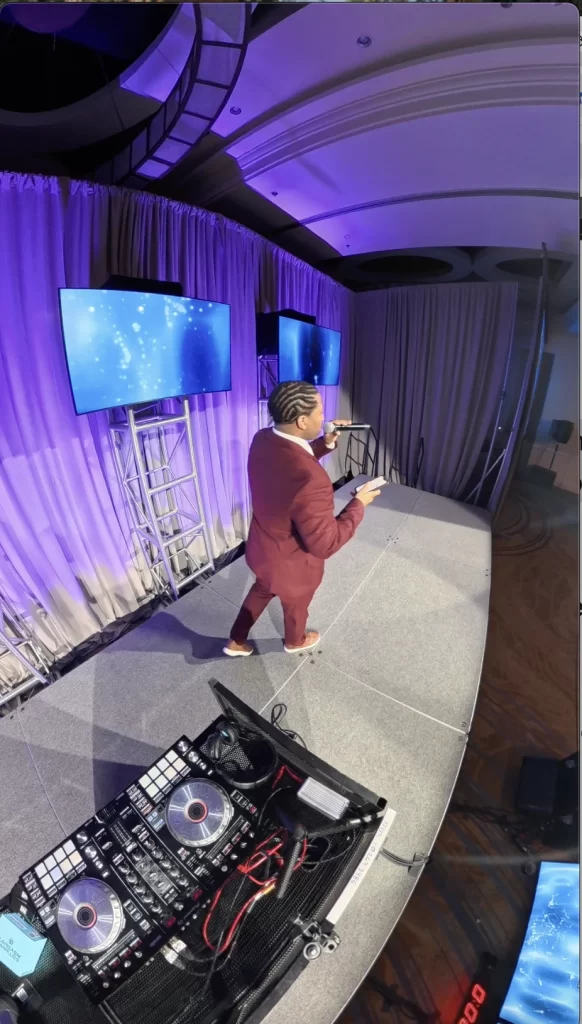
A skilled emcee can hold a room for 30 to 45 minutes with structured interactive content. This move depends entirely on your emcee’s capacity to improvise with structure.
Interactive segments work better than emcee monologue. Small group discussions. Live polling. Audience storytelling prompts. The room becomes part of the content and the missing speaker becomes invisible.
Great emcees have three or four interactive segments ready as speaker no show contingency plans. They can pull the segment that fits the audience and the timing without preparation because they built the segments into their permanent kit.
Book emcees who can do this specifically. During emcee vetting, ask them to describe how they would fill 30 minutes on 15 minutes notice. Their answer tells you whether backup depth lives inside their skill set.
The best emcees treat this as a core skill rather than an emergency measure, the same way they approach transitions, audience reads, and pacing throughout the event. For a deeper look at what separates a true master of ceremonies from someone who simply reads a script between segments, see our master of ceremonies conference guide. An emcee who has run dozens of live pivots brings a different kind of speaker no show contingency value than one who has only rehearsed a run of show once, and that difference shows up exactly when a session goes sideways.
Plan 5: Pre Recorded Speaker Content
Some events pre record every keynote as insurance. When a speaker no shows, the pre recorded video runs while the emcee moderates a discussion or Q and A afterward.
This approach requires meaningful production investment. Every speaker needs to record their session two to three weeks before the event. Adds cost but delivers ironclad backup content.
Pre recorded content also allows for higher production values than live delivery. Post production edit. Multiple takes. Music beds. The recording can be a stronger asset than the original live delivery would have been.
Communicate the pre recording clearly if it airs. Attendees respect the intentional design. Pretending it is live is where trust breaks down.
Plan 6: Cross Session Merge
Cross session merge is an underutilized speaker no show contingency. When a speaker on the main stage no shows, merge two breakout sessions into the main room instead. Attendees get two speakers for the price of one and the main stage stays busy.
This move requires the two breakout speakers to be willing to share the stage. Some love it. Others do not. Have the conversation ahead of the event so you know which pairings work.
The emcee moderates the merged session as a live conversation between the two speakers. That format often produces more insight than either would have delivered solo. Attendees get value from the disruption.
Merged sessions also break attendee expectations in a good way. The room reads the format as intentional programming rather than a scramble.
Plan 7: Structured Break Extension
When no other move works, a structured break extension buys you time. The break becomes 45 minutes instead of 15. Attendees get networking time. The team gets time to solve the next hour.
Structured means the break has design. Programd networking prompts. Sponsor activation hooks. Music that supports connection. Not just an empty hallway with the coffee stand overwhelmed by demand.
The break extension speaker no show contingency should be the last resort because it does not solve the missing content. Attendees who paid to attend still lose the session they came for.
Announce the extended break as intentional. Never let the audience feel the scramble. That is the difference between a producer who runs the room and a producer who gets run by the room.
Why Speakers No Show
Speaker no show contingency planning requires understanding why speakers actually no show. Not every reason is predictable but patterns exist.
Family emergency is the most common. Then travel disruption. Then illness. Then miscommunication about the date or time. Rarely is it deliberate. Almost always the speaker is embarrassed and apologetic.
Travel disruption is the most preventable. Book speakers on flights that arrive 24 hours before their session, not the same morning. That single change reduces speaker no show rate by 60 to 70 percent.
Miscommunication is also preventable through triple confirmation. Contract confirmation. Two week reminder. 48 hour reminder. Speakers who receive three touches are dramatically less likely to lose track of the date.
Building Speaker No Show Contingency Into Every Event
Every event over 200 attendees should have documented speaker no show contingency plans for every scheduled speaker. Not a general plan. Speaker specific plans that account for the timing, format, and audience for each session.
The speaker no show contingency document should live with the run of show. Emcee has a copy. Production team has a copy. Producer has a copy. Everyone knows the plan for every session before the event starts.
Update the document event over event based on what actually worked. Real world execution refines the plans faster than theoretical planning. Speaker no show contingency planning gets better with every event you run.
The same discipline applies more broadly. Events that treat speaker no show contingency as one symptom of a larger reliability gap tend to run into more problems than the no show itself. For a wider look at where high pressure programs break down, see high stakes events not delivering results.
Communicating a Speaker No Show to the Audience
How you communicate a speaker no show contingency situation to the audience matters as much as the plan itself. Silence creates suspicion. Overexplaining creates concern. Transparent brevity works best.
The emcee should acknowledge the change in one sentence. Name the speaker. State that they cannot be with you today. Introduce the replacement plan confidently. Move forward. That flow shows leadership and preserves trust.
Do not lie about the reason. Do not overexplain. Do not apologize excessively. Audiences accept that speakers occasionally cannot make it. What they do not accept is watching the producer squirm.
Post event follow up matters here too. If the speaker no show contingency involved a substitute or a schedule change, an email explaining the pivot and thanking the audience for their flexibility reinforces the professionalism of the response.
Vendor Coordination on Speaker Failures
Speaker no show contingency requires understanding the vendor coordination burden. Speaker no show contingency spreads across every event vendor. Catering needs to know if the schedule shifted. AV needs to know if a pre recorded video is running instead of live. Security needs to know if the substitute has different access needs.
The production team should have a single point of contact who owns coordination during a no show event. Not the emcee. Not the producer. A dedicated coordinator whose job during that hour is only speaker no show contingency execution.
This coordinator role should be assigned in advance. During pre event walkthroughs, brief this person on every speaker no show contingency plan for every session. When the moment hits, they execute without needing decisions from the producer.
The speaker no show contingency coordinator is one of those invisible roles that only matters when something goes wrong. When it does, they are the difference between a smooth pivot and a visible scramble.
That coordinator role should be written into the production contract, not assumed. Vague verbal agreements about who owns a speaker no show contingency decision tend to break down exactly when the room is watching. Our contract essentials checklist walks through the specific clauses worth adding before an event, including who has the authority to trigger a contingency plan, how substitute content gets approved, and what happens to vendor scheduling if a session shifts. Building this into the contract removes the ambiguity that turns a manageable speaker no show contingency into a visible scramble in front of the audience.
Insurance and Speaker No Show Contingency
Event cancellation insurance sometimes covers speaker no show costs but the coverage varies dramatically by policy. Read your policy specifically for speaker no show language before assuming coverage exists.
Speaker contracts should also include cancellation penalty clauses. Speakers who cancel with less than 14 days notice should forfeit their fee. Speakers who cancel with less than 48 hours notice should also cover reasonable replacement costs.
Enforce the clauses. Even sympathetic speakers should feel the financial consequence of no showing. That enforcement is what protects future events from repeat no shows by the same speakers.
Document every speaker no show event carefully. Reason. Impact. Cost. Speakers with multiple documented no shows across the industry become known risks that other producers avoid booking.
The Bottom Line on Speaker No Show Contingency
Speaker no show contingency planning is not paranoia. It is professional risk management. Every producer running events at scale eventually watches a keynote fall through. The producers who look calm are the ones who prepared.
The seven plans above cover most speaker no show contingency scenarios. Build them into your run of show template. Brief your emcee and production team on which plan fits which scenario. Rehearse the plans during pre event walkthroughs.
According to the Meeting Professionals International, roughly 3 to 5 percent of confirmed corporate event speakers do not appear on show day. That failure rate makes speaker no show contingency planning table stakes for professional producers.
Reach out at nostresszoneent.com/contact to build a speaker no show contingency plan for your next event before you finalize the run of show.
Building the Backup Speaker List Before You Need It
Speaker no shows happen more often than most planners expect, whether it’s flight delays, family emergencies, or last minute illness, and the events that handle it smoothly are the ones with a backup plan built weeks in advance, not one improvised in a panic an hour before the session. A backup speaker list doesn’t need to be elaborate: two or three internal team members or trusted external contacts, briefed in advance on the general topic, who could step in for a modified version of the session if needed.
The briefing matters more than the list itself. A backup speaker who’s simply told “you might need to fill in” without any context on the session’s key points will deliver a noticeably weaker version than one who’s been given the original speaker’s outline, key talking points, and any slides in advance. Building that handoff packet at the same time you build the main speaker’s brief costs almost no extra time and makes the difference between a seamless save and an obvious scramble.
For sessions where a true substitute isn’t realistic, a highly specialized technical topic, for instance, the fallback plan should shift from “replace the speaker” to “restructure the session.” A moderated panel discussion among other attendees, an extended Q&A with available subject matter experts, or simply extending the break and adjusting the agenda are all better outcomes than an empty room and a dead time slot. Decide in advance which sessions have a true backup speaker option and which need a structural fallback, so the decision doesn’t have to be made from scratch under pressure.
Refresh the backup speaker list at least twice a year, not just before a single event. Industry contacts change roles, and internal team members who were briefed on a topic six months ago may no longer remember the details. A speaker no show contingency plan that goes stale is only slightly better than having no plan at all.
Treat the refresh like a fire drill. Pull the list, confirm every contact is still reachable and still comfortable stepping in, and update the handoff packet with anything that changed about the session content since the last review. Some organizers build this refresh into their quarterly event planning cycle so it never gets skipped.
The goal isn’t a perfect list, it’s a current one. A backup speaker who can actually be reached on the day of the event, briefed in fifteen minutes, and trusted to hold the room is worth more than an elaborate contingency document that nobody has looked at since it was written.
That fifteen minute conversation, done well ahead of time, is the entire difference between a graceful pivot and a stalled room.
Frequently Asked Questions
What’s the strongest speaker no show contingency plan?
A substitute speaker already on site, not on a call, not on standby remotely, but in the venue and familiar with the topic. Recruit substitutes from your speaker pool at least 30 days before the event: former speakers attending, board members with relevant expertise, or executives from sponsoring companies.
How much prep does a substitute speaker need to cover a no show?
About twenty minutes with a briefing packet covering the original speaker’s topic, session length, audience level, and any specific angles the original speaker planned to cover, that’s enough for a capable substitute to deliver a strong session.