


Most “entertainment ideas” lists read like they were written by someone who has never actually run a corporate event. We’ve produced hundreds of them — sales kickoffs, galas, brand activations, conference after-parties — and the entertainment choices that flop are almost always the ones a planning committee picked off a generic list without asking what the room actually needs. Below are nine formats that have held up on real event floors, along with when each one earns its place on the agenda and when it doesn’t.
The most successful corporate events combine atmosphere, interaction, and professionalism to create a cohesive experience that supports your goals. Thoughtful corporate event entertainment sets the tone from the moment guests arrive and maintains momentum throughout the program. Whether it’s subtle background music during networking or a high-energy finale, the right entertainment helps attendees feel engaged, comfortable, and genuinely excited to be there.
This guide covers nine proven corporate event entertainment ideas, how to choose the right option for your event type, and what separates forgettable events from ones that actually move people.
Corporate event entertainment results from our own events
The ideas below come from rooms we have run as DJ and emcee:
- $70,000 in sales in three hours for PUMA at The Mills at Jersey Gardens. PUMA case study
- 72 Lidl US grand openings in seven years, including an outdoor winter opening in Northeast Philadelphia on December 2, 2020 with hundreds of people waiting outside. Lidl US case study
- RMS Sales Kickoff, Martin’s Crosswinds, Greenbelt, Maryland, March 22, 2026. 500 attendees, more than 20 segments, zero dead air, booked two years in a row. Case study
- FTF News Awards, Hard Rock Hotel New York, 2025 and 2026. We hosted the program and ran walk up music for every winner from the same position. Case study
- 9/11 Day at the Intrepid, New York. We were the DJ from 2020 through 2025. In 2026 the role expanded to hosting, with announcements, introductions and parts of the run of show. Case study
9 Corporate Event Entertainment Ideas That Actually Work
1. Professional Corporate Event DJ
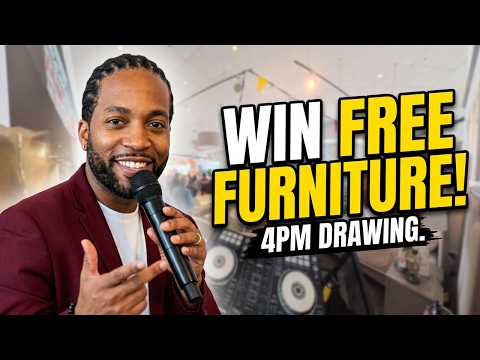
A skilled corporate event entertainment DJ is one of the most versatile options available. Unlike nightclub or wedding DJs, professionals who specialize in corporate environments understand how to balance energy with professionalism. They can provide background music during networking, elegant soundtracks during dinner, and high-energy tracks for celebrations — all while coordinating with planners and AV teams. A corporate event DJ reads the room in real time, adjusting tempo, genre, and volume to match the crowd’s energy at every stage of the event.
2. Live Music Performances
Live bands, jazz ensembles, or acoustic performers add sophistication and visual interest that recorded music simply cannot replicate. This type of corporate event entertainment works especially well for cocktail hours, galas, and award ceremonies where conversation is a priority and guests are mingling rather than dancing. The presence of live musicians creates a sense of occasion, signals investment in quality, and gives guests something to comment on — a built-in conversation starter that recorded music never delivers.
3. Interactive Photo Experiences
Photo booths, 360-degree video stations, and branded selfie installations have become staples of corporate event entertainment because they serve multiple purposes simultaneously. They give guests an activity, create shareable content, reinforce brand identity, and produce lasting mementos — all without requiring guests to step outside their comfort zone. Modern photo experiences go far beyond the basic booth, offering GIF creation, augmented reality overlays, and instant social sharing that extends the life of your event well beyond the room.
4. Comedians or Keynote Entertainers
A well-chosen comedian or keynote entertainer can shift the energy of an entire room in minutes. This form of corporate event entertainment works particularly well after dinner or between program segments when attention begins to drift. The key is selecting someone who understands the corporate context — clean material, cultural awareness, and the ability to land laughs without alienating a diverse audience. When done right, this type of entertainment becomes the moment guests reference for months.
5. Interactive Game Stations
Casino tables, trivia competitions, escape room challenges, and team game stations turn passive attendees into active participants. Interactive game-based corporate event entertainment drives conversation between people who might never otherwise connect, accelerates networking, and adds a competitive edge that keeps energy levels high throughout the event. This format works especially well at sales kickoffs, team-building events, and conferences where cross-departmental connection is a goal.
6. Professional Emcee and Host
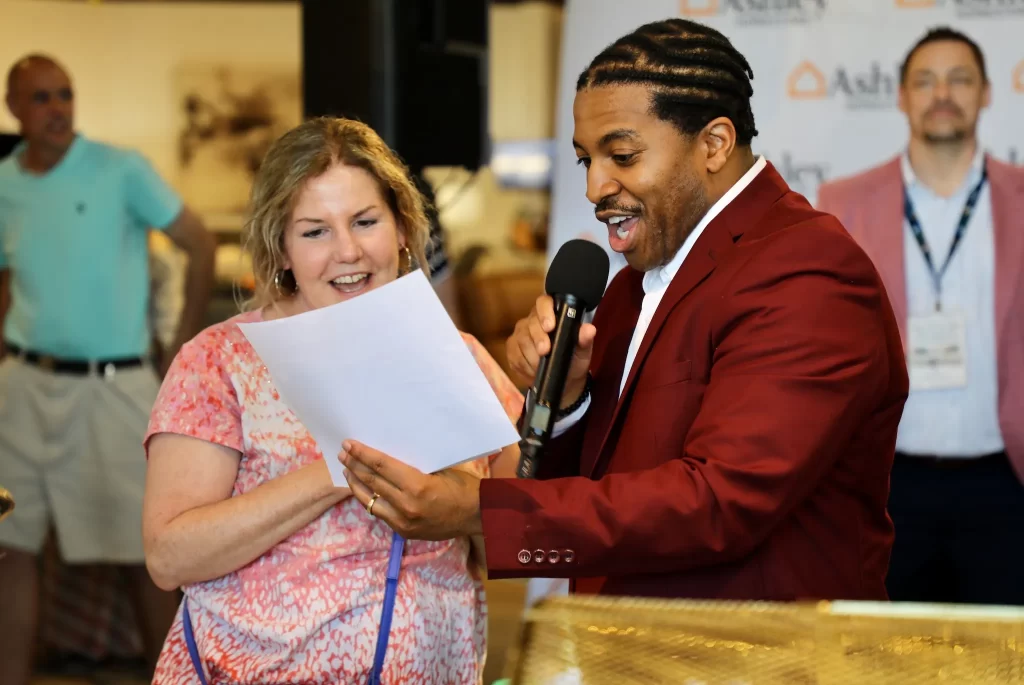
A professional emcee is one of the most underutilized forms of corporate event entertainment. The right host keeps the program moving, manages transitions between segments, warms up the crowd, handles the unexpected with grace, and maintains energy across a multi-hour event. Without a skilled emcee, even a well-planned event can feel disjointed. With one, every moment flows — and the audience stays dialed in from opening remarks to closing call to action. Learn more about professional event hosting services.
7. Themed Experiences and Immersive Environments
Themed corporate event entertainment transforms a standard venue into a fully immersive environment that supports your event’s narrative. Whether it’s a roaring 20s gala, a futuristic product launch, or a culturally inspired celebration, theming creates a cohesive sensory experience that makes every element — décor, music, attire, food — feel intentional. Guests who enter a well-executed themed event immediately understand the investment behind it, and that perception transfers directly to how they view your brand.
8. Technology-Driven Activations
LED walls, projection mapping, interactive touchscreens, and audience response systems represent the cutting edge of corporate event entertainment. Technology-driven activations let you present information dynamically, gather real-time feedback, and create visual moments that set a high-production tone from the first impression. These elements work especially well at product launches, annual conferences, and large-scale brand activations where visual impact is central to the message.
9. Hybrid Entertainment Combinations
The most memorable corporate event entertainment rarely comes from a single source. Hybrid combinations — a DJ who also emcees, a live band paired with interactive games, or a comedian who transitions into audience Q&A — create layered experiences that sustain energy across different phases of your event. Rather than treating entertainment as a one-size-fits-all category, build a program that evolves from welcome to close, matching the right format to each moment.
How to Choose the Right Corporate Event Entertainment
Selecting corporate event entertainment isn’t just about picking something guests will enjoy — it’s about choosing something that serves your specific event objectives. Start by defining what you need the entertainment to accomplish. Are you trying to energize a sales team, impress clients, celebrate milestones, or facilitate networking? The answer determines format, tone, timing, and execution.
Consider your audience demographics, the venue layout, the program flow, and your budget before committing to any entertainment option. The best corporate event entertainment providers will ask you these questions before making recommendations — because the right fit depends entirely on context, not preference. Always work with vendors who have direct corporate event experience, verifiable references, and the professionalism to adapt when the unexpected happens. According to Meeting Professionals International, the quality of on-site entertainment is consistently ranked among the top three factors determining attendee satisfaction at corporate events.
For large conferences and conventions, conference DJ services offer a proven approach to managing energy across multiple sessions and crowd sizes. For smaller executive events, a refined acoustic performer or comedian may land better than a full production setup.
What Makes Corporate Event Entertainment Successful

The difference between good and great corporate event entertainment comes down to three factors: preparation, adaptability, and audience awareness. Any professional can follow a setlist or run a scripted segment. What separates elite corporate entertainers is the ability to read a room in real time and adjust before engagement dips — not after.
Great corporate event entertainment also operates invisibly in the best way possible. Guests shouldn’t feel managed or manipulated — they should feel like the energy, pacing, and atmosphere just happened organically. That seamlessness is the result of deep preparation, clear communication with the event team, and years of experience reading the specific dynamics of corporate audiences.
Frequently asked questions about corporate event entertainment
What is the most popular corporate event entertainment option?
Professional DJs and live music remain the most widely used forms of corporate event entertainment because they scale across event sizes and types. However, interactive experiences and hybrid combinations are increasingly popular for their ability to drive engagement and social sharing.
How early should I book corporate event entertainment?
For major events, book corporate event entertainment at least 90 days in advance. Peak seasons, especially Q4 and spring, fill up quickly. The best performers often have waitlists, so early commitment is critical to securing your first choice.
How much does corporate event entertainment cost?
A professional corporate DJ and emcee typically runs $2,500 to $10,000 for a single day, depending on hours, room size and whether one person covers both roles. Bands, performers and large scale activations run higher. Entertainment is the part of the event guests remember, so budget for it early instead of fitting it into what is left.
Can a DJ also serve as an emcee?
Yes, and for many corporate events, this combination is highly effective. A DJ who can also emcee provides seamless transitions between program segments, manages energy between music sets, and reduces the number of vendors you need to coordinate. Make sure to confirm that the DJ has specific corporate emcee experience, not just general hosting skills.
What is corporate event entertainment?
Any live element that shapes how guests feel at a corporate event: a DJ, a host or emcee, performers, interactive moments and the pacing between them. Good corporate entertainment serves the event objective and the audience, not the performer.
What entertainment works best for a corporate party?
A DJ who reads the room, with volume set so people can still talk early and a dance floor built later in the night. Add a host if there are speeches, awards or raffles, so those moments start on time and land.
How to Work With a Corporate Event Entertainment Partner
The most effective corporate event entertainment partnerships begin well before the event date. A professional entertainment vendor should be involved in the planning process early enough to align with your program flow, AV setup, venue logistics, and budget. Waiting until 30 days out limits your options and increases the risk that the entertainment won’t integrate seamlessly with everything else happening on the day.
Start with a detailed intake conversation. Share your event objectives, the audience makeup, what’s happened at previous events and how those were received, and any non-negotiables you have around tone, content, or timing. The best entertainment professionals will use this information to customize their approach — not just show up and execute a standard set.
Establish clear deliverables in writing. Your contract should cover not just the scope of services but also what happens if something changes — a shortened run-of-show, a venue switch, a late keynote that cuts into entertainment time. Entertainment professionals who have worked events at this level will have experience navigating these situations and should be able to tell you exactly how they handle changes on the day.
Plan for a pre-event walkthrough. For large events especially, having your entertainment professional walk the space in advance is worth the investment. Room acoustics, sightlines, stage positioning, and crowd flow all affect how entertainment lands. A walkthrough eliminates surprises and gives your vendor the information they need to perform at their best.
Corporate Event Entertainment Planning Timeline
Timing your corporate event entertainment bookings correctly is as important as choosing the right vendor. Here is a practical timeline that has worked consistently across large-scale corporate events:
6+ Months Out: Identify Format and Budget
At six months, you should be defining what role corporate event entertainment plays in your overall program. Is it the anchor of the event, or a supporting element? What budget envelope are you working with, and what format — DJ, live band, emcee, interactive experience — best serves your objectives? This is the decision stage, not the booking stage.
4–5 Months Out: Research and Shortlist
Begin researching specific providers and requesting proposals. Ask for references from corporate clients specifically — not general event clients. The experience required for corporate event entertainment is different from wedding or social event work, and references from comparable events will give you the most relevant picture. Shortlist two or three vendors and compare based on experience, approach, and fit — not just price.
3 Months Out: Book and Confirm Logistics
By three months out, your primary corporate event entertainment vendor should be contracted and the basic logistics confirmed: date, time, venue, technical requirements, and any event-specific customization. Share your draft run-of-show as soon as it’s available so the entertainment vendor can identify any potential conflicts or gaps.
4–6 Weeks Out: Finalize Details
Finalize the run-of-show, confirm AV requirements with the venue, share any branding guidelines or music restrictions, and schedule a pre-event call with your corporate event entertainment team to align on expectations. If a venue walkthrough is part of the scope, schedule it for this window.
Event Day: Execution and Real-Time Adjustment
On event day, a professional corporate event entertainment provider should arrive early for soundcheck and setup, confirm the run-of-show with the event coordinator, and be ready to adapt the moment the doors open. The best performers aren’t reading the room — they’re running ahead of it, making adjustments before any issue becomes visible to the audience.
Common Corporate Event Entertainment Mistakes to Avoid
Even experienced event planners make predictable mistakes when it comes to corporate event entertainment. These are the most common — and the most avoidable:
Booking too late. The most qualified corporate event entertainment professionals book months in advance. Waiting until 30–60 days out forces you into whoever is available rather than whoever is best. Start early and treat entertainment as a primary booking priority, not an afterthought.
Prioritizing price over fit. Budget matters, but the cheapest option for corporate event entertainment almost always costs more in reputation than you save in dollars. A performer who misreads your audience, plays the wrong energy, or handles the microphone unprofessionally creates a lasting impression — and not a good one. Invest appropriately for what’s at stake.
Ignoring the program flow. Entertainment doesn’t exist in isolation. It responds to everything that happens before it and shapes everything that comes after. When corporate event entertainment isn’t coordinated with the run-of-show, you get transitions that kill energy, sets that run over and compress keynote time, or performances that end abruptly and leave the room flat. Always involve your entertainment vendor in the full program discussion.
Underestimating the emcee role. A skilled emcee is arguably the most valuable corporate event entertainment investment for a multi-hour event. They set the tone, manage transitions, keep energy levels consistent, and handle the unexpected with professionalism that protects both the attendee experience and the brand. Many planners treat the emcee as a logistics function rather than an entertainment and engagement function — and they pay for it in a flat, disconnected program.
Budget Planning for Corporate Event Entertainment
One of the most consistent challenges in planning corporate event entertainment is budget allocation — specifically, how much to invest relative to the total event budget. There’s no universal formula, but experienced planners generally treat entertainment as 15–25% of the total production budget for events where the attendee experience is a primary objective. For events where entertainment plays a supporting role, that range narrows to 8–15%.
The more useful question isn’t “what should I spend?” but “what is the cost of a poor attendee experience?” A flat room, a disconnected audience, or entertainment that misses the mark doesn’t just affect the evening — it affects how attendees talk about the event afterward, how sponsors evaluate ROI, and whether leadership views the program as an investment worth repeating. When framed that way, investing appropriately in professional entertainment stops being a line item and starts being risk management.
When evaluating proposals, look beyond the day-of fee to understand total cost. A professional corporate event entertainment vendor may charge separately for travel, AV production requirements, pre-event calls, rehearsal time, or customization work. Getting total cost clarity upfront prevents surprises and allows for an honest comparison between vendors who quote differently.
Also consider what is NOT in the proposal. A DJ who provides their own equipment, handles their own setup, and brings a backup system is worth more than a cheaper option who requires the venue to provide AV and hasn’t addressed redundancy. In live event production, professional vendors build contingency into their logistics because they understand that a technical failure during a keynote send-off or awards presentation reflects on everyone — not just the vendor.
Questions to Ask Before You Book Corporate Event Entertainment
Before contracting any corporate event entertainment provider, use these questions to assess fit, professionalism, and experience at the level your event requires:
How many corporate events at this scale have you worked in the last 12 months? Volume and recency matter. A vendor who primarily works social events but says they can handle corporate work is taking on something genuinely different — and you’ll feel the difference in how they manage the room, the microphone, and the unexpected.
What does your pre-event preparation process look like? Professional entertainment vendors don’t show up and wing it. They review the run-of-show, ask about audience demographics and objectives, confirm AV requirements, and identify potential complications before event day. If a vendor can’t describe a structured preparation process, that’s information.
How do you handle changes on the day? Live events deviate from the run-of-show. A keynote runs long. A dinner service takes an extra 20 minutes. An award category gets added. Ask specifically how the vendor manages real-time adjustments and whether they’ve handled situations like that before. The answer tells you everything about their experience level and composure under pressure.
Can you provide references from similar corporate events? Not just testimonials on a website — actual contacts at comparable events. Corporate event references from event planners at peer organizations carry more weight than general reviews. A seasoned corporate event entertainment professional will have these available and will offer them without hesitation.
What’s your backup plan if something goes wrong with equipment? This is non-negotiable for events where equipment failure is not an option. Every professional-grade corporate event entertainment provider should have redundancy built into their setup — backup speakers, backup music sources, backup microphones. If they can’t answer this question specifically, keep looking.
Key Takeaways for Planning Corporate Event Entertainment
Effective corporate event entertainment doesn’t happen by accident. It’s the result of deliberate planning, the right vendor selection, and a clear understanding of what you’re trying to accomplish for your audience. The events that land — the ones people remember and talk about afterward — are the ones where the entertainment was treated as a strategic asset, not a line item to fill in once everything else was settled.
Start early. Choose vendors with proven corporate experience. Tie every entertainment decision back to a business objective. And don’t underestimate the power of a professional who knows how to read a room. The right corporate event entertainment partner doesn’t just perform — they protect the investment you’ve made in every other part of the event by ensuring the audience stays engaged from the first moment to the last. That’s the standard. That’s the goal.
Ready to Elevate Your Next Event?
No Stress Zone Entertainment specializes in corporate event entertainment for conferences, galas, sales kickoffs, and brand activations. We combine professional DJ services, expert emcee hosting, and live event strategy to control how your room feels, moves, and remembers the moment. Contact us today to discuss your event and build an entertainment experience your attendees won’t forget.
Pingback: Corporate Outfits for Event Planners: What to Wear When Running the Room