Not every corporate event needs a DJ. Some need an audio technician. Some need a jazz trio.
“What a joy it was to have DJ, so much so we hired him for our next 2 festival shows! Did such a great job working the crowd. Highly recommended him!”
, Christina C., verified client review
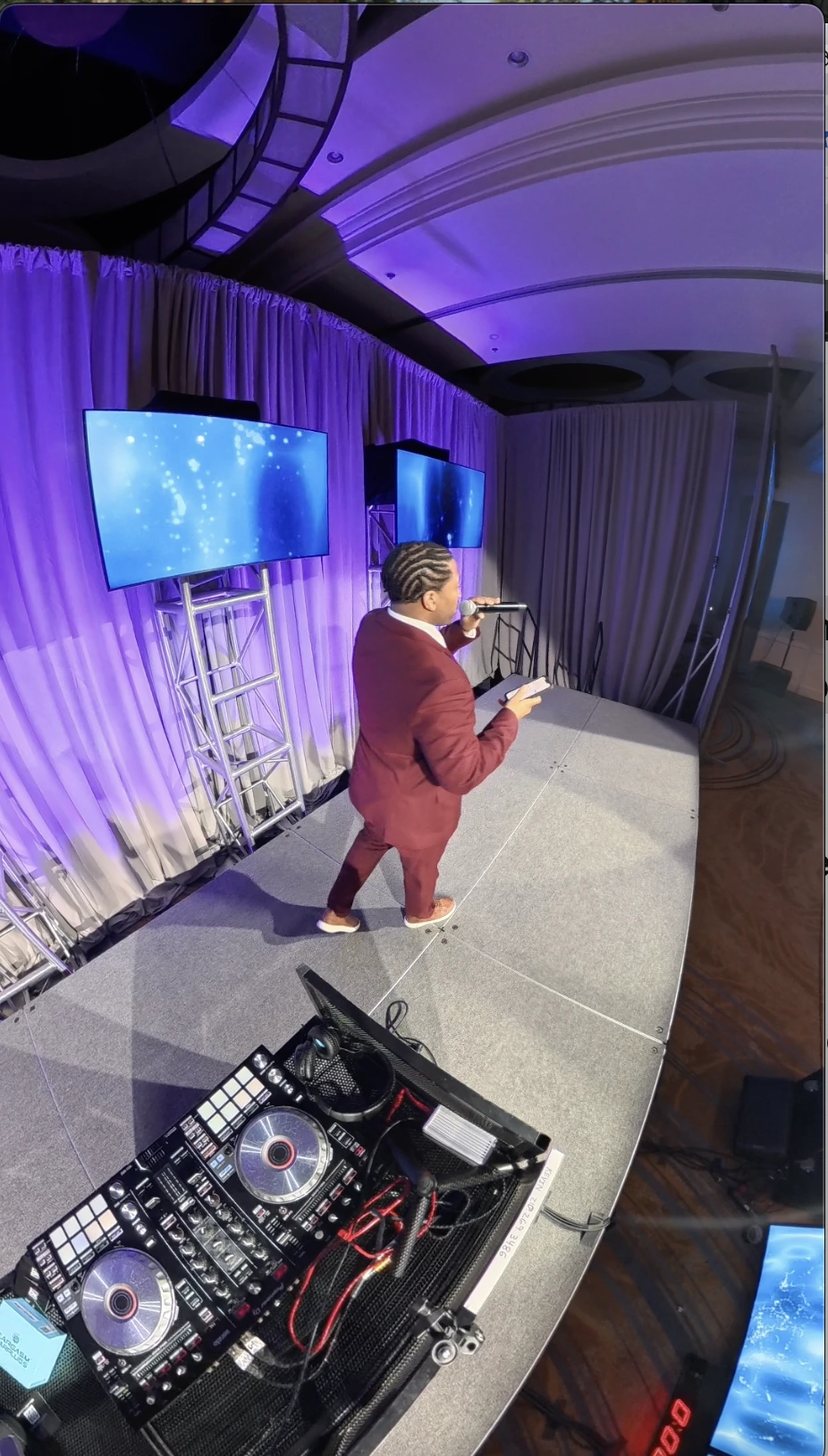
Real Proof: DJ Reese On Site
Real footage from a 300 guest conference shows what a booked DJ actually looks like on site, the direct comparison point against the alternatives this page walks through.

Rated 5.0 from 121 Google reviews. See real client case studies →
Not every corporate event needs a DJ. Some need an audio technician. Some need a jazz trio. Some need a laptop and somebody who will not touch it. Here is the full menu, what each option is actually good at, and where each one fails, written by people who would obviously prefer you hire a DJ and who are going to be straight with you anyway.
The options, one by one
A curated playlist through the house system
Good for: small internal events, 40 people or fewer, background only, no program.
Fails when: somebody needs a microphone, the schedule moves, the file will not play, or the volume needs to change and nobody knows where the control is. Also fails quietly when the playlist runs out and nobody notices for ten minutes.
If you go this route, assign one named person to own it for the whole event and have them test the actual file on the actual system in the actual room beforehand. Most playlist failures are connection failures, not music failures.
The venue or hotel AV package
Good for: rooms where you need speakers and microphones and nothing else. Often the cheapest way to get competent sound into a ballroom.
Fails when: you assume it includes anyone who will run your program. AV packages supply equipment and a technician who keeps it working. They do not supply someone reading your room or holding your run of show, and planners discover this at about 6pm.
A background instrumental act, jazz trio, string quartet, solo pianist
Good for: receptions, registration, cocktail hours, galas before the program, and any room where the point is atmosphere and conversation.
Fails when: you need the room to move later. These acts are the best possible answer for the first 90 minutes of an evening and the wrong answer for the last 90.
A live band
Good for: an evening that is purely a party, with a real stage, real budget and a single audience.
Fails when: there is a program to run, the volume needs range, space is tight, or the set breaks are not covered by anything.
Somebody in house who is into music
Good for: casual internal events with a genuinely relaxed culture. It can be charming and it costs nothing.
Fails when: that person is also an employee who wanted to attend their own company event, and now they are working. It also fails when something goes wrong, because they have no spare gear and no authority to fix the schedule.
Silent disco and other format plays
Good for: venues with hard noise restrictions, multi room events, and audiences that respond to novelty. Genuinely solves the outdoor curfew problem.
Fails when: the room is formal, the audience is senior, or you need a shared moment. Headphones are individual by design, which is exactly the opposite of a crowd moment.
Nothing at all
Good for: working sessions, board dinners, small executive meals, anything where the conversation is the product.
Fails when: the room is large and half empty, or people are arriving over a long window. Silence in a big room makes early arrivals feel like they came to the wrong place. This is the one case where a playlist through the house system earns its keep completely.
Pick by what the event has to do
- Registration, arrivals, cocktails only, no program. A playlist or an instrumental act.
- Seated dinner with speeches, no dancing. AV package plus somebody who owns the run of show, which can be an emcee without a DJ.
- Awards or recognition program. Somebody owning cues and audio together. This is where splitting the job across vendors starts to cost you.
- Full day conference with a general session. A host and an audio plan, all day, one owner.
- Party with a program attached. A DJ who also emcees, which is the most common corporate shape and the reason that combination exists.
- Party with no program at all. A band, if the budget supports a good one.
The pattern behind the failures
Look back at the fail cases and they are mostly the same failure. Somebody supplied equipment and nobody owned the event. The music option matters less than whether one named person is responsible for what happens between the scheduled items, because that is where corporate events come apart.
So the first question is not which entertainment to book. It is who is holding the room. Once that is answered, the entertainment choice is usually obvious.
Proof from the room: see every industry we have worked in, with proof.
Questions we get
Can we combine these
Frequently and profitably. A string trio for the reception and a DJ for the evening is a standard high end gala build. A band for one set inside a DJ evening is another. Combining costs more and removes the weaknesses of each.
What is the cheapest option that will not embarrass us
A rented sound system, a tested playlist, one named owner, and a microphone somebody has practiced with. That is a real answer and it works for internal events. It stops working the moment clients or executives are in the room.
How do we know if we are underspending
Ask what happens if the entertainment fails at 8pm. If the honest answer involves an executive noticing, you are underspending.
Next step
Tell us what the event has to accomplish and we will tell you which of these fits, including the ones that do not involve hiring us. Most corporate events book us 60 to 90 days out.
Frequently Asked Questions
What should you plan for first with this type of event?
A curated playlist through the house system Good for: small internal events, 40 people or fewer, background only, no program. Fails when: somebody needs a microphone, the schedule moves, the file will not play, or the volume needs to change and nobody knows where the control is.
What’s the most common mistake to avoid?
Registration, arrivals, cocktails only, no program. A playlist or an instrumental act.
What actually matters most on the day?
Look back at the fail cases and they are mostly the same failure. Somebody supplied equipment and nobody owned the event.