When a corporate event goes wrong in front of a room, the question afterwards is who owned it. On most events the honest answer is nobody, because the work was split across three vendors who each did their part correctly and the failure happened between them. This page makes the case for consolidating the microphone, the music and the run of show under one person.
“We had a fantastic experience working with DJ Reese. From start to finish, everything ran smoothly, professionally, and exactly as expected for a fundraising event. He did an excellent job managing both the DJ and emcee responsibilities.”
, Molly Edrich, verified client review
When a corporate event goes wrong in front of a room, the question afterwards is who owned it. On most events the honest answer is nobody, because the work was split across three vendors who each did their part correctly and the failure happened between them.
This page makes the case for consolidating the microphone, the music and the run of show under one person. There is a real argument against it, and we have written that one too at Vendor Consolidation Risk at Corporate Events. Read both.
The gaps are where events fail
Look at where corporate events actually come apart and almost none of it is inside a vendor scope.
- The nine seconds between a video ending and a speaker reaching the microphone.
- The moment a speech runs six minutes long and something has to be cut.
- The build that peaks before the screen changes, because the music and the visual had different owners.
- The awards walk that needed twenty seconds of cover and got eight.
- The reception that starts fifteen minutes late because scoring ran over and nobody had planned the gap.
Every one of those is a handoff. A vendor who owns only one side of a handoff cannot fix it, even when they can see it happening.
What one owner actually changes
Adjustments happen silently
When the person holding the microphone is also the person controlling the music and tracking the schedule, a segment running long gets absorbed without anyone in the room noticing. Two vendors have to communicate first, and communication in a live room is either visible or too slow.
The room gets read by someone who can act on it
Reading a room is only useful if the person reading it can do something. A host who senses the room dipping but does not control the music, and a DJ who feels it but does not control the microphone, are both watching a problem they cannot solve.
There is one person to call
At 4pm on the day, when something has changed, a planner with one number to dial is in a different situation than a planner coordinating three vendors who need to be told the same thing in three conversations.
Where it saves money, and where it does not
Consolidation is usually cheaper than booking separately, because one person for a full day costs less than a host plus a DJ plus separate audio. But that is not the main argument and we would not lead with it.
The real economy is in planning time. One set of calls, one document, one person who knows the names. Planners underestimate what the coordination overhead costs them in hours.
Where a single owner is the wrong call
- Large productions with a general session, staging, rigging and multiple screens. That needs a production team and a production manager, and we should be one specialist inside it rather than trying to hold the whole thing.
- Multi room events happening simultaneously. One person cannot be in two rooms.
- Events where the emcee must be an internal executive for credibility reasons. Then the run of show should still be owned by one person, just not the same one holding the microphone.
- Highly technical content with complex AV, where the specialist knowledge is worth more than the consolidation.
The version that actually works most often
One person holds the microphone, the music and the run of show. The venue or a contracted AV company owns the room systems, screens and lighting. Those two parties talk directly, in advance, and meet in the room before doors.
That is not full consolidation and it is not fragmentation. It puts the parts that have to move together under one owner and leaves the technical infrastructure with the people who own the building.
Proof from the room: see why CBRE has booked us every year since 2019.
Questions we get
Is one person enough for a 500 person room
For the hosting, music and run of show, yes, provided the audio infrastructure is right. We have run a general session for 500 attendees carrying more than 20 segments in a single day. What one person cannot do is also run staging and screens.
What if that person gets sick
Fair question and the reason to ask every single operator vendor what their contingency is. Ours is a defined notification window and a named alternative you approve, written into the contract rather than improvised.
Does this mean you do everything
No. We do the microphone, the music, the run of show and audience engagement. We work under a production manager on large events and we say so.
Next step
Send us your run of show and your vendor list and we will mark every handoff that currently has nobody named on one side of it.
Real Proof: Single Vendor Accountability at RMS Sales Kickoff 2
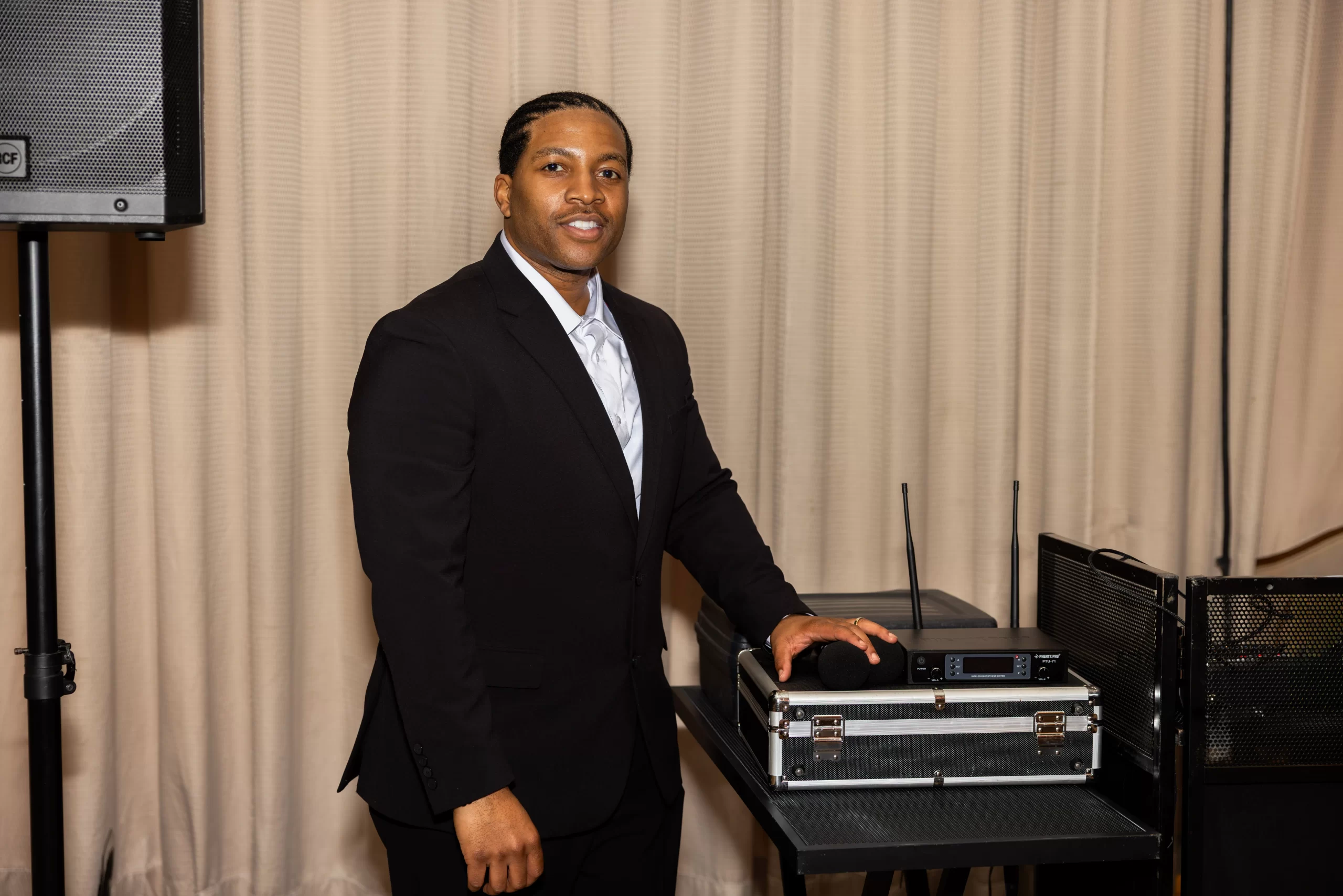
For RMS Sales Kickoff 2, we served as both corporate host and music operator, a single vendor accountable for both roles, for 500 attendees at Martin’s Crosswinds, Greenbelt, MD. That’s the dual role model this guide covers.


Full case study: RMS Sales Kickoff 2, 500 Attendees
Frequently Asked Questions
What should you plan for first with this type of event?
Look at where corporate events actually come apart and almost none of it is inside a vendor scope. The nine seconds between a video ending and a speaker reaching the microphone.
What’s the most common mistake to avoid?
Adjustments happen silently When the person holding the microphone is also the person controlling the music and tracking the schedule, a segment running long gets absorbed without anyone in the room noticing. Two vendors have to communicate first, and communication in a live room is either visible or too slow.
What actually matters most on the day?
Consolidation is usually cheaper than booking separately, because one person for a full day costs less than a host plus a DJ plus separate audio. But that is not the main argument and we would not lead with it.