A hybrid event has two audiences with completely different experiences, and the one in the room always wins by default. The remote audience gets the leftovers: the gaps nobody covered, the jokes that only make sense in the room, the applause that sounds thin through a stream, and the transitions where the feed shows an empty stage for ninety seconds.
“We had DJ Reese at our Dream Team Member Gala, and it truly made the night unforgettable as we came together to celebrate our team at RMS. The music, sound, and energy were outstanding.”
, Wazhma Raufyar, verified client review
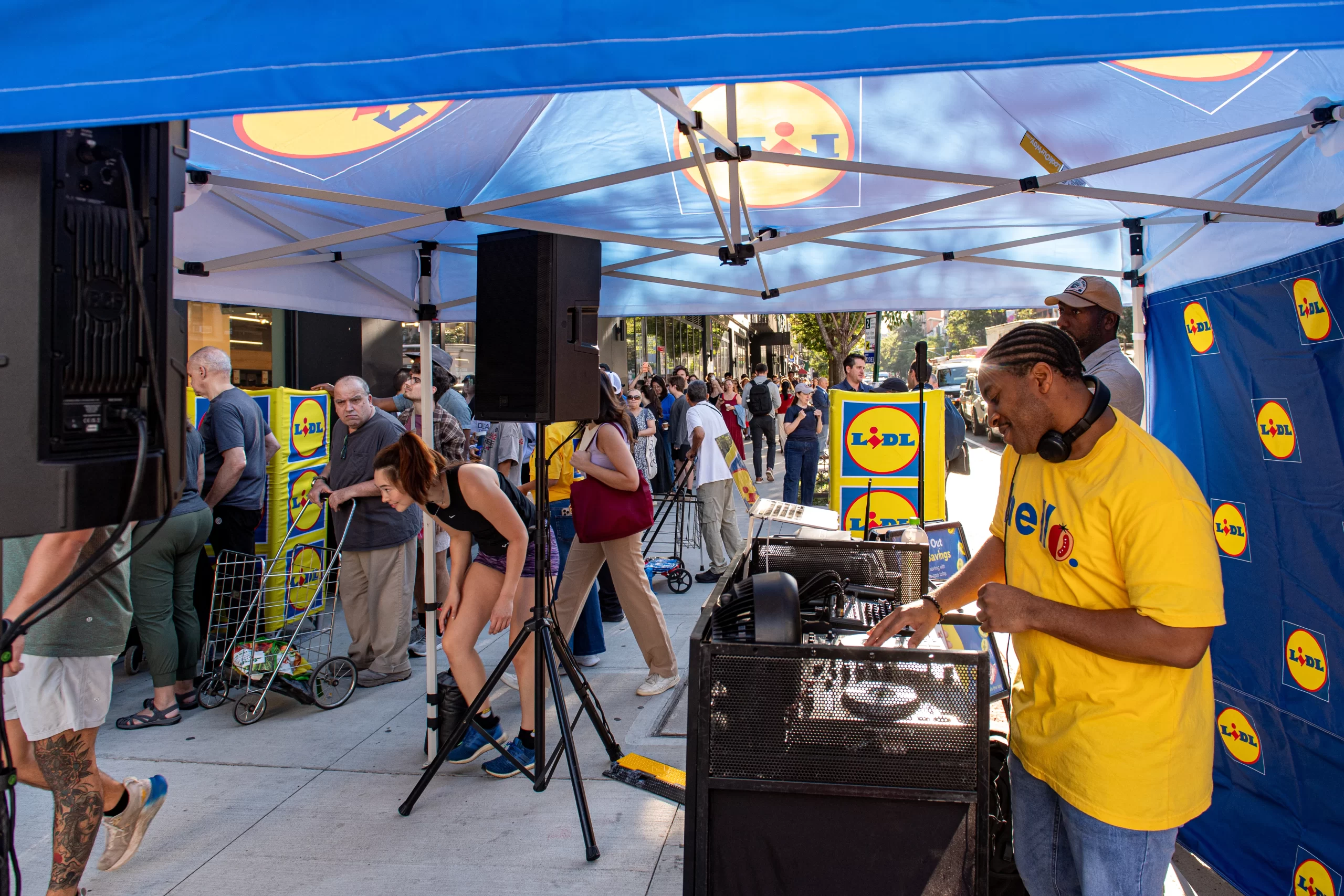
5.0 from 121 Google reviews. See the LIDL US case study
A hybrid event has two audiences with completely different experiences, and the one in the room always wins by default. The remote audience gets the leftovers: the gaps nobody covered, the jokes that only make sense in the room, the applause that sounds thin through a stream, and the transitions where the feed shows an empty stage for ninety seconds.
Hosting hybrid properly means deliberately serving the audience that is not in front of you, which is unnatural and has to be built into the script.
Where we have done this work
Our remote experience: in 2023 we coproduced and hosted the eCommerce Growth Masterclass, a fully online series where every attendee joined from home. We emceed and DJed it live, holding energy and timing through a screen with no room to read. Hybrid events combine that skill with the in room work covered below.
Time passes differently on a stream
Ten seconds of silence in a ballroom is a natural pause. Ten seconds of silence on a stream is long enough for a remote viewer to open another tab, and once they do, they are gone for the session.
Practically, every gap in the run of show needs to be covered for the remote feed: a presenter changeover, a room reset, a technical pause, a break. That coverage is either the host speaking to camera or a produced element, and somebody has to own the decision. In most hybrid events nobody does, which is why the stream experience is usually worse than the room experience by a wide margin.
Address the remote audience directly and by name
The single highest return habit in hybrid hosting is saying out loud that the remote audience exists. Naming them at the open, referring to them during the program, reading their questions in the Q and A, and telling them explicitly what is happening when the room is doing something they cannot see.
It sounds small. It is the difference between a remote attendee feeling like a participant and feeling like they are watching someone else event through a window.
The camera changes what a host does physically
In a room, a host works the whole space, turns, moves and plays to the back. On camera, that reads as wandering out of frame. The two are in direct conflict and the host has to know which moments belong to which audience.
- Know where the camera is and which lens is live. Somebody has to tell the host, continuously.
- Anchor positions for anything directed at the stream, movement for anything directed at the room.
- Assume the microphone is always live and the camera is always on, because at some point both will be when nobody expects it.
- Visual references need describing. Pointing at a screen means nothing to a remote viewer.
- Never let the stream show an empty stage without commentary.
Q and A is where hybrid is won
Remote questions are the clearest signal to the online audience about whether they are real participants. If every question comes from a floor microphone and the chat is ignored, the remote audience learns their input does not count.
We plan a ratio in advance, typically alternating, and we make it visible: naming the remote questioner, saying where they are joining from, and treating their question with the same weight. That requires somebody monitoring the chat and feeding questions to the host, which is a staffed role and is usually unstaffed.
Audio is the part that actually ruins hybrid
The room mix and the stream mix are two different products. Music that fills a ballroom is overwhelming on a stream. Applause that sounds warm in the room is thin online. A panelist who is intelligible in the third row may be unusable on the feed.
The feed needs its own audio path and somebody responsible for it, not a microphone in the back of the room. This is the most common technical failure in hybrid corporate events and it is the one remote attendees complain about most.
Questions we get
Can our AV company handle the hosting side
They handle the signal. What they do not do is decide what the remote audience hears during a nine second gap or whether the next question comes from the chat. That is a host and run of show job.
Should the remote audience get different content
Usually not different content, but different framing. Same program, with the host explicitly translating the room for them.
How much extra planning does hybrid take
Meaningfully more, and the extra is mostly in the gaps rather than the content. Budget an additional planning pass specifically to walk the run of show from the remote viewer perspective.
Next step
Send us the agenda and tell us who owns the stream. We will walk it from the remote side and show you where your online audience currently gets nothing.
Frequently Asked Questions
What should you plan for first with this type of event?
Ten seconds of silence in a ballroom is a natural pause. Ten seconds of silence on a stream is long enough for a remote viewer to open another tab, and once they do, they are gone for the session.
What’s the most common mistake to avoid?
The single highest return habit in hybrid hosting is saying out loud that the remote audience exists. Naming them at the open, referring to them during the program, reading their questions in the Q and A, and telling them explicitly what is happening when the room is doing something they cannot see.
What actually matters most on the day?
In a room, a host works the whole space, turns, moves and plays to the back. On camera, that reads as wandering out of frame.