A corporate golf tournament is an outdoor audio job disguised as an event. There is no ceiling, no walls, no power where you need it, and the audience is spread across 150 acres for five hours and then compressed into one room for 90 minutes. Almost everything that goes wrong on these is logistical rather than musical.
“DJ Reese made our New Year’s Eve Party spectacular at Great Wolf Lodge Perryville. He was flexible, communicative, and so easy to work with. His song choices were perfect for our audience and he kept the party going all night.”
, Yellin Studio, verified client review
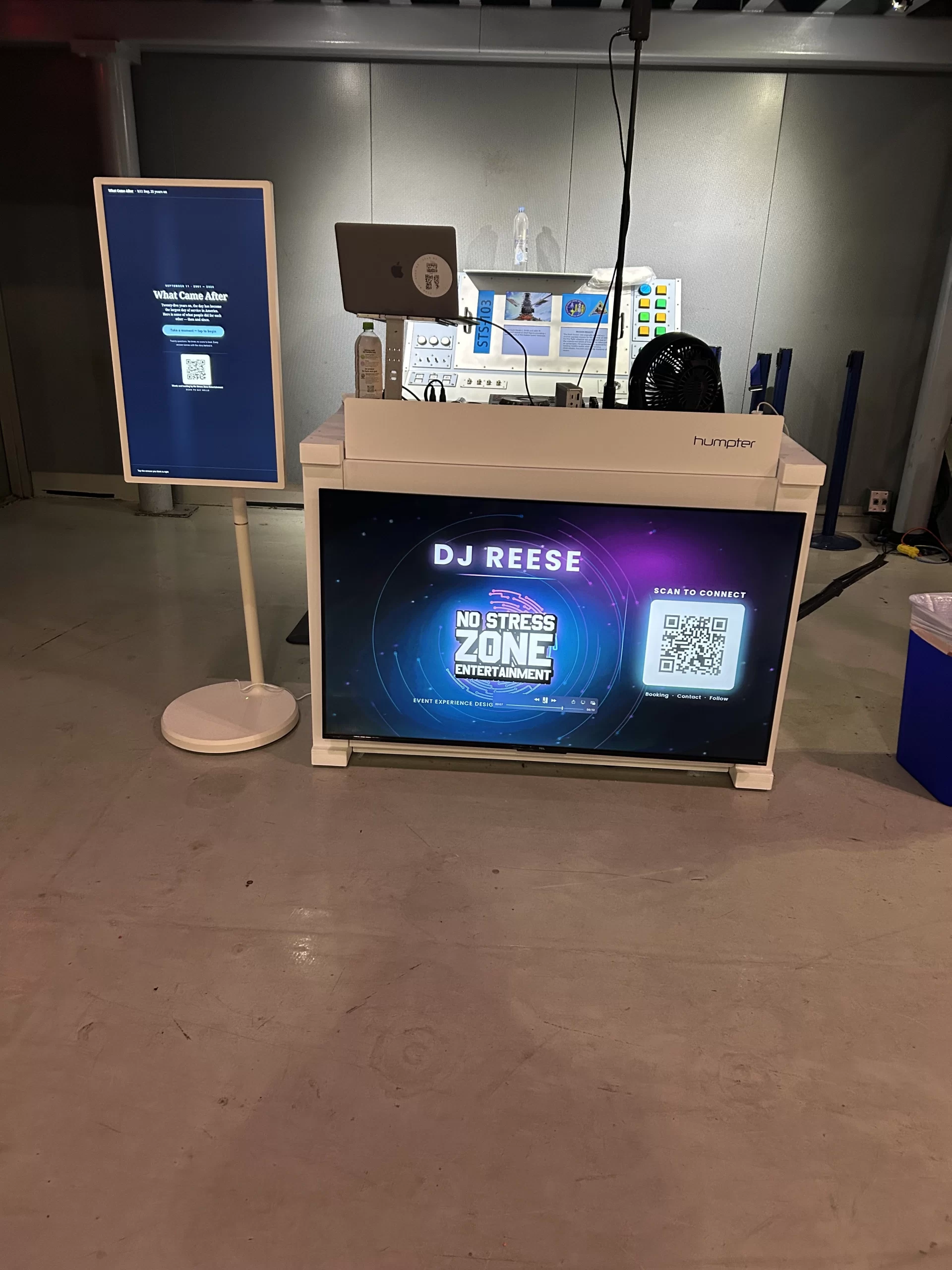
5.0 from 121 Google reviews. Learn more about our corporate event DJ services.
“DJ Reese made our New Year’s Eve Party spectacular at Great Wolf Lodge Perryville. He was flexible, communicative, and so easy to work with. His song choices were perfect for our audience and he kept the party going all night.”
, Yellin Studio, verified client review
A corporate golf tournament is an outdoor audio job disguised as an event. There is no ceiling, no walls, no power where you need it, and the audience is spread across 150 acres for five hours and then compressed into one room for 90 minutes. Almost everything that goes wrong on these is logistical rather than musical.
Here is how we plan them, in the order the day actually happens.
Registration and the driving range
The first hour sets whether the day feels organized. Players arrive over a 45 minute window, check in, get carts, hit balls and mill around. What that area needs is light ambient sound and a working microphone, not a show.
The microphone is the real deliverable here. Announcements about cart assignments, rule sheets, hole sponsors and the shotgun start time have to reach people who are not paying attention, outdoors, with no acoustic help. That means a properly placed speaker at registration and another toward the range, not one system pointed at the middle and hoping.
The shotgun start
Every player has to hear one set of instructions at one time, standing in the open, often at a distance. This is the single highest risk audio moment of the day and it lasts three minutes.
We want to know: where will people be standing, how far is the furthest cart, is there wind, and is the course going to give us a cart to reposition. Getting this wrong means half the field mishears the format and the tournament has scoring disputes at dinner.
On course sound
Some tournaments want music at specific holes, a sponsor activation at the par 3, a beverage station with a speaker. This is worth doing and worth doing in a limited way.
- Battery power at every on course position. There is no outlet at the 14th tee.
- Weather protection that is already in place, not fetched when it starts raining.
- Volume that does not carry to adjacent holes. Golfers will forgive a lot but not noise during a swing two fairways over.
- Somebody who can physically reach each position during play if something fails.
Every course has its own rules on this. We ask for the course contact directly rather than relaying questions through the planner, because the golf professional is the person who actually knows what is allowed.
The awards dinner is the whole point
Tournaments are client and sponsor events. The golf is the excuse. The dinner is where sponsors get recognized, where the relationship work happens, and where the day either closes well or trails off.
The reliable failure is a scoring delay. Cards come in, somebody has to add them up, and the room sits there with nothing happening. We plan for it: a defined block of content that runs while scoring finishes, usually sponsor recognition, raffle draws and the closest to the pin awards, so that the gap is programd rather than endured.
Sponsors get named correctly or the day was expensive for nothing
Sponsor recognition is the return on the whole event for a lot of these tournaments, and it is routinely handled with a list read quickly off a page. Names get mispronounced, tiers get confused, and the title sponsor gets the same eight words as a hole sponsor.
We want the sponsor list by tier, with pronunciation, at least a week out, and we want to know which sponsor representatives are in the room so they can be acknowledged by name. That is the difference between a sponsor renewing and a sponsor deciding the exposure was not worth it.
Weather is a program, not a risk
Outdoor corporate events need a written plan for rain, heat and lightning delay, and the entertainment side has to be in it. Where does equipment go, who moves it, how long does it take, and what happens to the schedule. A lightning delay can eat 90 minutes and the dinner still has to happen.
We have run outdoor events in conditions most people would call unworkable, including grand opening mornings in the Northeast in December with crowds lined up outdoors before dawn. The equipment side of that is planning, not heroics.
Questions we get
Do we need a DJ or just a sound system
If the day is only golf and a buffet, a rented PA and a volunteer with a microphone might be enough. If there is sponsor recognition, an awards program, a raffle and a room you want to hold after dinner, you need somebody whose job is that program. The tournaments that feel professional are the ones where somebody owned the run of show.
How much equipment does this take
More than an indoor event of the same size. Outdoor sound has no room reinforcement, so coverage costs more gear, and on course positions each need their own power and protection. Budget accordingly and get the quote before you commit to on course activations.
What does it cost
Single day corporate work runs $5,000 to $8,000 depending on hours, scope and equipment. A tournament with registration coverage, a shotgun start, on course positions and an awards dinner sits toward the upper part of that because it is effectively three setups in one day.
Next step
Send us the course, the format, the sponsor tiers and your rough timing. We will come back with where we think the day will stall and what the on course plan actually requires. Most corporate events book us 60 to 90 days out, and outdoor events benefit from the site conversation happening early.
Frequently Asked Questions
What should you plan for first with this type of event?
The first hour sets whether the day feels organized. Players arrive over a 45 minute window, check in, get carts, hit balls and mill around.
What’s the most common mistake to avoid?
Every player has to hear one set of instructions at one time, standing in the open, often at a distance. This is the single highest risk audio moment of the day and it lasts three minutes.
What actually matters most on the day?
Some tournaments want music at specific holes, a sponsor activation at the par 3, a beverage station with a speaker. This is worth doing and worth doing in a limited way.