A panel is the easiest session on a corporate conference agenda to schedule and the hardest one to make good. Four smart people sit down, the first question runs long, and by minute twenty the room is on their phones. The moderator is the only person who can stop that, and most panels are moderated by a volunteer who was handed the chair that morning.
“We had an incredible DJ at our party! Their energy was infectious, and they kept the dance floor alive all night. The music selection was on point, and they seamlessly transitioned between songs. Our guests couldn’t stop raving about the fantastic atmosphere they created.”
, Madison Childs, verified client review
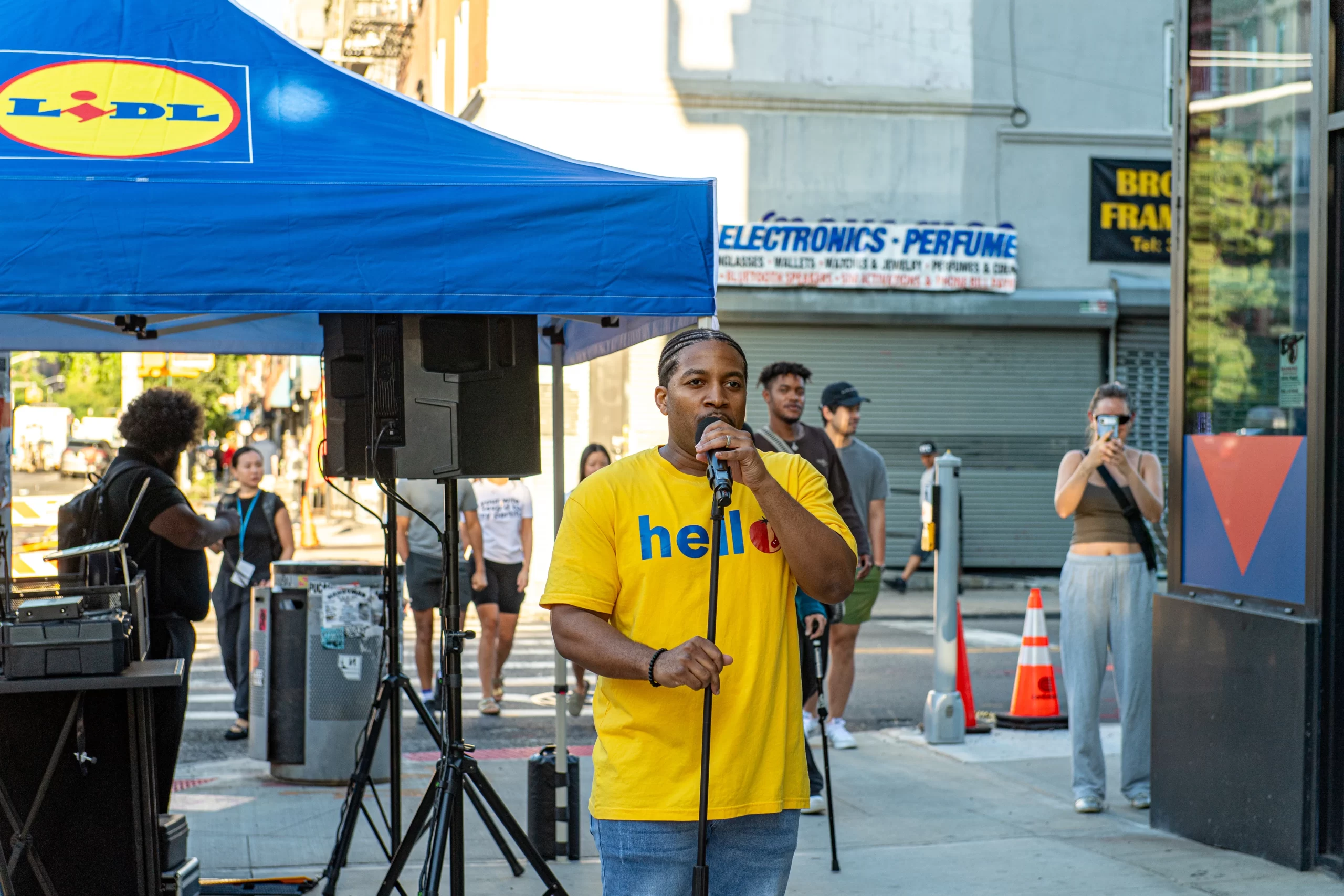
5.0 from 121 Google reviews. See the LIDL US case study
A panel is the easiest session on a corporate conference agenda to schedule and the hardest one to make good. Four smart people sit down, the first question runs long, and by minute twenty the room is on their phones. The moderator is the only person who can stop that, and most panels are moderated by a volunteer who was handed the chair that morning.
We moderate panels as part of our corporate emcee work at conferences, summits and user meetings. This page covers what the job actually is, how we prepare, and what we do when a panel starts to slide.
Where we have done this work
We emceed and moderated the program at Trade House’s Launch Pad at the Atlantic City Convention Center on August 15, 2021, a three hour corporate event for 200 to 250 attendees. The room stayed engaged long enough that the client booked additional time on the day.
What a moderator controls
A moderator does not control what panelists know. That is set the moment they are booked. What a moderator controls is time, sequence and energy.
- Time. Who speaks, for how long, and when the room moves on.
- Sequence. Which question lands first, which one gets cut when the session runs behind.
- Energy. Whether the exchange feels like a conversation the audience is sitting in on, or four prepared statements read aloud.
- Safety. Whether a panelist who is losing the room gets rescued instead of left there.
That is the whole job. Everything below is in service of those four things.
The prep that makes a panel work
Almost all of the outcome is decided before anyone sits down. Our prep runs on a fixed sequence.
A short call with each panelist, separately
Fifteen minutes each, not a group call. Separate calls surface the thing a panelist will not say in front of the others: the story they are proud of, the topic they want to avoid, the competitor in the room. We also learn who talks fast and who needs a runway.
A question bank, not a question list
We build roughly twice the questions the session has time for, sorted into three tiers. Tier one always gets asked. Tier two gets asked if the pace holds. Tier three is there for the panel that finishes early, which happens more often than planners expect.
Name pronunciation and titles, verified out loud
We say every name back to the panelist on the call and write it phonetically. A mispronounced name in the opening thirty seconds costs credibility for the rest of the session.
One sentence per panelist, written by us
Not the bio from the program. One sentence that tells the audience why this person is worth listening to on this specific topic. Bios read from a program are where panel energy goes to die.
Running the room
The opening sets the contract. We tell the audience what the next forty minutes will cover, how long it runs, and when their questions are coming. An audience that knows a Q and A is coming at minute thirty stops worrying about whether they will get to speak and starts listening.
Then we ask the first question of one named panelist, not of the group. Open questions thrown at four people produce a four second silence while everyone waits to see who goes first. That silence is the moment a room decides the session is going to be slow.
Handing time back
The discipline that separates a good moderator from a talkative one is giving time away. Our own talking should total a small fraction of the session. When we do speak between answers it is to do one of three things: connect what was just said to what the audience came for, redirect to a panelist who has been quiet, or close a thread that has run its course.
Managing the clock out loud
We tell the panel where we are. A quiet “we have about ten minutes and two more topics” keeps a panelist from burning eight of them on a setup. Panelists almost always cooperate when they know the number. They cannot cooperate with a clock they cannot see.
The four ways panels fail
These are predictable. We plan for all four.
- The monologue. One panelist answers every question at length. We fix it with direct naming: the next three questions go to specific people, and we stop returning to the microphone hog for follow ups.
- The dead panel. Short answers, no disagreement, nothing at stake. We fix it by asking two panelists to react to each other rather than to us, and by asking the question the pre call told us they actually have an opinion about.
- The sales pitch. A panelist starts describing their product. We fix it by thanking them and immediately widening the question to the category, which gives the audience the general answer they came for.
- The Q and A hijack. Someone in the audience makes a speech instead of asking a question. We fix it by cutting in at the first pause, restating it as a question, and handing it to a panelist. We never let the room watch a moderator lose a microphone.
What this looks like in practice
At the Alliance for Science summit at the Marriott Newark Airport, we hosted a room of roughly 300 life sciences leaders across a full day program with panel segments, awards and transitions. That room got booked again for the following year. Nothing in that day was rescued by charisma. It held because every transition had been written, every name had been checked, and the running order had a plan for what to cut if a segment ran long. When a microphone failed mid program, the room was moving again in about eight seconds, because the recovery had been thought about before it was needed.
We run the same discipline at association and industry conferences and at corporate sales kickoffs. At the Regency Management Services sales kickoff at Martins Crosswinds in Greenbelt, Maryland, the general session carried more than 20 segments in a single day in front of 500 attendees, and we were rebooked.
Do you need a moderator or an emcee
They are different jobs and event profs mix them up regularly. An emcee carries the whole room across the day: opens, transitions, keeps the schedule honest, holds energy through the slow parts. A moderator runs one session. On most corporate conference agendas the same person can do both, and it is usually better if they do, because the emcee has been reading that room since the doors opened and knows exactly how much energy the panel is starting with.
If you are hiring separately, hire the moderator for subject fluency and the emcee for room control. If you are hiring one person, hire for room control and brief them properly on the subject.
Questions we get
Do you need to be an expert in our industry
No, and an expert is sometimes the wrong choice. An expert moderator is tempted to join the panel. Our job is to make your experts sound clear to a room that may not share their vocabulary. What we do need is prep time and access to the panelists.
How long should a panel run
Forty minutes is the practical ceiling for most corporate audiences, including questions. Sixty works only when the panel is genuinely contentious or the audience is deeply invested in the topic. If your agenda has a 90 minute panel on it, that is worth a second look.
How many panelists
Three plus a moderator is the sweet spot. Four is workable. Five means someone speaks twice in the whole session and knows it, which reads badly from the stage and from the seats.
Next step
Tell us the session, the panelists and the slot on your run of show. We will tell you honestly whether it needs a moderator, a different format, or just a tighter time limit. Most corporate events book us 60 to 90 days out, and panel prep needs about two weeks of lead time for the panelist calls.
Frequently Asked Questions
What should you plan for first with this type of event?
A moderator does not control what panelists know. That is set the moment they are booked.
What’s the most common mistake to avoid?
Almost all of the outcome is decided before anyone sits down. Our prep runs on a fixed sequence.
What actually matters most on the day?
The opening sets the contract. We tell the audience what the next forty minutes will cover, how long it runs, and when their questions are coming.