Background music at a corporate event has one job: make the room feel intentional without anyone noticing it. When it is right, guests talk more easily, gaps stop feeling like gaps and the program moves. When it is wrong, people raise their voices, the volume creeps up and by the third segment the room is tired.
“We booked DJ Reese for our RAD event at our apartment community. He was on time, had a versatile selection and was pleasant to work overall. We will definitely be booking him again!”
, Laylaa Ahmad, verified client review
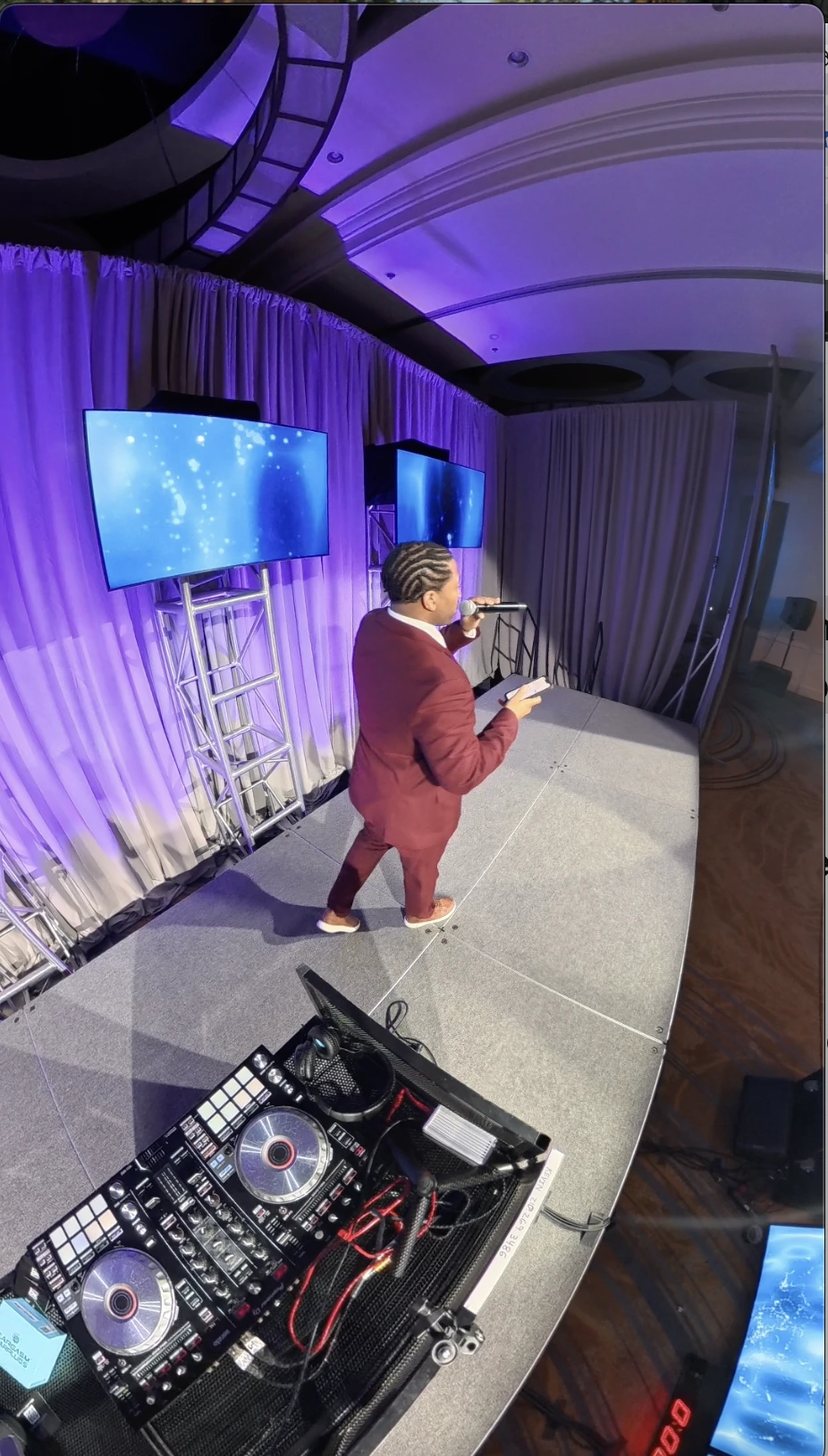
Real Proof: DJ Reese On Site
What professionally run background music actually looks like on site: DJ Reese’s own audio setup and program flow at a real 300 guest conference.

Rated 5.0 from 121 Google reviews. See real client case studies →
Background music at a corporate event has one job: make the room feel intentional without anyone noticing it. When it is right, guests talk more easily, gaps stop feeling like gaps and the program moves. When it is wrong, people raise their voices, the volume creeps up and by the third segment the room is tired.
We run music and hosting at conferences, galas, activations and executive dinners. Here is how we think about the parts nobody sees.
Volume is a decision you remake all night
There is no correct level, only a correct level for this moment. During arrivals people are standing and the room is empty, so music carries. Once the room fills, bodies absorb sound and the same level feels thin. During dinner service the music has to sit under conversation at every table, not just the ones near the speakers. We adjust continuously, which is the part a playlist cannot do.
The arc, hour by hour
- Arrivals: familiar, warm, unobtrusive. The job is to make walking in feel like arriving somewhere.
- Seating and program: music drops back or stops. Anything competing with a speaker is a mistake.
- Transitions: short, deliberate lifts that move people without announcing themselves.
- Dinner: conversation level, consistent, no surprises.
- After the program: energy rises only if the event is meant to go there. Many corporate rooms are not, and pushing them is how you lose the executives.
What we learned inside retail rooms
Across 74 Lidl US grand openings the music changes character the moment the doors open. Outside, it carries across a parking lot and builds a crowd. Inside, it comes down to a level where staff can sell and shoppers can talk, and the host moves to lighter announcements. Same event, two completely different sound decisions, twenty minutes apart.
Reading the room, in practice
- Watch the bar line and the doorway. Movement means the energy is fine. Stillness early means the room needs help.
- Watch whether people lean in to talk. That is your volume telling you it is too high.
- Watch the tables furthest from the speakers. If they look disconnected, the coverage is wrong, not the playlist.
- Watch the executives. If the room is meant to stay professional, they are your ceiling.
Genre, brand and the songs that are off limits
Music is part of your brand in that room. A luxury launch, a sneaker drop and a grocery opening should not sound the same. We agree the sound of the brand in advance, including anything off limits, explicit content and any track tied to a competitor. At the PUMA activation at The Mills at Jersey Gardens, sound was part of why the room converted: $70,000 in sales in three hours.
Common mistakes
- A playlist built for the planner’s taste instead of the audience in the room
- One volume for the entire night
- Music under a speaker because nobody decided to stop it
- Silence during registration and breaks, which reads as an event that has not started
- No plan for the moment after the program ends, when half the room leaves and half wants to stay
Frequently asked questions
Can we just send a Spotify playlist?
You can, and we will honor your must plays and your never plays. What a playlist cannot do is change when the room changes, which is most of the job.
What volume should background music be at?
Conversation level during meals, which usually means you can speak normally across a round table without raising your voice. That target changes as the room fills.
Should there be music during the program?
Only at the edges: walk ups, transitions, awards reveals. Under a speaker, never.
Next step
Send us your agenda and the feel you want at each stage. See Corporate Event Entertainment: 9 Ideas That Engage Guests or check your date.
Frequently Asked Questions
What should you plan for first with this type of event?
There is no correct level, only a correct level for this moment. During arrivals people are standing and the room is empty, so music carries.
What’s the most common mistake to avoid?
Arrivals: familiar, warm, unobtrusive. The job is to make walking in feel like arriving somewhere.
What actually matters most on the day?
Across 74 Lidl US grand openings the music changes character the moment the doors open. Outside, it carries across a parking lot and builds a crowd.