


A 25th, 50th or 100th anniversary is the rare corporate event where the guest list spans generations. Retirees who started in the 1970s, people hired last quarter, founding family members, current leadership, sometimes customers and local officials. No single playlist serves that room, and the events that try produce a lobby full of people who came for the history and a bar full of people waiting for it to end.
“DJ Reese made our New Year’s Eve Party spectacular at Great Wolf Lodge Perryville. He was flexible, communicative, and so easy to work with. His song choices were perfect for our audience and he kept the party going all night.”
, Yellin Studio, verified client review
A 25th, 50th or 100th anniversary is the rare corporate event where the guest list spans generations. Retirees who started in the 1970s, people hired last quarter, founding family members, current leadership, sometimes customers and local officials. No single playlist serves that room, and the events that try produce a lobby full of people who came for the history and a bar full of people waiting for it to end.
As a corporate milestone anniversary DJ, here is how we build these so the whole spread of the room gets a night rather than a segment.
Where we have done this work
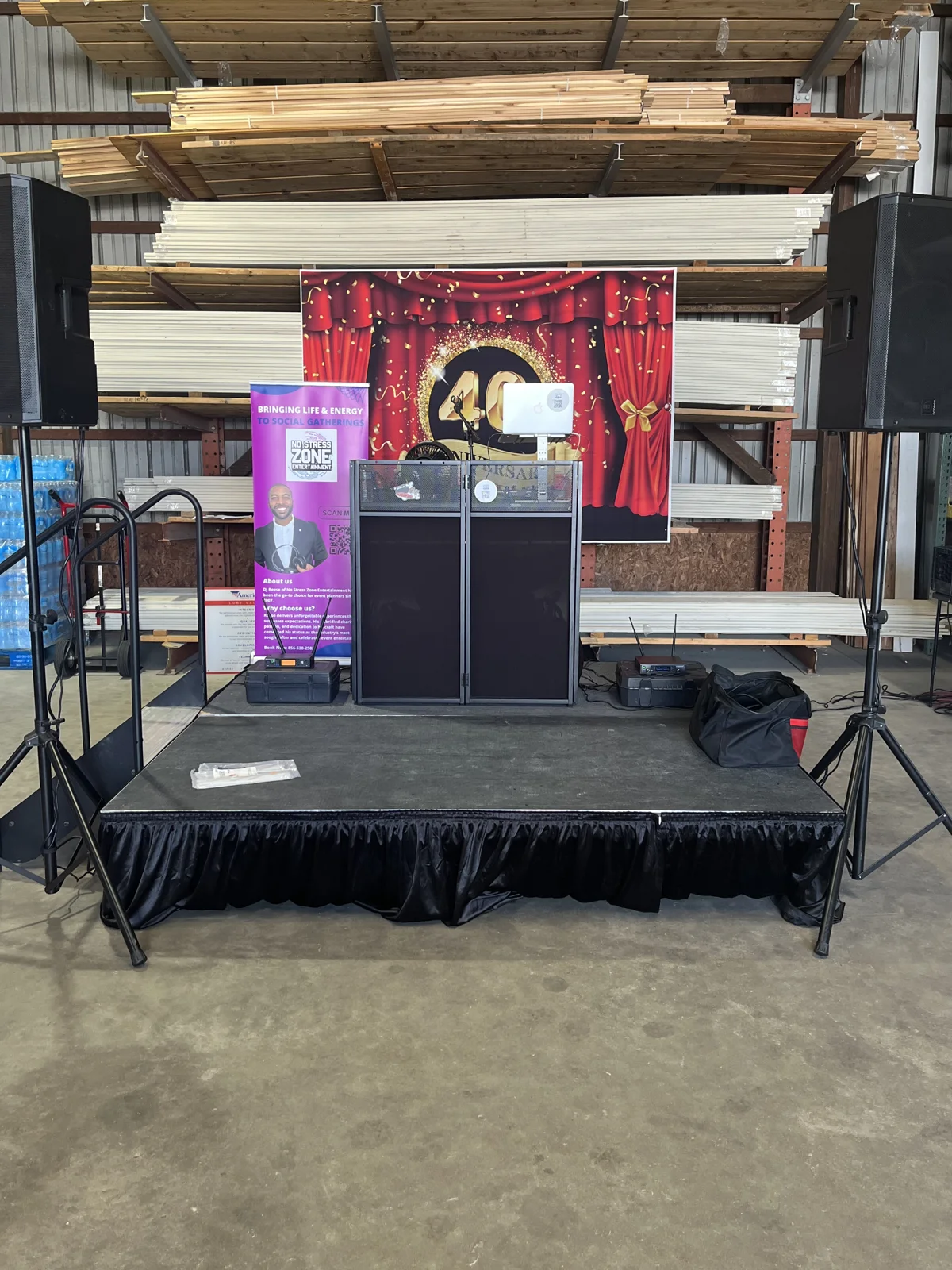
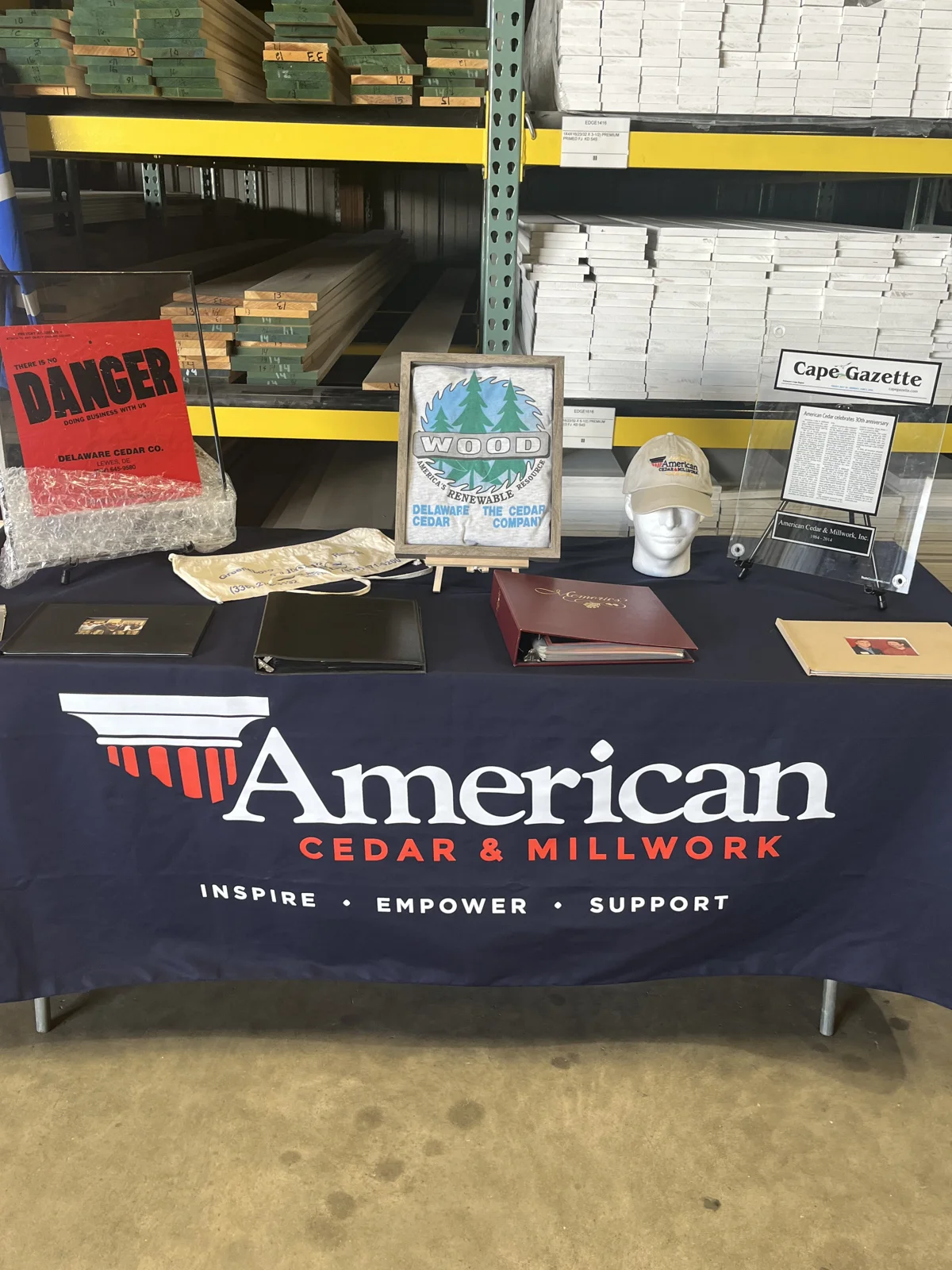
We DJed an internal 40th anniversary celebration for American Cedar & Millwork in Lewes, Delaware, on October 5, 2024. A milestone night is recognition first and a party second, and the music has to honor the history in the room before it gets anyone dancing.
Start from the timeline, not the playlist
An anniversary has a built in structure that nothing else in corporate events has: chronology. Use it. The evening can move through the decades, and when it does, every generation in the room gets their stretch of it, in an order the room understands without being told.
Practically: arrival music from the founding era, a shift forward roughly every 30 to 40 minutes, and the present day by the time the floor opens. The retirees get their window early, when they are most likely to still be there, which also solves the problem of a 7:30 crowd and a 10:30 crowd wanting different things.
The history segment is the part people remember, and the part most often botched
Almost every milestone event has a look back: a video, a slideshow, a founder story, a wall of photographs. These land or die on three things.
- Length. Eight minutes is the ceiling for a room standing with drinks. Twelve is fine for a seated room. Nobody has ever complained that a company history video was too short.
- Audio ownership. Whoever produced the video set its levels in an editing suite, not in a ballroom. We set it against the actual room before doors.
- Names. If the segment names people, every name gets verified, including the ones nobody thought to check because they are on a slide rather than in the script.
If living founders or long tenured retirees are present, bring them in physically. A named introduction and a walk to the front does more for a room than any video, and it costs nothing but 90 seconds of run of show.
Three audiences, one room
Anniversaries usually contain a group that does not attend other company events. Retirees, alumni, family, sometimes the community. They came for the history. Current employees came for the party. Leadership came for the message.
The failure mode is programming for only one of the three. We build the night so the history is front loaded and generous, the message sits in the middle and is short, and the party is the back half and genuinely a party. Guests who came for the first thing can leave satisfied at 9pm without feeling they left early, and the people who came to dance are not sitting through an hour of speeches to get there.
Venue realities for milestone events
Anniversaries get held in places other corporate events do not: the original factory floor, a historic building, a tent in a parking lot, a museum. These are wonderful for the story and difficult for sound.
Hard industrial surfaces mean reflections and a long decay, so speech intelligibility, not music, is the constraint. Historic venues often have volume caps written into the rental agreement and power that will not support what a standard rig expects. Tents have no acoustic containment at all and get loud fast at the edges.
We want a site visit or, at minimum, photographs and the venue technical sheet before we commit to a setup. The venue that makes the best story is usually the one that needs the most planning, and finding out at 3pm on the day is how a milestone event becomes a memory for the wrong reason.
Photographs and the receiving line
Milestone events generate more photography than any other corporate event, because people who have not seen each other in years are in the same room. That has a programming consequence: there is a long stretch early in the night when almost nobody is going to dance because they are busy finding each other.
Fighting that with volume does not work. We let the reunion happen, keep the music supporting conversation, and hold the lift until the room has finished greeting itself. On these events that moment usually arrives later than the planner expects, and pushing it early costs the whole back half.
Proof from the room: see why CBRE has booked us every year since 2019.
Questions we get
Should we use music from the founding decade if nobody in the room was alive for it
Sparingly, and for texture rather than for the floor. A 100 year anniversary cannot open with 1926 recordings and hold a room. Use the era as a reference point in the first 20 minutes, then let the timeline move.
Do we need an emcee
For an anniversary, more than for most events. There is a story to tell and a lot of names to honor, and a room that is moving between history and party needs a voice explaining what is happening next. Without one, the transitions between those two modes feel like the event lost the thread.
How far out should we book
Further than usual. Milestone events have unusual venues, unusual guest lists and content that has to be produced. We ask for 60 to 90 days on standard corporate events and would want more for a centennial.
Next step
Tell us the anniversary, the venue and who is on the guest list besides current employees. We will come back with a shape for the night and the parts of it we think will be harder than they look.
Real Proof: American Cedar & Millwork’s 40th Anniversary
We DJed an internal 40th anniversary celebration for American Cedar & Millwork in Lewes, Delaware, on October 5, 2024, exactly the kind of milestone anniversary this guide covers.
Full write up of this event: DJ services in Delaware
Independently confirmed by the client: American Cedar & Millwork’s own event listing for this party names the entertainment, “Music by DJ Reese” (millwork1.com).
Frequently Asked Questions
What should you plan for first with this type of event?
An anniversary has a built in structure that nothing else in corporate events has: chronology. The evening can move through the decades, and when it does, every generation in the room gets their stretch of it, in an order the room understands without being told.
What’s the most common mistake to avoid?
Almost every milestone event has a look back: a video, a slideshow, a founder story, a wall of photographs. These land or die on three things.
What actually matters most on the day?
Anniversaries usually contain a group that does not attend other company events. Retirees, alumni, family, sometimes the community.

