At a strategy offsite, the agenda is not where the work happens. The agenda produces the slides. The evening produces the alignment, and most offsites are designed as though the reverse were true.
“We had DJ Reese at our Dream Team Member Gala, and it truly made the night unforgettable as we came together to celebrate our team at RMS. The music, sound, and energy were outstanding.”
, Wazhma Raufyar, verified client review
5.0 from 121 Google reviews. Learn more about our corporate event DJ services.
At a strategy offsite, the agenda is not where the work happens. The agenda produces the slides. The evening produces the alignment, and most offsites are designed as though the reverse were true.
If eight executives spend two days in a room and then have dinner in silence at separate ends of a long table, the offsite cost a lot of money and generated a document. The thing it was supposed to generate happens when people are tired, unguarded and not presenting.
Protect the unstructured time
The most common offsite mistake is filling the schedule. Sessions from 8 to 6, dinner at 7 with a speaker, breakfast meetings, an activity block. The group never has an hour where nothing is required of them, and the conversations that would have changed something never start.
Real white space is a design decision and it has to survive the agenda review, where somebody will inevitably propose filling it. An offsite with three unscheduled hours across two days is more productive than one with none, and every executive who has been to both knows it.
The evening has a shape
Offsite evenings are not parties and they are not meetings, and treating them as either wastes them.
- Arrival and first drink. This is where the day decompresses. Light sound, everyone standing, no structure at all.
- Dinner. Usually nothing playing. The table is the conversation and it should not be competing.
- After dinner. The most valuable hour of the offsite. People move, pairs form, the real conversations happen. Light sound that supports movement without pushing it.
- Late. A small group stays up. Leave them to it, keep something on quietly, do not program it.
The mistake is putting content in the second and third of those. The mind of the group has been working since 8am. What it needs is permission to stop performing.
Small groups need almost no production
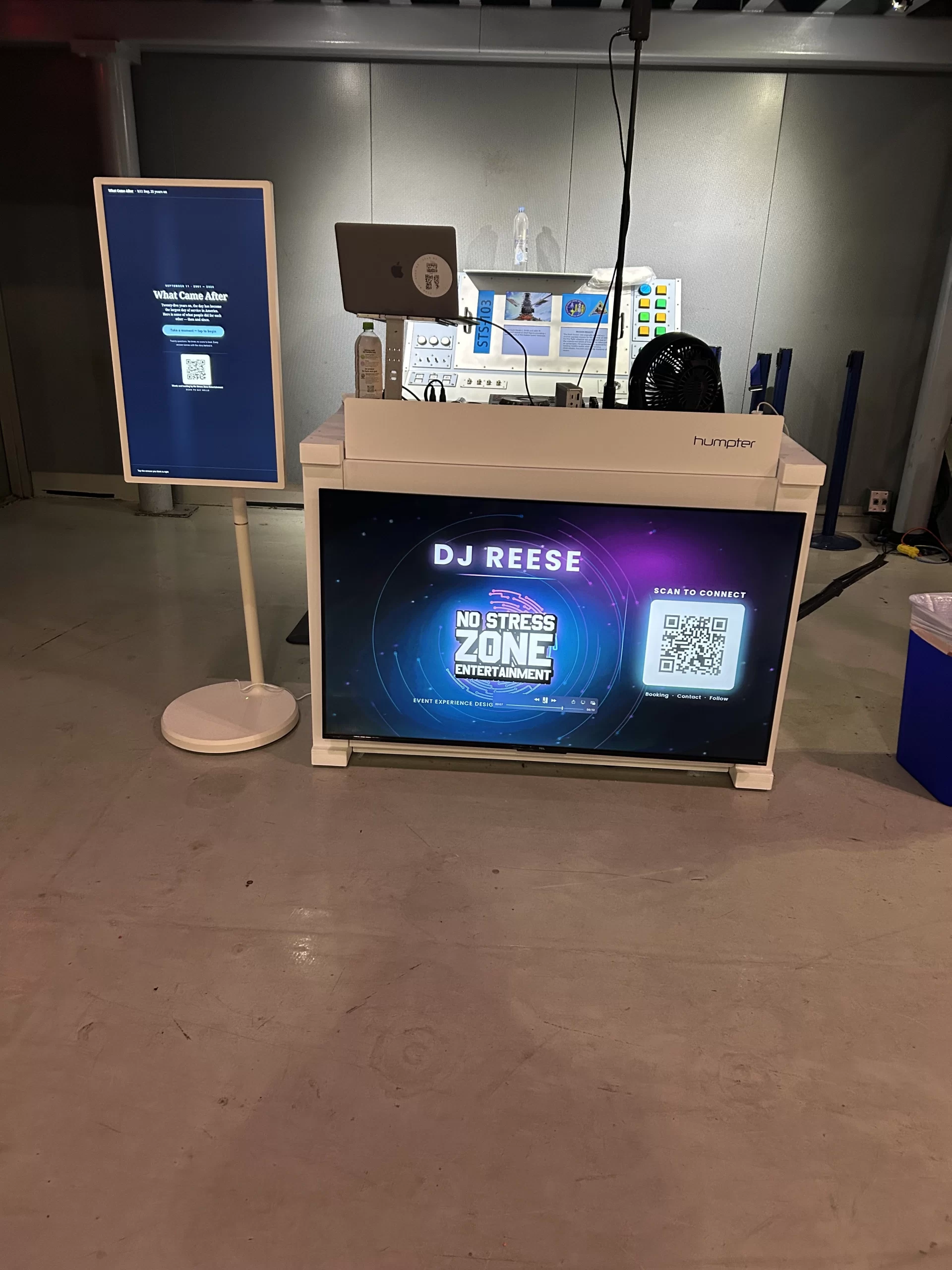
An offsite is usually eight to forty people. At that scale a visible setup changes the register of the room, and the register is the whole point. The gear should be small and out of the way, the volume should never require anyone to raise their voice, and nobody should feel they are at an event.
What is worth having is a reliable microphone for the sessions and someone who knows how the room behaves, because offsite venues are frequently resorts, lodges and conference centers where the meeting rooms are acoustically poor and the AV is whatever was installed a decade ago.
Activities are social engineering, judge them that way
Offsites usually include something: a cooking class, a hike, a competitive activity, a tour. The useful test is whether it puts people in conversation with someone they do not normally talk to.
Activities that split the group by existing team fail that test. So do activities that are physically demanding enough to exclude part of the group, which then socializes separately for the rest of the trip. And anything that creates a visible hierarchy of competence, which senior groups are unusually sensitive about, tends to backfire.
Read the group and adjust
Executive groups on an offsite arrive in a particular state: several of them travelled that morning, some had a difficult quarter, and there is usually one topic everyone is aware of and nobody has raised.
The room tells you. When the first evening stays formal past the second drink, the group has not decompressed and pushing the schedule the next morning will not help. When the after dinner hour is still going at eleven with people standing in threes, the offsite is working. We watch for that and adjust what the evening does rather than running a plan written two weeks earlier.
Questions we get
Do we need a DJ or emcee for a small executive offsite at all?
For eight people at a lodge, possibly not. For a group large enough that the room has to be managed, or a venue where the AV is unreliable and the sessions matter, yes. We would rather tell you it is unnecessary than sell you a setup that makes the offsite feel like a conference.
Should there be a formal dinner program
Almost never. One person speaking for three minutes at the top of the final dinner is plenty. Beyond that you have turned the evening back into a session.
How is multi day executive offsite pricing structured?
Quoted as a package rather than per day. Tell us the venue, the group size and the number of evenings.
Next step
Send us the agenda and the venue. The first thing we will do is tell you where it is overscheduled, which is usually the most useful thing anyone says about an offsite plan.
Frequently Asked Questions
What should you plan for first with this type of event?
The most common offsite mistake is filling the schedule. Sessions from 8 to 6, dinner at 7 with a speaker, breakfast meetings, an activity block.
What’s the most common mistake to avoid?
Offsite evenings are not parties and they are not meetings, and treating them as either wastes them. This is where the day decompresses.
What actually matters most on the day?
An offsite is usually eight to forty people. At that scale a visible setup changes the register of the room, and the register is the whole point.