A merger celebration happens after the news has been absorbed. The deal closed, the emails went out, the org charts landed, and now somebody has to put both employee populations in one venue and make it feel like one company. That is a different assignment from announcing a deal, and it is mostly a social engineering problem rather than an entertainment one.
“We absolutely love No Stress Zone Entertainment! We have used their DJ services two years in a row now and it’s always a blast. He is like a wizard with reading the room and getting a feel for the vibe extremely quickly to make everyone have a good time.”
, Julie Gualano, verified client review
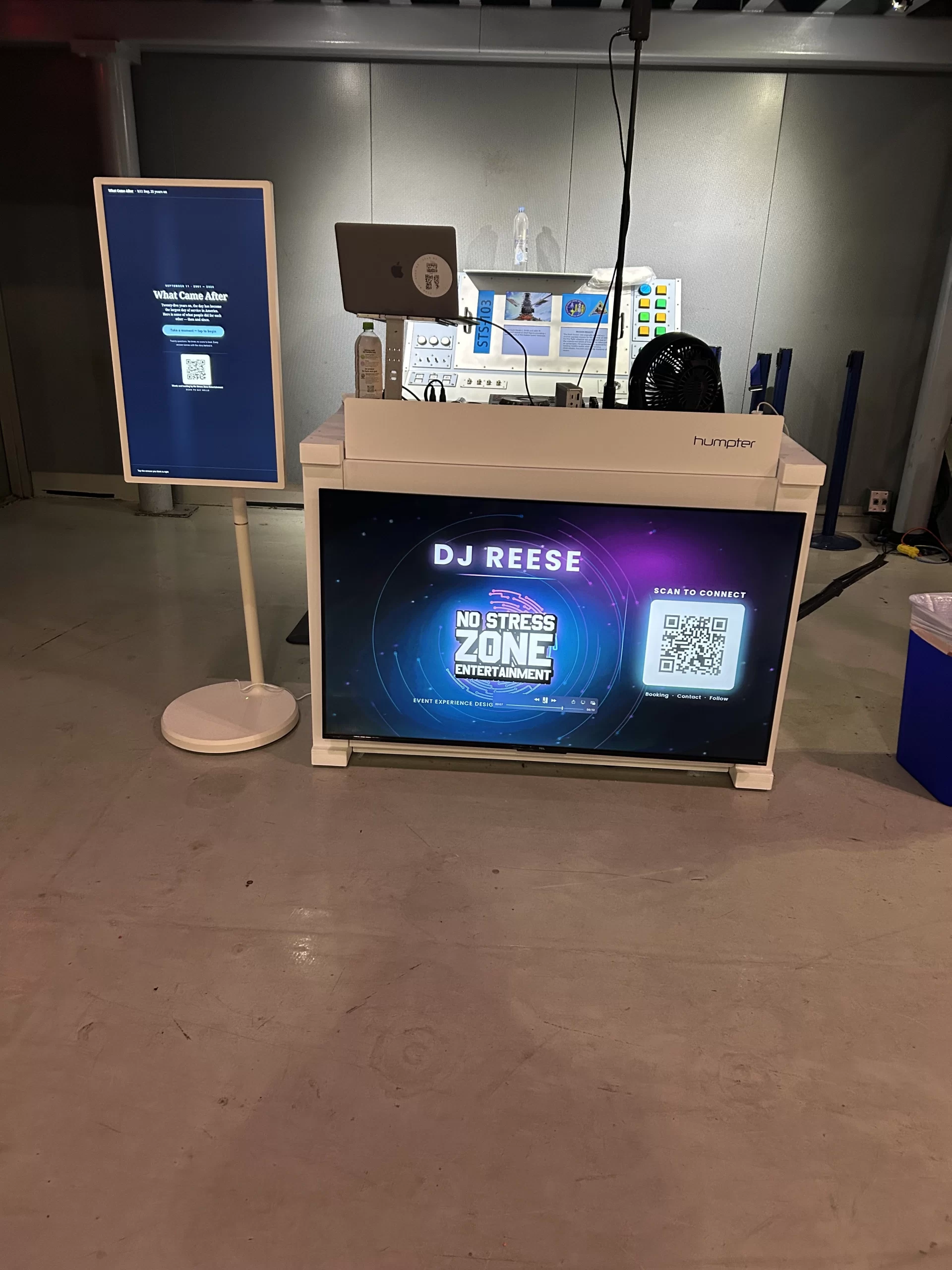
5.0 from 121 Google reviews. Learn more about our corporate event DJ services.
A merger celebration happens after the news has been absorbed. The deal closed, the emails went out, the org charts landed, and now somebody has to put both employee populations in one venue and make it feel like one company. That is a different assignment from announcing a deal, and it is mostly a social engineering problem rather than an entertainment one.
The measurable outcome is simple and you can watch it happen. At the end of the night, are people standing with colleagues they did not know that morning, or did they spend four hours with the people they came with.
Left to itself, the room will not mix
Adults at a work event stand with the people they already know. That is not resistance to the merger, it is just how rooms work. If the event does nothing structural about it, both populations will have a pleasant evening in parallel and nothing will have changed.
The things that actually mix a room are physical and boring.
- No reserved seating by legacy company, and ideally no reserved seating at all for the first hour.
- Food and bar stations placed apart from each other so getting a drink and getting food puts people in different lines with different people.
- Standing height tables rather than seated rounds for the early part of the night. Seated rounds lock groups in place for the duration.
- One shared activity with mixed participation. A photo moment, a giveaway, anything that requires standing next to a stranger for 40 seconds.
- A floor that opens before the room has settled into groups, not after.
We push planners hard on the seating question because it is the one with the biggest effect and the one most often decided by whoever is handling logistics rather than by whoever owns the outcome.
Music as the neutral ground
Every company has a soundtrack it thinks of as its own, and on a night like this that is a liability. If the playlist reads as belonging to one legacy company, the other side hears it, and what they hear is who won.
So the music on a merger night is deliberately common ground. Broad, cross generational, nothing that is anybody team song. That sounds like a compromise and it is, and it is the right one. The floor on these nights fills on shared references, not on anyone specific taste.
Where it gets interesting is the second half. Once both groups are on the floor together, the room earns the right to be more specific, and that is where a DJ reading the floor in real time matters. We are watching which sections of the room respond to what and adjusting, because the mix of that room is not something you can predict from a guest list.
Keep the formal part short
There is a temptation to use a captive audience for messaging. Resist it. The information part of a merger is done by email, town hall and manager conversations long before this night. If the celebration turns into a fourth explanation of the strategy, the room will sit politely and the social work will not get done.
Ten minutes. Both leaders. Named recognition of specific people from both legacy companies who did the integration work, because that is the part employees actually want to hear and almost never get. Then get out of the way.
Language from the stage
Small word choices carry a lot on these nights. Whoever is holding the microphone should be saying the new company name, not the old ones, from the first sentence forward. References to legacy companies should be historical and respectful rather than comparative. No jokes about either side, even affectionate ones, because affectionate from one side reads differently from the other.
We write this into the script rather than trusting it to the moment. It is easy to say the wrong thing warmly.
What we need to program it
- The new company name and how leadership wants it said.
- The rough split between the two employee populations, and whether one is much smaller. A 90 to 10 split is a very different room from a 50 to 50.
- Whether people are traveling in, which changes the arrival curve and the energy at 9pm.
- Which specific people leadership wants named from the stage, from both sides.
- Any topic that is off limits. Offices, roles and timelines are usually the ones.
Questions we get
Is this the same as the announcement event
No. An announcement delivers news to a room that may be anxious and has to be sequenced very carefully. A celebration happens once people know where they stand, and its job is getting them to know each other. Different program, different pacing, different music.
What if one side is much smaller
Then the smaller group is going to feel outnumbered, because they are. The program compensates: their leadership speaks first, their people get named, and the music leans slightly toward what they would recognize rather than majority default. Nobody will name this from the stage and everybody in the smaller group will feel it.
Do you emcee these as well as DJ
Usually both. The person who writes the language and the person who reads the floor should be the same person on a night whose whole purpose is how the room feels.
Next step
Tell us the venue, the split and what leadership wants the night to accomplish beyond a good time. We will send back a room plan, not just a playlist. Most corporate events book us 60 to 90 days out.
Frequently Asked Questions
What should you plan for first with this type of event?
Adults at a work event stand with the people they already know. That is not resistance to the merger, it is just how rooms work.
What’s the most common mistake to avoid?
Every company has a soundtrack it thinks of as its own, and on a night like this that is a liability. If the playlist reads as belonging to one legacy company, the other side hears it, and what they hear is who won.
What actually matters most on the day?
There is a temptation to use a captive audience for messaging. The information part of a merger is done by email, town hall and manager conversations long before this night.