As the acquisition announcement DJ, we treat the room as if it is not a celebration until it decides it is. Most of the people hearing the news are running one calculation in their head: what does this mean for my job. Program the event as a party and you will be the person playing upbeat music at a room full of people doing math.
“We had DJ Reese at our Dream Team Member Gala, and it truly made the night unforgettable as we came together to celebrate our team at RMS. The music, sound, and energy were outstanding.”
, Wazhma Raufyar, verified client review
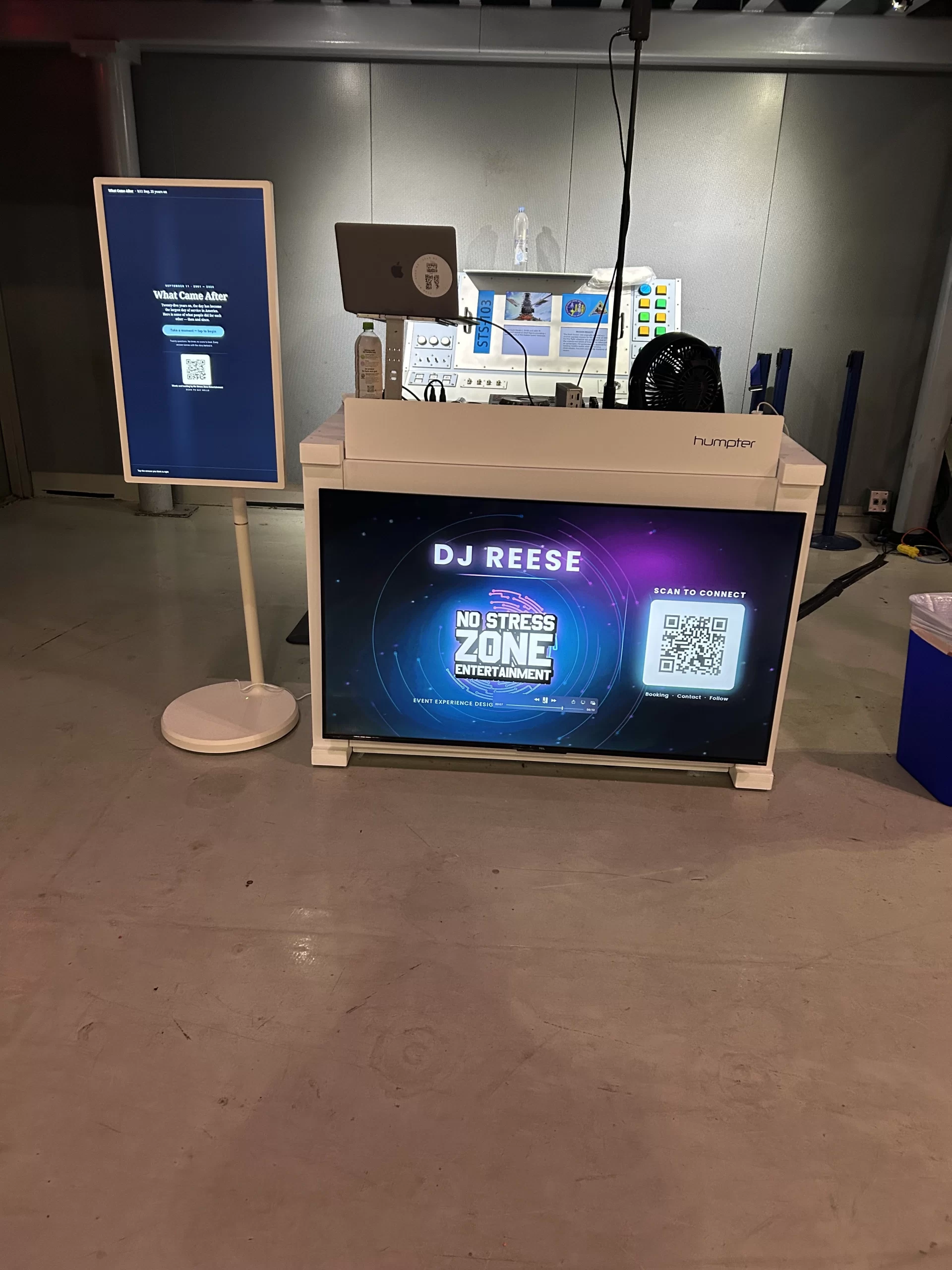
5.0 from 121 Google reviews. Learn more about our corporate event DJ services.
As the acquisition announcement DJ, we treat the room as if it is not a celebration until it decides it is. Most of the people hearing the news are running one calculation in their head: what does this mean for my job. Program the event as a party and you will be the person playing upbeat music at a room full of people doing math.
We have a specific approach for all hands reveals and integration events, and most of it is about sequence.
Information first, celebration second, and never the reverse
The single most common mistake is opening with energy. Big entrance, loud music, confetti cued, and then the CEO explains the deal to a room that has not been told whether there will be layoffs. Whatever energy the open created is spent in the first 90 seconds and you cannot get it back.
The sequence that works is plain: tell them the news, tell them what it means for them, take questions honestly, and only then lift the room. The celebration has to be earned inside the meeting. When it is, the lift is real and people remember the day well. When it is manufactured at the top, the room reads it as being managed.
There are two audiences in the room
If both workforces are present, you have the acquiring side and the acquired side, and they are having completely different days. The acquiring side is curious. The acquired side is exposed.
Everything from the stage should be built for the acquired side. That means the acquired company gets named correctly and said with respect every single time. It means their leadership is on stage and speaking, not seated in the second row. It means the music does not come exclusively from the acquiring company culture, which the room notices immediately even if nobody says it out loud.
If you run a reveal where one side is clearly the host and the other is clearly the guest, you have told the acquired employees exactly where they stand, and you did it before anybody said a word.
The reveal moment itself
If there is a visual reveal, a new logo, a new name, a screen drop, the timing is unforgiving. The music build, the visual and the applause window have to be rehearsed against each other, not described in an email. A build that peaks two seconds after the screen changes turns a moment into a mistake everyone saw.
We rehearse this with whoever runs the screens, in the room, before doors. Not a conversation. An actual run through, at level, at least twice.
Handling the Q and A
There will be a hard question. Somebody will ask about jobs, or about offices closing, or about whose systems everyone is moving to. The worst outcome is a leader who looks caught.
From the host side our job is to make that question land cleanly: repeat it clearly so the whole room hears it, do not soften it, and hand it over without editorializing. A question that gets restated fairly makes the leadership look prepared. A question that gets deflected by the host makes the leadership look protected, which is worse than the question.
After the meeting
The reception after an announcement is where integration actually starts, and it is almost always under designed. Two workforces will stand with their own people unless the room makes that awkward. Practical things that work: no assigned seating by company, food stations placed so the lines mix, and music at a level that supports conversation instead of replacing it.
We read this room closely because the tell is visible. When the two groups are still standing separately 25 minutes in, the volume is usually too high and people have retreated to whoever they already know. Bringing it down gets more mixing than turning it up ever does.
What we need to program it
- The actual sequence of the announcement and who delivers each part.
- Whether both workforces are present, and in what proportion.
- The correct name and pronunciation of the acquired company, verified with someone from that company.
- Whether a visual reveal is happening and who controls the screens.
- What leadership is willing to say about jobs. We do not need the details. We need to know whether the room is getting an answer or not, because that changes how the back half of the event should feel.
Questions we get
Should there be music at all during the announcement
Under the announcement itself, no. Silence is correct. Music belongs before the room settles, under a visual reveal if there is one, and after the information has been delivered.
What if the news is genuinely bad for part of the room
Then do not throw a party. Run a short, respectful, well produced meeting and let people go. A well run 25 minute all hands does more for trust than a reception nobody wanted to attend.
Can you emcee and DJ the same day
Yes, and for these we prefer it. The person who has been reading the room during the announcement is the right person deciding what the reception sounds like an hour later.
Next step
Send us the run of show and tell us honestly how the news is going to land. We will tell you where the event should be lighter or heavier than you have it. Most corporate events book us 60 to 90 days out, though announcement timing often moves faster than that and we work with it.
Frequently Asked Questions
What should you plan for first with this type of event?
The single most common mistake is opening with energy. Big entrance, loud music, confetti cued, and then the CEO explains the deal to a room that has not been told whether there will be layoffs.
What’s the most common mistake to avoid?
If both workforces are present, you have the acquiring side and the acquired side, and they are having completely different days. The acquiring side is curious.
What actually matters most on the day?
If there is a visual reveal, a new logo, a new name, a screen drop, the timing is unforgiving. The music build, the visual and the applause window have to be rehearsed against each other, not described in an email.