Insurance conferences are recognition events with a conference attached. Agents and producers come to see where they landed, and the awards block is not a segment of the program, it is the reason most of the room is in the building. Underproduce it and you have wasted the whole event.
“We absolutely love No Stress Zone Entertainment! We have used their DJ services two years in a row now and it’s always a blast. He is like a wizard with reading the room and getting a feel for the vibe extremely quickly to make everyone have a good time.”
, Julie Gualano, verified client review

5.0 from 121 Google reviews.
Insurance conferences are recognition events with a conference attached. Agents and producers come to see where they landed, and the awards block is not a segment of the program, it is the reason most of the room is in the building. Underproduce it and you have wasted the whole event.
Where we have done this work
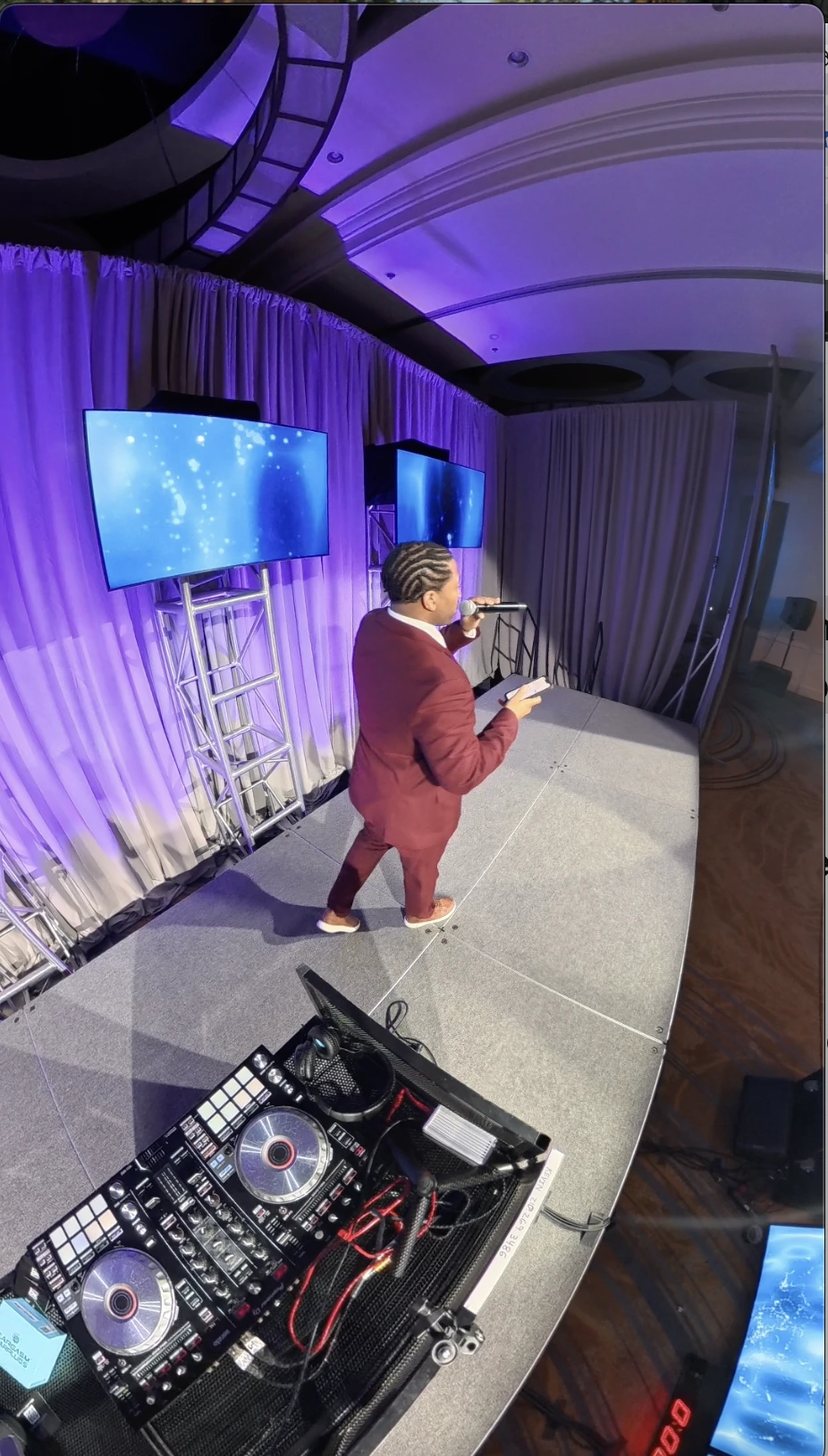
We DJed and emceed the Horizon NJ Health Mental Matters Summit, a 500+ attendee program for one of New Jersey’s health insurance plans. We also emceed and DJed the Senior Health Stop Health Fair in July 2024 for Senior Health Stop, a New Jersey Medicare insurance agency, running the outdoor program from 11 AM to 1 PM. Two different rooms, one lesson: insurance audiences respond when the person on the microphone respects the work they do and keeps the program moving.
The awards block is the event
A typical annual meeting has production tiers, regional winners, rookie awards, agency of the year, persistency and retention recognition, and a top producer list that can run to dozens of names. That is not one segment. It is often 45 to 70 minutes of stage time, and it is routinely planned as if it were fifteen.
The consequences of planning it short are predictable. The block runs over, the reception starts late, the closing gets cut, and the people recognized last get a visibly tired room. We schedule this backwards: measure the actual list, add walk times, add applause windows, and then see what the rest of the day can afford.
Walk time is the number nobody calculates
Forty recipients crossing a ballroom at twelve seconds each is eight minutes of walking, before anybody says a word. If the seating is spread across a large room it is more. If there is a handshake and a photograph at the front, add five to eight seconds each.
This is the single biggest source of overrun in insurance awards programs and it is entirely predictable. We time it, we position the stage access to shorten the walk where the venue allows, and for large tier groups we bring people up in batches rather than individually, which is faster and, done properly, does not feel less significant.
Tiers have to feel different
If a bronze tier recipient and the top producer of the year get the same music, the same citation length and the same applause window, the room learns that the awards do not mean much. The hierarchy has to be audible.
- Entry tiers: grouped, brisk, warm, named clearly, photographed together.
- Middle tiers: individual, short citation, a real walk on.
- Top tier: full production. Longest runway, the specific numbers, the room prepared for it, and the only real pause in the block.
- Agency or team awards: the whole team on stage, which needs its own stage plan because six people do not fit where one does.
Get the numbers and the names right
This audience knows exactly what everyone wrote. Production figures said wrong from a stage are noticed instantly and remembered. So are names, and insurance rosters carry a lot of names that will be mispronounced by anyone reading cold.
We ask for the final award list with figures and phonetic pronunciations at least a week out, and we read every name aloud before the event. When the list changes at the last minute, which it does, we want that change in writing rather than shouted from the wings.
The audience skews toward the floor, and that is unusual
Unlike most senior corporate rooms, insurance annual meetings often do have a dancing culture. Agency teams travel together, they know each other, the recognition has just put the room in a good mood, and there is frequently an incentive trip crowd that has been socializing for days.
That is an advantage worth using. The evening after an awards block starts with more energy in the room than any other corporate event we work, and the mistake is letting it dissipate during a long gap while the ballroom gets reset. We program that gap deliberately rather than leaving the room to cool.
Carrier, agency and sponsor politics
These events usually involve multiple organizations in one room: the carrier, independent agencies, sponsors, and sometimes competing distribution channels. Language from the stage matters. Who gets thanked first, whether an agency name is said correctly, whether a sponsor tier gets the recognition it paid for.
We want the sponsor list by tier and the organizational sensitivities named explicitly before we write anything. Nobody wants to discover a political problem live.
Questions we get
How long should the awards block be
As long as the list honestly requires, and then you decide whether to shorten the list. What does not work is keeping the list and pretending it fits in the slot you have.
Should the awards happen at lunch or at dinner
Dinner, almost always. A recognized room wants to celebrate, and at lunch you send them back into sessions instead. If the program forces a lunch block, keep it to the top tiers and move the rest.
Do you handle the run of show as well as the music
Yes, and on an awards heavy program we would push for it. The cues, the walk timing and the music are the same job, and splitting them is where overruns come from.
Next step
Send us the award list, the tier structure and the room layout. We will come back with a realistic time for the block and where we would batch. Most corporate events book us 60 to 90 days out.
Frequently Asked Questions
What should you plan for first with this type of event?
A typical annual meeting has production tiers, regional winners, rookie awards, agency of the year, persistency and retention recognition, and a top producer list that can run to dozens of names. It is often 45 to 70 minutes of stage time, and it is routinely planned as if it were fifteen.
What’s the most common mistake to avoid?
Forty recipients crossing a ballroom at twelve seconds each is eight minutes of walking, before anybody says a word. If the seating is spread across a large room it is more.
What actually matters most on the day?
If a bronze tier recipient and the top producer of the year get the same music, the same citation length and the same applause window, the room learns that the awards do not mean much. The hierarchy has to be audible.